


How Do Waterproof Zippers Actually Work?

How Do Waterproof Zippers Actually Work?
Some zippers simply shed rain. Others create an airtight, waterproof seal. The difference is hidden in the construction, and it matters when your gear may actually go underwater.
A zipper can look almost completely sealed and still be designed only for rain. The real question is not whether the zipper looks waterproof. It is how the closure physically stops water from moving through it.
How do waterproof zippers work?
Water-resistant zippers usually rely on coated tape and water-repellent surfaces to help rain bead up and roll away. Airtight and truly waterproof zippers go further by creating a physical seal. Depending on the design, that seal may be formed around interlocking zipper elements or by smooth sealing lips that close together over the mechanical part of the zipper.
TIZIP is a brand, not a zipper type. YKK is also a manufacturer rather than a construction category. Both companies make particular waterproof zipper products, and other manufacturers offer similar sealing architectures. In this guide, brand names are examples. The important things to compare are the zipper's construction, published capability and intended use.
One zipper sheds water. The other has to stop it.
The terms get mixed together because both types can have a smooth, coated appearance. But the engineering goal is different.
A water-resistant zipper is primarily trying to reduce the amount of rain or spray that can pass through the closure. A true waterproof or airtight zipper has to create a continuous barrier between the environment and the inside of the product.
Shed the water.
Coated zipper tape and water-repellent surfaces help water bead and roll away before it reaches the openings in the zipper construction.
Create the seal.
The closure includes sealing surfaces that are physically brought together as the slider moves, blocking the path through which water or air would otherwise travel.
YKK AquaGuard® is a useful example of the first category. Its coated construction is designed to improve resistance to surface water, but YKK classifies AquaGuard® as water-resistant rather than waterproof.
That does not make AquaGuard® inferior. For a rain jacket, backpack or product that mainly encounters rain and splashes, water resistance may be exactly the right engineering choice.
Two common ways an airtight zipper creates the seal.
Exact geometry varies by manufacturer, but many airtight zipper systems can be understood through these two broad sealing approaches.
Interlocking elements with sealing material between them.
In this style, visible mechanical teeth or zipper elements provide the engagement while rubber-like or elastomeric sealing material is compressed between or around the engaged elements. The zipper therefore has a visibly toothed mechanical structure as well as a separate sealing function.
The exact tooth geometry, sealing material and pressure rating differ between manufacturers and products.
The sealing surfaces meet above the mechanical closure.
In another common architecture, the mechanical zipper engagement sits beneath or inside the sealing system. Smooth sealing lips are brought together above it, creating a much flatter, more continuous exterior seal when the zipper is closed.
TIZIP is one manufacturer that offers airtight zipper products, but this general sealing concept is not a generic category owned by one brand.
Not every product needs the same zipper.
Appropriate when keeping water out is not an important part of the product's job.
Designed for rain, spray and surface exposure rather than full immersion.
Mechanical engagement and sealing material work together to create a waterproof closure.
Smooth sealing lips create a continuous outer barrier over the mechanical closure.
What you are actually looking at when comparing zippers.
Brand names are useful examples, but they should come after the construction type. Several manufacturers can build products around similar sealing principles.
| Construction | How It Handles Water | Typical Applications | Exposure |
|---|---|---|---|
| Standard coil or molded zipper | Mechanical closure only. Water can move through openings in the zipper. | Everyday bags, apparel and dry conditions | Dry use |
| Coated water-resistant zipper | Coated tape and water-repellent surfaces reduce water penetration from the exterior. | Rain jackets, backpacks and weather-resistant equipment | Rain + spray |
| Airtight toothed compression seal | Mechanical elements engage while sealing material is compressed into a waterproof barrier. | Waterproof storage, dry gear and technical equipment | Immersion capable* |
| Airtight covered or flush seal | Smooth sealing lips meet above or around the mechanical closure to create a continuous barrier. | Waterproof and airtight equipment requiring a sealed closure | Immersion capable* |
*Always use the published rating of the specific finished zipper and product. Construction style alone does not establish a particular depth, pressure or duration rating.
Where do YKK and TIZIP fit?
YKK makes both ordinary water-resistant products and specialized waterproof zipper systems. AquaGuard® is one example of a water-resistant zipper, while products such as AQUASEAL® and PROSEAL® are intended for substantially greater water exposure.
TIZIP is another zipper manufacturer with waterproof and airtight products. Its name is sometimes used casually as though it were a generic zipper type, but similar waterproof closure principles can also be found from other manufacturers.
Even the best waterproof zipper is only one part of the seal.
This is one of the easiest mistakes to make when evaluating waterproof gear. A highly capable zipper does not automatically make the finished bag or garment submersible.
Every possible entry point matters.
The closure itself has to match the intended level of water exposure.
The surrounding material must also stop water from moving through the body of the product.
Stitch holes and unfinished seams can create leak paths even when the zipper itself seals.
Waterproof zippers must be completely closed and properly seated for the seal to work as designed.
A waterproof zipper does not automatically equal a submersible bag.
Fabric construction, welded or sealed seams, attachment points, zipper installation and the closure itself all affect the final product. When immersion matters, check the published capability of the complete product.
If you are deciding between different waterproof storage approaches, see our waterproof bag guide for a broader comparison of how different bag systems protect phones, wallets, keys and other valuables.
The right zipper depends on where the gear is going.
Rain, surface-water use and full immersion create very different sealing requirements.

Surface exposure
Gear used primarily in rain may need resistance without the complexity of an airtight submersible closure.

Heavy water exposure
Water moving across the gear increases the importance of the entire waterproof system.

Full water exposure
Once the product may actually go underwater, surface resistance and true sealing become very different things.
Start with the environment, not the zipper.
The strongest possible seal is not automatically the best choice for every product. More sealing capability can also mean more stiffness, more closing force, greater cost and different maintenance requirements.
Mostly dry conditions
A conventional zipper may be perfectly appropriate when water protection is not part of the product's primary job.
Rain and occasional spray
A coated water-resistant zipper can provide useful weather protection without requiring an airtight closure.
Possible full immersion
Now the sealing architecture matters. Look for a finished product and zipper specifically designed and rated for that level of water exposure.
Why can an airtight zipper eventually leak?
The sealing surfaces have to meet cleanly. Sand, grit, salt and other contamination can interfere with the seal, while some zipper systems are designed to be periodically lubricated so that the slider continues to move correctly and the sealing surfaces are not unnecessarily stressed.
Protect the sealing surfaces.
Do not let contamination remain packed into the sealing area after use.
A small unclosed section can compromise the entire barrier.
Use only the cleaning and lubrication method recommended for the specific zipper system.
Waterproof zipper FAQ
Is TIZIP a type of waterproof zipper?
No. TIZIP is a zipper manufacturer and brand. It produces waterproof and airtight zipper products, but similar sealing concepts can also be produced by other manufacturers.
Is a waterproof zipper the same as a water-resistant zipper?
No. Water-resistant zippers are primarily designed to reduce penetration from rain and surface water. Waterproof and airtight zipper systems create a physical seal intended for substantially greater water exposure.
Is YKK AquaGuard® waterproof?
YKK classifies AquaGuard® as water-resistant rather than waterproof. It is designed to help shed surface water, but it is not the same construction category as a zipper intended for airtight or submersible applications.
Are all airtight waterproof zippers built the same way?
No. Different zipper systems use different mechanical and sealing geometries. Two common approaches are a visible tooth or element system that compresses sealing material, and a covered system where smooth sealing lips meet above the mechanical closure.
Does a waterproof zipper automatically make a bag submersible?
No. The fabric, seams, zipper installation, attachment points and other construction details all contribute to the performance of the finished product.
Why can waterproof zippers feel harder to open and close?
Airtight zipper systems have to bring sealing surfaces together tightly. That additional sealing function can create more resistance than an ordinary clothing or backpack zipper.
Why do waterproof zippers sometimes begin leaking?
Contamination, incomplete closure, wear or deterioration of sealing surfaces can all affect performance. The specific maintenance requirements depend on the zipper manufacturer and product.
Primary Sources
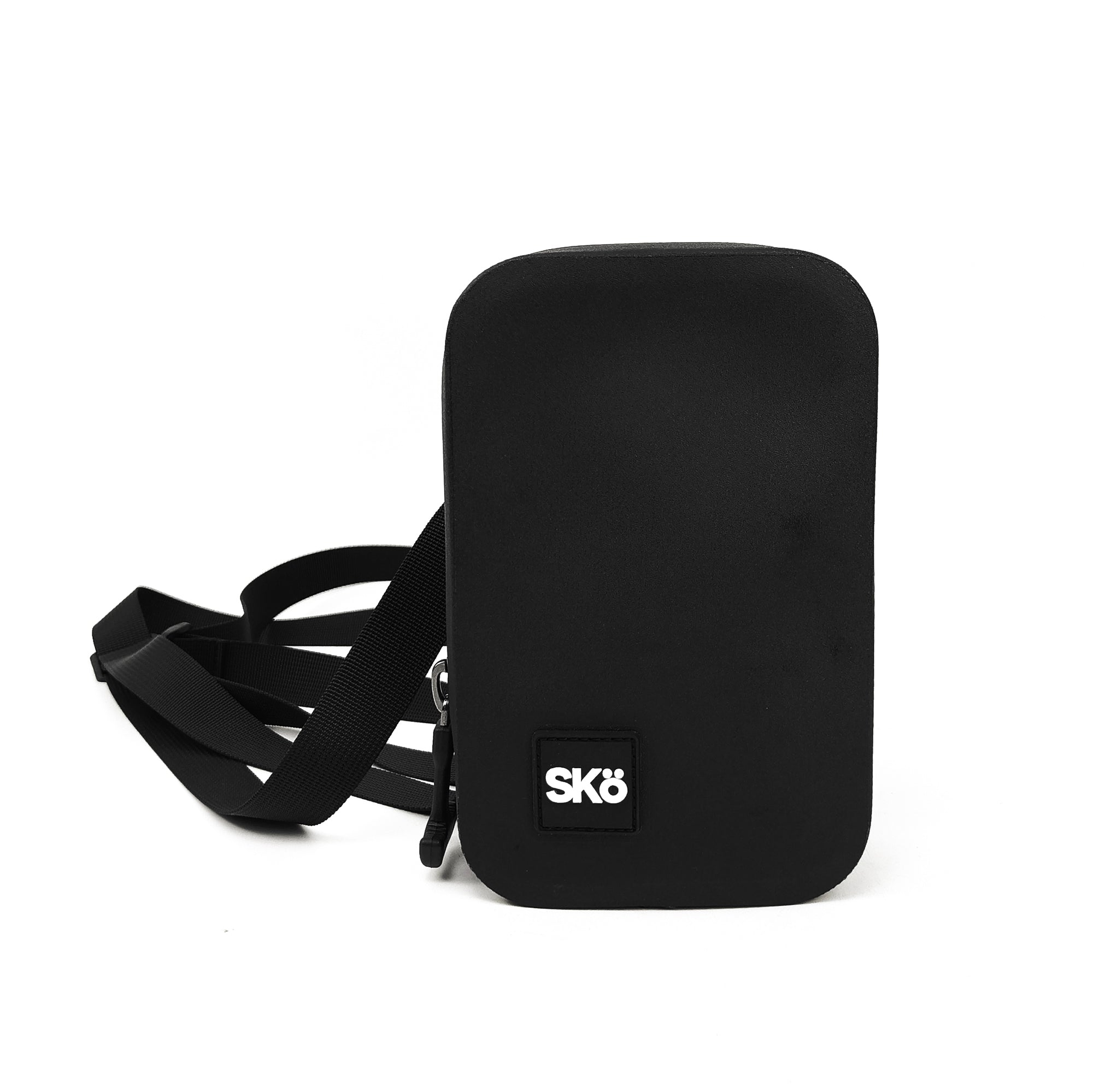
The zipper is only one part of the system.
The SKÖ Waterproof Crossbody is built around the complete waterproof compartment, combining the closure, waterproof material and construction into one compact place for the essentials you cannot afford to soak.
Explore the Waterproof Crossbody →