

Can a Dry Bag Be Fully Submerged?
A capsize, a quick dunk and sitting underwater are not the same test. The answer depends on the exact claim the manufacturer makes.
For a quick dunk, many paddling dry bags are built to cope when closed correctly. For staying underwater, only trust a bag that publishes a specific submersion claim, depth and time. If a phone or camera is inside, use a second protective layer instead of treating the dry bag as an underwater electronics case.
A wave over the bag is not the same as a bag sitting underwater.
SealLine separates splashproof, waterproof and submersible products. That distinction is useful because different closures and constructions are designed for different levels of exposure. For how fabric, seams and closures work together, see how waterproof bags actually keep water out.
The safest approach is to use the maker’s own wording and test conditions instead of assuming every product called a “dry bag” passes the same immersion test.
Quick dunk, rated submersion or prolonged underwater exposure?
SealLine says most of its waterproof dry bags are intended to handle quick submersions such as capsizes when the closure is used correctly.
SealLine defines its submersible category at 1 meter for 30 minutes. Its E-Case uses an IPX7 claim with that same stated depth and time.
IPX8 does not create one universal depth and time. The manufacturer has to state the conditions behind its claim.
Three checks answer the question faster than the product name does.
Look for a published immersion rating.
If the product page gives a depth and time, that is the test condition to respect. Do not extend it because the bag “felt fine” on a previous trip.
If there is no depth/time rating, look for the maker’s use language.
“Quick submersion,” “capsize,” “splashproof” and “submersible” are materially different promises.
If electronics are inside, add another layer.
Sea to Summit specifically warns that dry bags are not guaranteed for electronics in heavy submersion and recommends extra protection.
Match the bag to the water exposure you actually expect.
| Situation | What the bag experiences | What to look for |
|---|---|---|
| Rain, spray, paddle drip | The bag remains above water. | A splashproof or waterproof product designed for the activity may be enough. |
| Capsize and quick recovery | The bag may go underwater briefly. | A paddling dry bag the maker describes as waterproof for quick submersion, closed exactly as instructed. |
| Held underwater | A swamped boat, pinned load or sunken bag keeps pressure on the seal. | A specific submersion rating with a published depth and time. |
| Phone or camera inside | Failure consequence is much higher. | A second sealed layer or hard case appropriate to the electronics and exposure. |
A dry bag is not automatically an underwater camera case.
Sea to Summit recommends extra protection for electronics because real-world submersion adds pressure, movement, grit and repeated dunks. If losing the item would ruin the trip, build in redundancy.
A good rating cannot rescue a badly closed roll-top.
Overpacking can keep the roll-top from forming the full seal the maker requires.
SealLine and NRS both instruct users to make multiple tight folds rather than one loose curl.
Wrinkles, grit and trapped fabric can turn a good bag into a poor seal.
Understand the rest of the dry-bag system.
Keep phone, wallet and keys sealed without pretending a small bag is expedition dry storage.
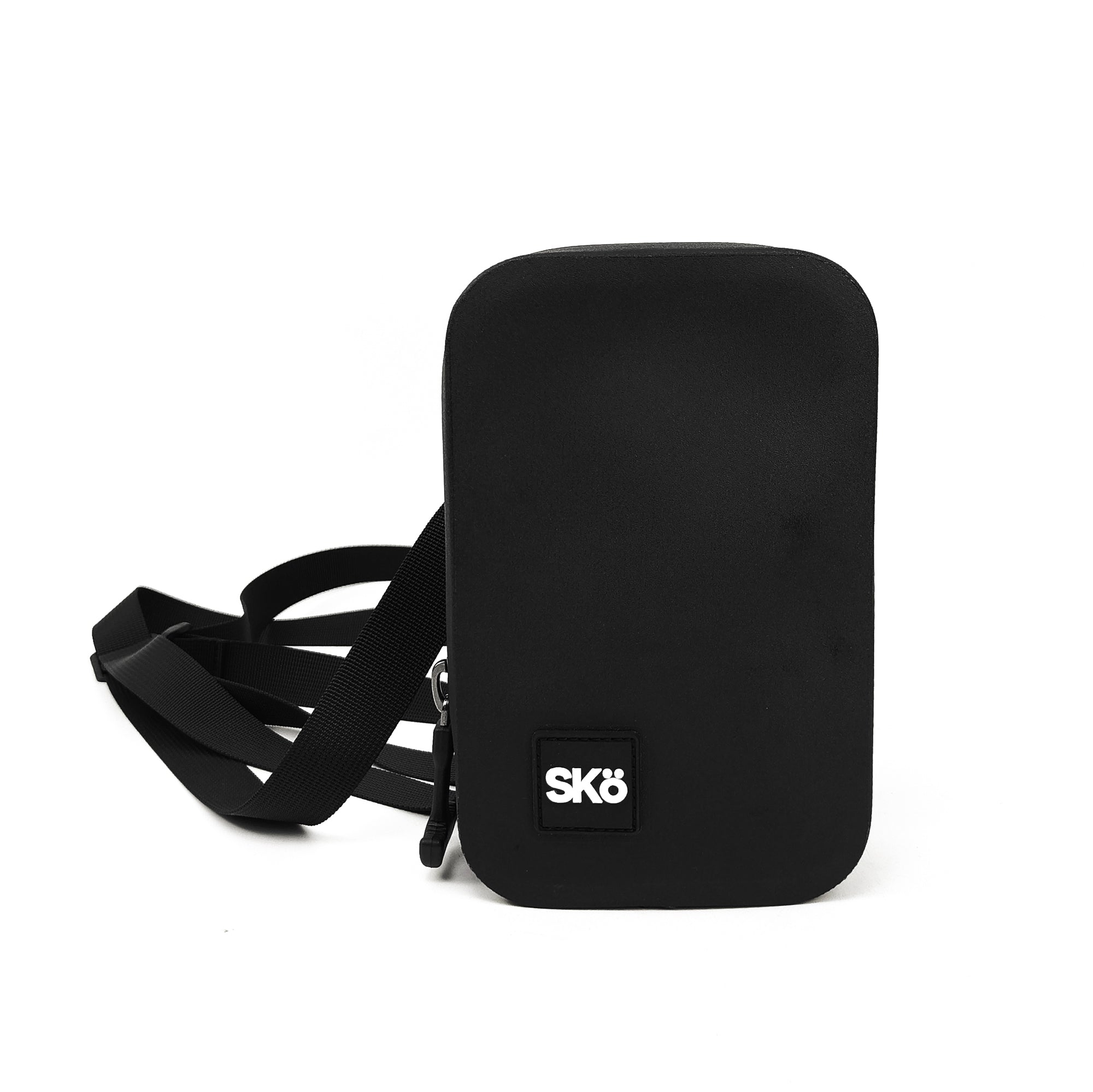
The SKÖ Waterproof Crossbody is compact storage for small essentials around water. SKÖ does not publish a specific standardized depth-and-duration rating for it.
See the Waterproof Crossbody →Storage equipment only. It is not flotation or lifesaving equipment.
Explore more SKÖ guides
More useful guides for keeping your gear protected and your essentials ready.
 Dry Bag vs. Waterproof Bag: What’s the Difference?
 How Waterproof Bags Actually Keep Water Out
 How to Seal a Roll-Top Dry Bag Properly (and Fix Leaks)
 Understanding IPX Waterproof Ratings