


Stand Up. Paddle Out. Keep the Essentials Dry.
Waterproof carry and practical field guides for paddleboarding, from protecting your phone and keys to choosing the right storage for short paddles and longer days on the water.
For valuables that may end up fully underwater, choose protection intended for submersion rather than relying only on splash resistance.
Paddleboarding puts ordinary gear one fall away from the water.
A calm paddle can turn wet quickly. Boat wake, wind, a missed step or an ordinary fall can put your phone, keys and wallet directly in the water. The right setup protects the essentials without turning your board into a floating gear closet.
For short paddles, compact storage worn on your body may be enough. Longer outings usually call for additional capacity secured under deck bungees or with an appropriate tether.
Bring what you need. Secure everything before launch.
A simple setup is easier to paddle with and easier to keep secure. Keep small valuables protected and attached to you, then use the board's storage area for larger items you genuinely need.
Phone & Keys
Keep the valuables you cannot afford to soak in waterproof storage attached to you.
Water & Sun Protection
Bring drinking water, sunscreen and sunglasses appropriate for the conditions and length of your paddle.
Safety Gear
Bring the safety equipment appropriate for your location, conditions and applicable rules, including a properly fitted PFD.
Trip Extras
For longer outings, add food, layers, first-aid supplies and other gear based on the route and conditions.

Your storage should match the length of the paddle and the gear you're bringing.
A phone and keys need very different storage than a towel, lunch and extra layer. Build your setup around what must stay protected and what must stay attached.
Compact protection for the things you want within reach.
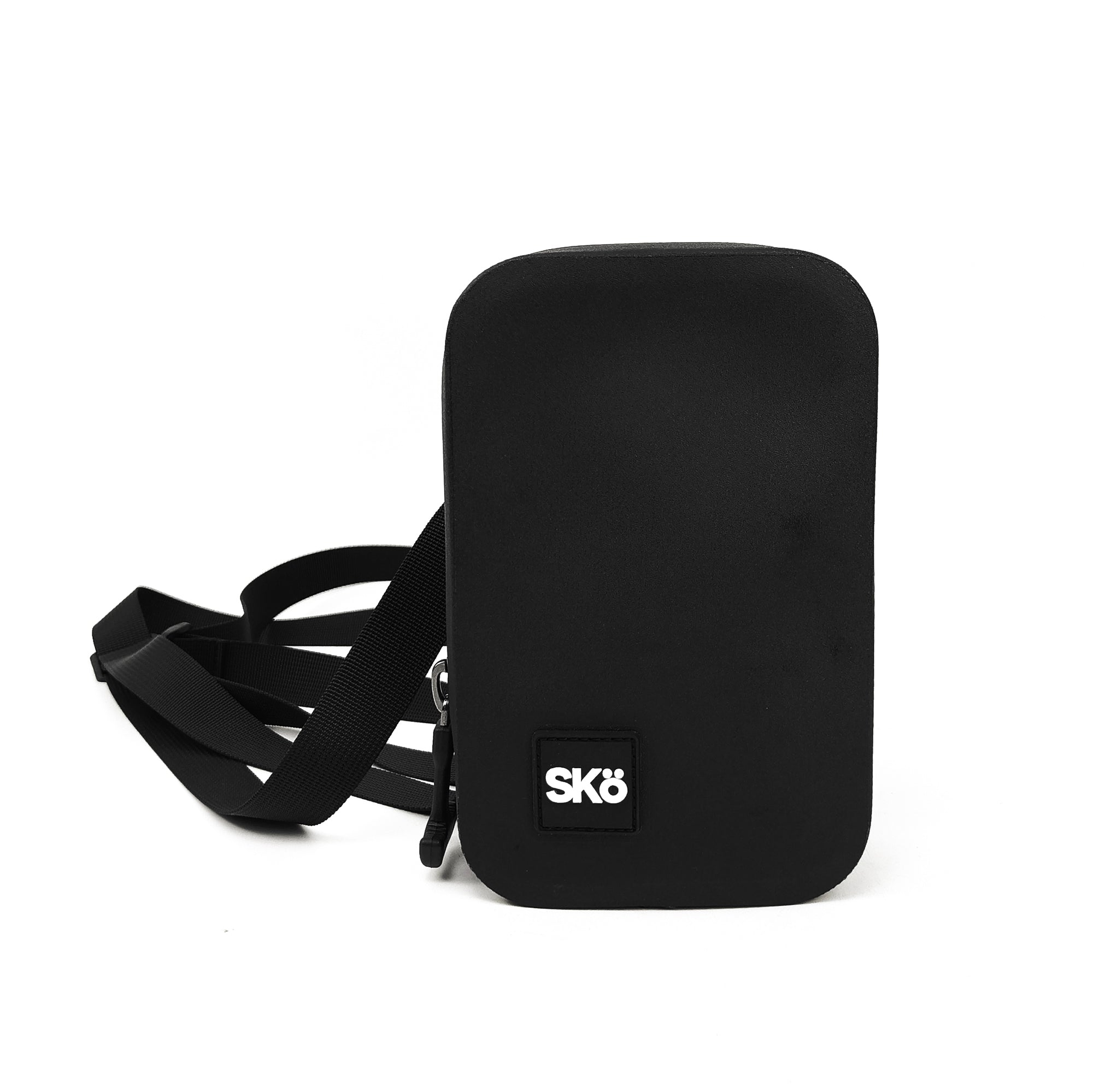
Phone. Keys. ID. One protected place.
The SKÖ Waterproof Crossbody is designed for waterproof and submersible protection when its waterproof zipper is properly closed and sealed. Its compact size is intended for small valuables such as a phone, keys, wallet and cards while paddleboarding and around the water.
SKÖ manufactures this product. Its compact capacity is intended for small essentials. For clothing, towels, food, water or larger equipment, use a larger dry bag or waterproof backpack.
Water-resistant and submersible are not the same thing.
On a paddleboard, splashes are expected and accidental immersion is possible. Match the protection level to what you're carrying and what happens if it goes overboard.
A one-hour paddle and a full-day outing need different storage.
Choose capacity based on what you are actually carrying. Small valuables can stay on your body, while food, clothing, water and safety gear usually need secured board storage.
Secure the setup. Small valuables can stay attached to you. Larger bags should be secured beneath board bungees or with an appropriate tether so a fall does not separate you from your gear.
Build a cleaner, safer setup for your time on the water.
Explore in-depth guides covering waterproof storage, what to bring, phone protection, bag sizing and practical paddleboarding gear.

How to Store Your Kayak or Paddleboard for the Off-Season
Clean, dry and store a paddleboard correctly to reduce UV, moisture and long-term storage damage.
Best Waterproof Crossbody Bags for 2027
Compare compact waterproof options for keeping a phone, wallet and keys protected around the water.
How to Keep Your Phone Dry While Kayaking
Learn how splash, submersion and condensation affect phone protection during paddling trips.
TPU vs. PVC Waterproof Bags
Compare the materials commonly used in waterproof bags and the tradeoffs that matter for regular paddling.
Why Won't My Dry Bag Roll-Top Seal Properly?
Fix common roll-top problems caused by too few rolls, trapped air or overpacking before you launch.
Best Dry Bags for Kayaking
Compare dry bags, waterproof backpacks and compact carry options for keeping paddling gear protected.A few minutes after the paddle keeps waterproof gear ready for the next one.
Fresh water, saltwater, sand and grit can all collect around closures, straps and hardware. A quick inspection and rinse when needed helps keep your setup clean.
Rinse
After saltwater or sandy launches, rinse the bag, zipper, straps and hardware with fresh water.
Inspect
Clear grit from waterproof closures and check straps, attachment points and board storage before the next trip.
Dry
Let waterproof gear dry before storing it for an extended period.
Paddleboarding & waterproof gear FAQs
Do I need a dry bag for paddleboarding?
Not always. If you are only carrying a phone, keys, wallet and a few small essentials, compact waterproof storage may be enough. Clothing, food, towels and larger gear usually call for a dry bag or waterproof backpack.
Where should I put my phone while paddleboarding?
Keep it in waterproof storage attached to your body or securely attached to the board. If accidental immersion is possible, choose protection intended for that level of exposure.
Can I take my phone paddleboarding?
Yes. Phones are useful for photos, navigation and communication, but they should be protected from spray and the possibility of going fully underwater.
Should I strap my bag to my paddleboard?
Larger dry bags and backpacks should be secured using the board's storage system or an appropriate tether. Small waterproof valuables can also be kept attached directly to your body.
Is water-resistant gear enough for paddleboarding?
It can be enough for items that only need splash or rain protection. For phones, electronic keys and other valuables that may be submerged during a fall, look for protection intended for complete immersion.
Is a waterproof crossbody good for paddleboarding?
It can be a strong option for small essentials because it keeps them attached to your body and easy to access. For bulky gear or longer outings, add larger secured dry storage.
What size waterproof bag is best for paddleboarding?
Choose based on what you carry rather than paddle time alone. Small essentials may fit in a compact crossbody, while food, clothing, water and safety supplies require more capacity.


Keep the essentials close when the board gets wet.
Explore compact waterproof carry for paddleboarding, swimming, travel and the moments when ordinary bags are not enough.