


Understanding IPX Waterproof Ratings

Understanding IPX Waterproof Ratings
IPX4, IPX6, IPX7 and IPX8 do not simply mean “a little more waterproof.” Each represents a different water-ingress test. Here is how the entire rating system works and what the numbers actually mean for gear you use around water.
If you have ever compared a waterproof phone case, dry bag, electronic device or piece of outdoor gear, you have probably seen ratings such as IPX4, IPX7, IP67 or IP68. Those numbers are far more useful than a vague “waterproof” label, but only if you know what they actually measure.
The biggest misunderstanding is treating the IPX scale like a simple ladder where every higher number means the product survives every type of water exposure below it. That is mostly true through the water-jet categories, but it stops being true when the system reaches immersion.
What does an IPX rating mean?
An IPX rating describes an enclosure's tested resistance to water ingress under the IEC IP Code. The number after the X identifies the type of water exposure tested: low numbers cover dripping or spraying water, IPX5 and IPX6 cover water jets, IPX7 covers temporary immersion, IPX8 covers continuous immersion under specified conditions, and IPX9 covers high-pressure, high-temperature water jets. The X means the solid-particle protection level is not being stated in that code.
An IP rating describes a defined test, not every possible real-world situation. Salt water, aging seals, improper closure, abrasion, extreme temperatures and impacts can all affect a finished product differently than a controlled laboratory test.
Start with the three characters: IPX.
IP ratings come from the IEC system for classifying the degrees of protection provided by an enclosure. A full rating can contain two characteristic numerals.
The first numeral describes protection related to solid foreign objects and access to hazardous parts. The second numeral describes protection against harmful effects caused by water ingress.
What does IPX7 tell you?
Each character answers a different question. Understanding that structure makes almost every IP rating easier to read.
X is a placeholder. It does not mean the product automatically has zero dust resistance.
The water-protection numeral indicates that the enclosure was evaluated against the IPX7 temporary-immersion test.
X does not mean “zero protection.”
It means that characteristic numeral is not being specified in the code you are reading. IPX7 tells you the declared water category but does not give you a solid-particle numeral. IP67 declares both.
So what does “IP” stand for?
The important part is that the IP Code is the standardized enclosure-protection classification defined by IEC 60529. In consumer product language, you will often hear it referred to as an ingress-protection rating because it describes protection against things entering an enclosure.
The complete IPX waterproof rating chart.
The scale moves from no declared water protection through drips, sprays, jets, immersion and finally high-pressure, high-temperature cleaning exposure.
The numbers describe different water threats.
It is tempting to look at IPX4, IPX6 and IPX8 as low, medium and high versions of one test. The reality is more useful: they represent different kinds of water exposure.
Drips, jets, immersion and pressure washing are not the same.
Water arrives at relatively low energy and does not surround the entire enclosure.
Moving water directly strikes seams, openings and sealing surfaces.
Water surrounds the enclosure and creates pressure against the entire sealing system.
Concentrated high-pressure and high-temperature water creates a separate extreme sealing challenge.
IPX8 does not automatically mean the product also passed IPX6.
Under IEC 60529, the water-protection levels are cumulative through numeral 6. The immersion categories 7 and 8 are treated separately from the water-jet categories. If both immersion and strong water-jet exposure matter, look for the applicable ratings rather than assuming an immersion rating automatically covers jets.
IPX7 vs. IPX8: what's actually different?
Both ratings move beyond rain and splash testing into immersion, but they do not communicate the same thing.
A standardized temporary-immersion category.
IPX7 evaluates the effects of temporary immersion under the standard's defined test conditions. It is commonly summarized in consumer literature as approximately 1 meter of water for 30 minutes.
Immersion under specified product conditions.
IPX8 covers continuous immersion under conditions specified for the product. The rating itself is not a universal promise of one particular depth or one particular duration.
There is no universal “IPX8 depth.”
This is one of the most important points in the entire IPX system. Seeing IPX8 does not let you assume that every IPX8 product can be taken to the same depth.
One manufacturer may publish one set of immersion conditions and another manufacturer may publish different conditions. If depth and duration matter to your use case, read the specification attached to the finished product.
What's the difference between IP68 and IPX8?
They can communicate the same water category while saying something different about solid-particle protection.
Dust protection + immersion protection.
The first numeral, 6, declares the highest solid-particle category in the basic IP scale: dust-tight. The second numeral, 8, declares the continuous-immersion water category.
The water category is stated. The solid numeral is not.
X occupies the solid-particle position, while 8 still communicates the continuous-immersion water category.
So IP68 and IPX8 should not be read as two different levels of water protection simply because one contains a 6. The 6 is describing solids. The water numeral in both examples is 8.
What about IP69 and IPX9?
The 9 category is different again. It deals with high-pressure, high-temperature water jets. It is particularly relevant to equipment exposed to intense washdown or cleaning environments.
You may also encounter IPX9K in vehicle and automotive contexts. That designation comes from a different standard family. Do not assume IPX9 and IPX9K are interchangeable claims simply because they describe similar severe washdown environments.
The right rating depends on what the water is actually doing.
Rain on a trail, spray on a boat and complete immersion create very different stresses on waterproof gear.

Rain exposure
Gear may see repeated surface water without ever being fully surrounded by it.

Moving water
Spray and waves repeatedly strike the exterior rather than simply resting against it.

Full submersion
Water surrounds the product and acts against every possible leak path at once.
Choose for the worst realistic exposure, not the average day.
The best rating depends less on what activity is printed on the packaging and more on the failure scenario you are actually preparing for.
For open-water activities, the question is often not “Will this get splashed?” The answer to that is obviously yes. The more useful question is whether the item could unexpectedly go fully underwater.
Five mistakes that make IP ratings harder than they need to be.
“X means zero dust protection.”
X means that characteristic numeral is not being stated in that code. It should not be interpreted as a numerical zero.
“IPX8 means any depth for any amount of time.”
It does not. IPX8 is continuous immersion under specified conditions. Read the manufacturer's conditions for the actual product.
“IPX8 automatically includes IPX6.”
Immersion and water-jet tests are different. Ratings 7 and 8 do not automatically establish compliance with jet categories 5 and 6.
“IP68 tells me exactly how deep I can go.”
IP68 identifies dust-tight solid protection and the IP category for continuous immersion. You still need the product's published immersion conditions.
“An IP rating lasts forever.”
Physical wear, damaged seals, contaminated zipper tracks, aging materials or incorrect closure can affect real-world performance even if the original product was tested to an IP rating.
A rating does not replace inspecting your gear.
A waterproof product can only perform as designed when its sealing system is still in good condition and properly closed.
Read the specific product conditions
Especially for IPX8 or IP68 products, check the published immersion conditions instead of relying on the numeral alone.
Inspect closures and sealing surfaces
Sand, grit, damaged gasket material, zipper contamination or a partially closed seal can create an entry path that did not exist during the original test.
Test without electronics when appropriate
If the manufacturer's instructions permit the exposure, dry paper inside the product can reveal obvious leaks without making a phone or passport the test object.
Stay within the intended use
Do not turn a home test into a depth, pressure or exposure challenge beyond the manufacturer's specification.
IPX waterproof rating FAQ
What does IPX mean?
In an IPX water rating, the X occupies the position normally used for the solid-particle protection numeral. The number after it describes the declared degree of protection against water ingress.
Is IPX4 waterproof?
IPX4 is a splashing-water rating. It can be useful for rain and splash exposure, but it is not an immersion rating and should not be interpreted as protection for underwater use.
Is IPX6 safe for swimming?
IPX6 is a powerful-water-jet category, not an immersion category. If a product will be intentionally submerged, look for a rating and manufacturer specification that specifically addresses immersion.
Is IPX7 fully waterproof?
IPX7 indicates that the enclosure meets the temporary immersion category under defined test conditions. It does not mean unlimited depth, unlimited time or every possible water exposure.
Is IPX8 better than IPX7?
IPX8 addresses continuous immersion under specified conditions, whereas IPX7 addresses temporary immersion. For immersion applications, IPX8 therefore represents a different and generally more demanding category, but the actual IPX8 conditions must still be checked for the particular product.
Is IP68 the same as IPX8?
They share the same second characteristic numeral for water protection: 8. IP68 additionally declares a first numeral of 6 for solid-particle protection, while IPX8 leaves that first numeral unspecified.
Does IPX8 include IPX5 and IPX6?
Not automatically. IEC treats immersion categories 7 and 8 separately from water-jet categories 5 and 6. If resistance to both immersion and jets matters, check the complete declared rating.
What is IPX9?
IPX9 is the IEC water category for high-pressure, high-temperature water-jet exposure. It is most relevant to severe cleaning and washdown environments rather than ordinary rain, paddling or recreational swimming.
Primary References
- IEC 60529 — Degrees of Protection Provided by Enclosures (IP Code)
- ANSI / IEC 60529 — Degrees of Protection Provided by Enclosures
- UL Solutions — Ingress Protection / IP Water and Dust Testing
- NEMA — Enclosure Types and IEC IP Classification Guidance
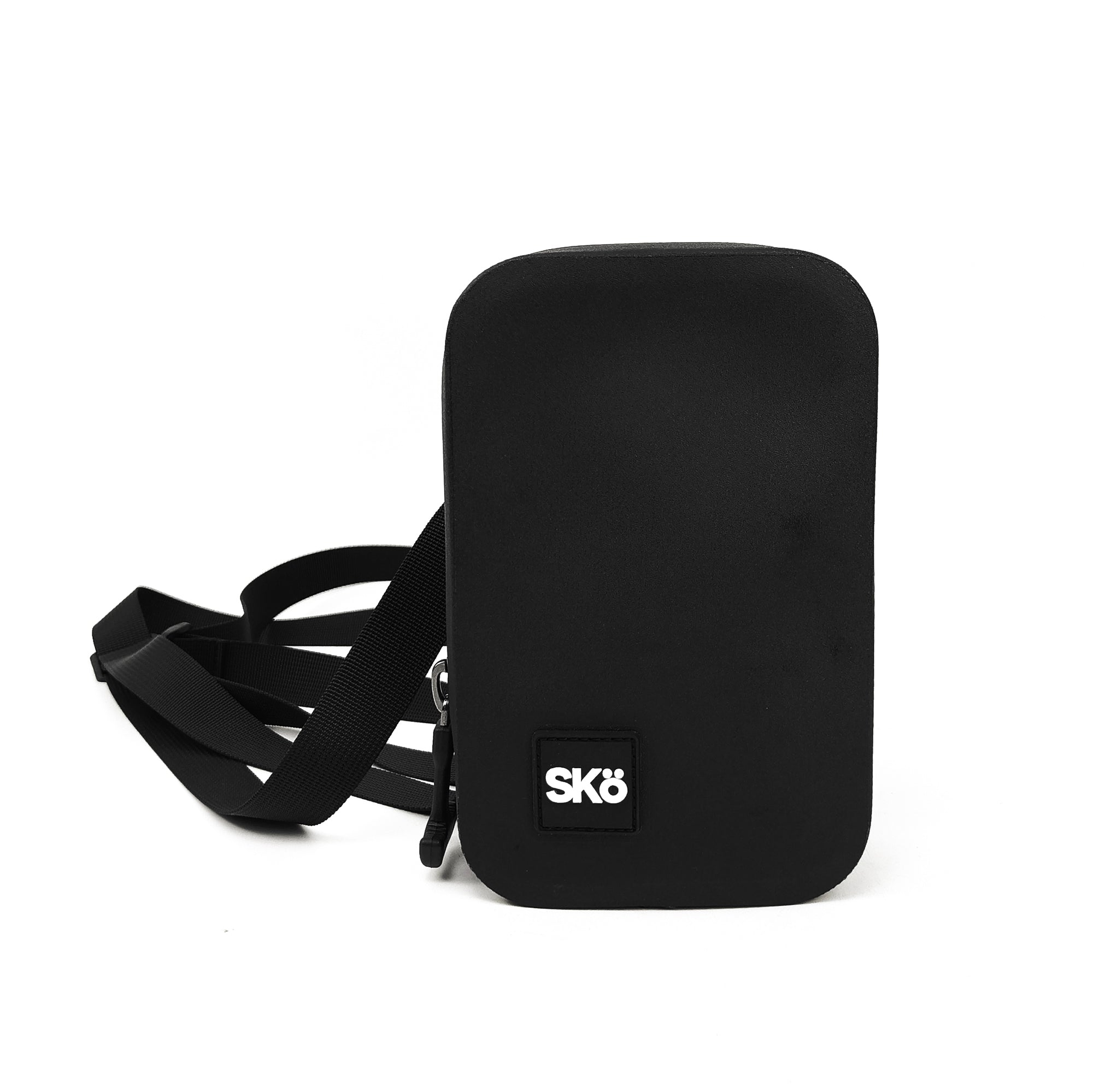
Read the rating. Then look at the whole system.
The SKÖ Waterproof Crossbody combines waterproof material, sealed construction and a waterproof closure into one compact space for the phone, wallet, keys and small essentials you bring around water.
Explore the Waterproof Crossbody →