


Take the Essentials Into the Water.
Submersible storage and practical field guidance for protecting your phone, electronic key, cards and small valuables while swimming at pools, lakes, beaches and other recreational water destinations.
Swimming changes the standard: if valuables enter the water with you, choose protection for complete immersion rather than ordinary splash or rain resistance.
Swimming creates a different storage problem.
A rain shower or wet boat deck exposes gear to water from the outside. Swimming can put the entire bag, closure and contents underwater repeatedly. That makes submersion capability the starting point, not an optional upgrade.
The simplest setup is still to leave unnecessary valuables somewhere genuinely secure. When that is not practical, keep the load minimal and choose between a phone-only pouch and compact submersible storage based on what actually needs to enter the water with you.
Carry less, protect it better.
If a locker, hotel safe, vehicle or trusted person can securely hold an item, leaving it behind is simpler. When valuables need to stay with you, most swimming loads are small.
Phone
Use storage designed for complete immersion. For active underwater photography, a purpose-built underwater phone housing may be more appropriate.
Electronic Key
Electronic key fobs should be isolated from direct water exposure and kept in reliable submersible storage when they must enter the water.
ID & Payment
One ID, one payment card and a small amount of cash create less bulk than bringing a full wallet into the water.
Hotel or Cruise Card
On travel days, a room or cruise key card may be one of the few additional essentials worth carrying with you.

The environment changes. The need for a complete seal does not.
Chlorinated pools, freshwater lakes and saltwater beaches create different care considerations, but all can fully immerse the valuables you bring with you.
More room than a phone pouch. Still compact enough for the essentials.
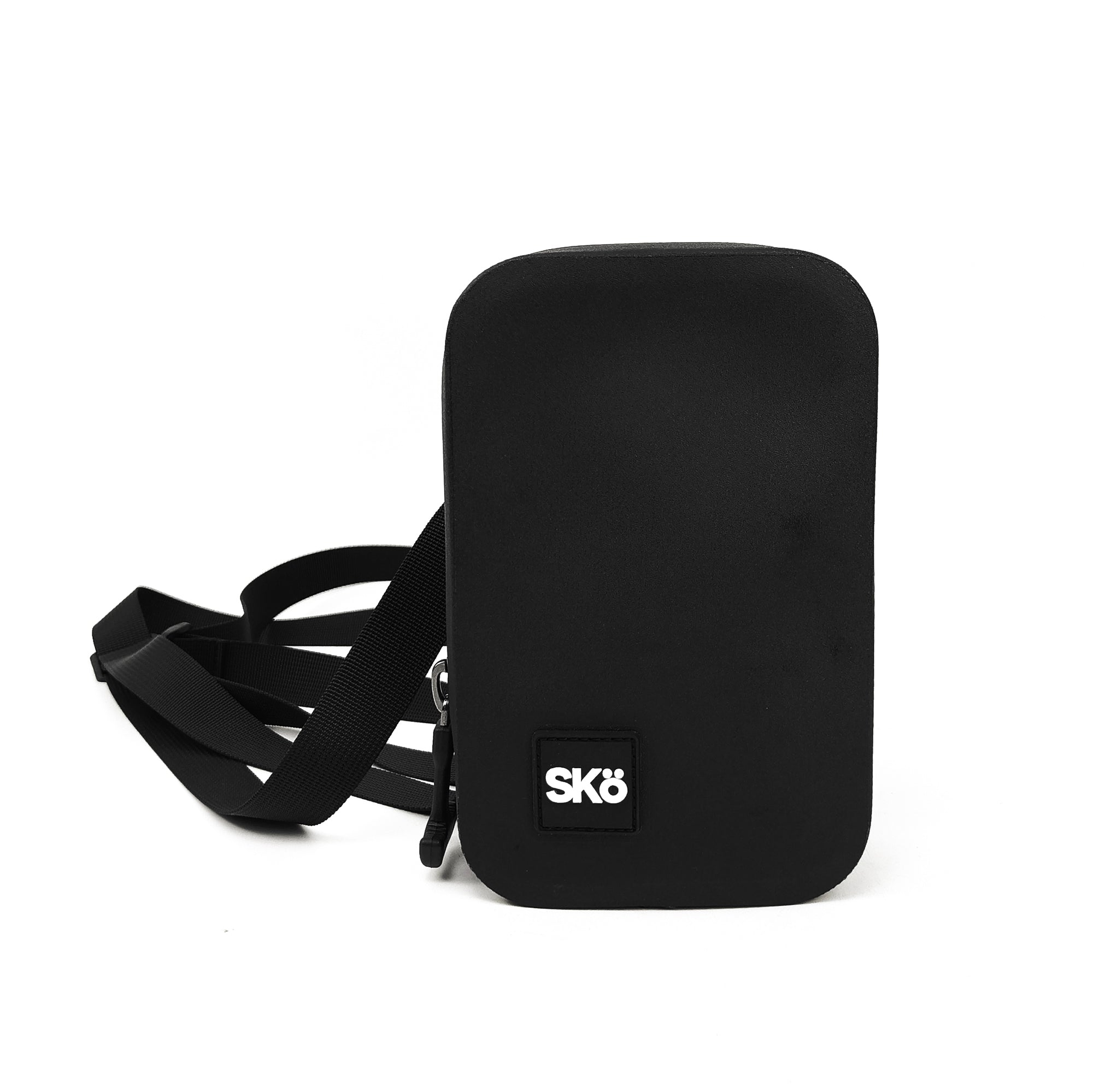
Phone. Key. Cards. One submersible place.
The SKÖ Waterproof Crossbody is designed to provide waterproof and submersible storage when its waterproof zipper is properly closed and sealed. Its approximately 1.14-liter capacity is intended for small valuables rather than towels, clothing or a full beach kit.
SKÖ manufactures this product. SKÖ does not currently publish a deep-diving depth or pressure rating for the Crossbody. Do not represent it as scuba equipment or exceed the product's stated use limitations.
Swimming is where “waterproof” needs a closer look.
A product can resist rain and still be the wrong tool underwater. Check the manufacturer's stated protection and intended use instead of relying on the word waterproof by itself.
Phone pouch, crossbody or shore storage?
Swimming gear works best when the storage is sized around the job instead of asking one bag to carry everything.
Secure fit matters. Any body-worn storage used while swimming should remain close to your body rather than swinging freely. Keep the load small, fully seal the closure and inspect the gear before putting electronics underwater.
Go deeper on swimming with valuables.
These existing SKÖ guides cover submersible crossbodies, beach swimming, phone protection, waterproof closures and situations where your valuables need to stay with you in the water.

Best Waterproof Crossbody Bag for the Beach
See what matters when you want a phone, wallet and keys to stay on your body while you actually swim.
Best Waterproof Crossbody Bags for 2027
Compare compact crossbodies, waist packs and phone pouches, including which options are genuinely rated for submersion.
Best Waterproof Bag for Snorkeling and Beach Trips
Learn why body-worn submersible storage and larger shore storage solve two different jobs on a water day.
Why Won't My Touchscreen Work Through a Waterproof Case?
Understand why wet touchscreens become unreliable and what changes when you try to use a phone around or in the water.
How Do Waterproof Zippers Actually Work?
See the difference between a coated zipper that sheds surface water and a closure engineered for actual submersion.
Best Way to Carry Valuables on a Cruise Excursion
Plan what stays with you when a port day includes swimming, snorkeling, beaches, tender landings or other water exposure.Pool water, saltwater and sand all deserve a quick reset.
The right care depends on the product, but rinsing residue away and letting gear dry before storage is a useful routine after recreational water use.
Rinse
After saltwater or chlorinated water, rinse the exterior, closure, straps and hardware with fresh water.
Inspect
Check the zipper, sealing surfaces and material for obvious damage before the next time valuables go underwater.
Dry
Allow the gear to dry before extended storage and follow the manufacturer's specific closure-care instructions.
Swimming & waterproof gear FAQs
Can I swim with a waterproof bag?
Yes, when the specific bag is designed for complete submersion and can be worn securely. Do not assume a bag intended only for rain or splashes is suitable for swimming.
How do I keep my phone dry while swimming?
Use waterproof storage designed for submersion, fully seal the closure before entering the water and keep the storage securely attached to you.
Where do I put my electronic car key while swimming?
If secure shore storage is not available, keep the electronic key in sealed submersible storage. Avoid exposing an electronic key fob directly to water.
Is water-resistant enough for swimming?
Not for valuables you expect to take underwater. Water-resistant products are generally intended for limited moisture exposure rather than complete immersion.
Crossbody or phone pouch for swimming?
A phone pouch can make sense when the phone is your only major item. A compact waterproof crossbody gives you more room when you also need to carry a key, wallet, ID or cards.
Should I rinse waterproof gear after swimming?
After saltwater or chlorinated water, rinse the exterior and closure with fresh water, then allow the gear to dry before storage.
Can I use a swimming bag for scuba diving?
Do not infer a diving depth or pressure capability from a general waterproof or submersible claim. Deeper underwater use requires product-specific depth and pressure information.
Explore by activity.


Bring the essentials. Leave the worry on shore.
Explore compact waterproof carry for phones, electronic keys, cards and small valuables around pools, lakes, beaches and other recreational water destinations.