


Protect the Gear That Keeps the Shoot Going.
Waterproof carry and practical field guidance for protecting batteries, memory cards, phones and small electronics from rain, waterfall spray, wet ground, sand and unexpected water exposure.
Compact waterproof storage complements a purpose-built padded camera bag. Camera bodies, lenses and other impact-sensitive equipment should be protected according to the equipment manufacturer's guidance and the conditions of the shoot.
The best conditions for a photograph can be some of the worst conditions for electronics.
Rain, waterfalls, ocean spray, wet ground and blowing sand can create remarkable images while exposing expensive equipment to moisture and debris.
The answer is not necessarily putting the entire photography kit inside one waterproof container. A more practical system separates the main padded camera kit from the smaller items that are especially important, easy to lose and frequently accessed.
Protect the accessories that can stop a shoot.
A memory card or spare battery may cost far less than a camera body, but losing or damaging one can still interrupt a shoot or put important files at risk.
Batteries
Keep spare camera batteries dry, clean, protected and easy to reach without repeatedly opening the main camera compartment.
Memory Cards
Use a protective card case and keep used and unused cards organized, secure and protected from water and dirt.
Phone & Personal Gear
Phones, electronic keys, wallets and IDs face the same rain, spray and wet surfaces as the rest of the kit.
Small Electronics
Compact microphones, remotes, battery banks, cables and other moisture-sensitive accessories benefit from protected storage.
Open the main camera bag less often.
In rain, spray or blowing sand, every unnecessary opening can expose more equipment. Keeping batteries, cards, your phone and other small essentials separately accessible can simplify the workflow while the main kit stays enclosed.
Quick-access protection for small photography essentials.
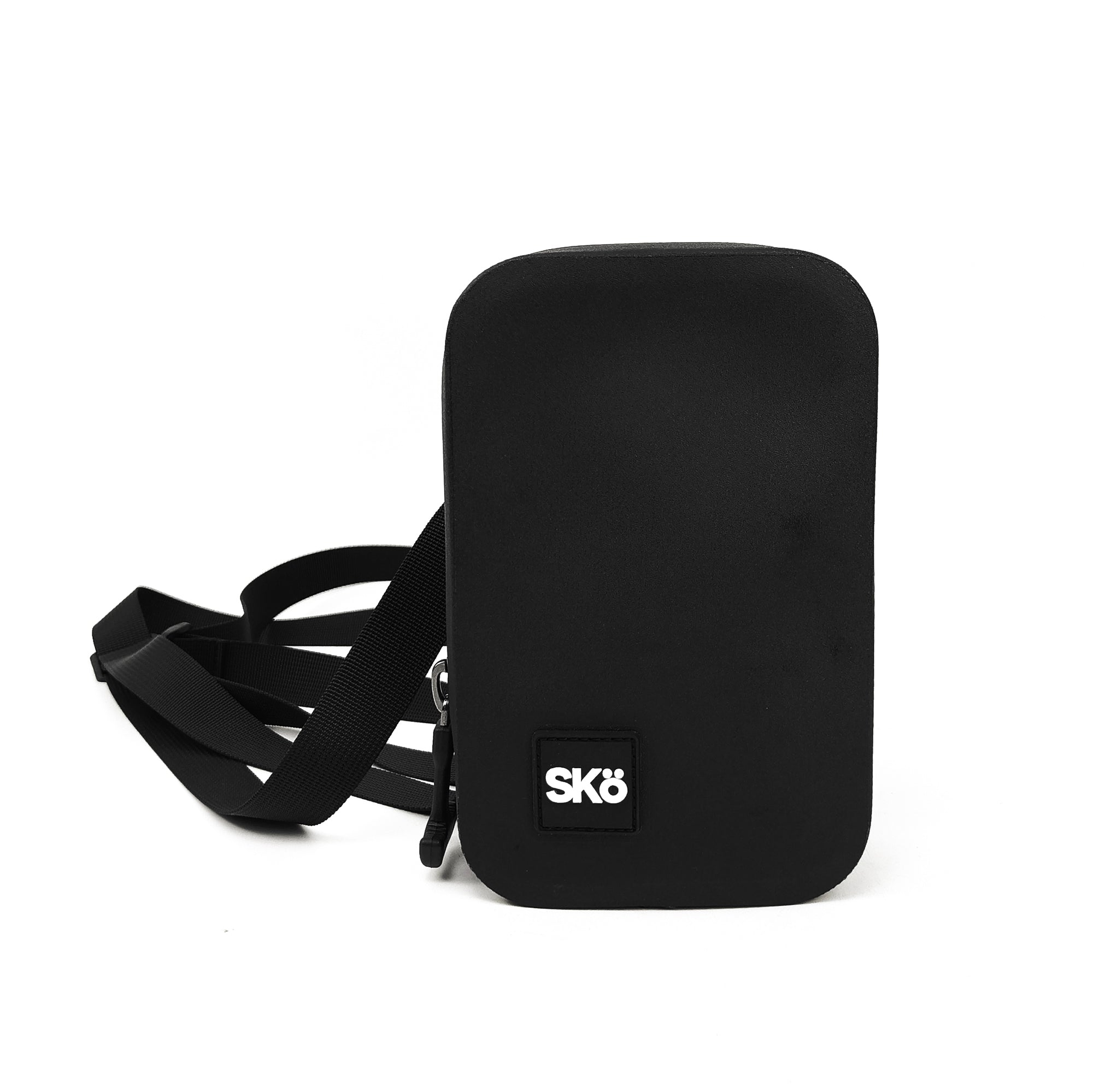
Batteries. Cards. Phone. Protected and within reach.
The SKÖ Waterproof Crossbody is designed for waterproof and submersible protection when its waterproof zipper is properly closed and sealed. For photographers, its approximately 1.14-liter capacity can give frequently used small accessories a protected space while the main camera kit stays in padded storage.
SKÖ manufactures this product. It is not padded camera storage and should not replace a purpose-built case or backpack for camera bodies, lenses, drones or other impact-sensitive equipment.
Weather-sealed does not automatically mean waterproof.
Camera and lens weather sealing varies by manufacturer and model. Follow the guidance for your specific equipment rather than assuming it can handle heavy rain, spray or immersion.
Rain, waterfalls and the ocean do not create the same risk.
The active camera may need purpose-built rain protection while unused equipment stays enclosed. Small accessories can remain separately protected and accessible throughout the shoot.
The main camera still needs the right system. Waterproof accessory storage is for small electronics and valuables. Use appropriate padded and weather protection for camera bodies, lenses and other fragile equipment.
Go deeper on waterproof storage.
Explore waterproof bag choices, closure systems and moisture issues that matter when cameras and electronics go into wet outdoor environments.

Best Waterproof Crossbody Bags for 2027
Compare compact waterproof options for batteries, cards, phones, keys and other small essentials.
Best Waterproof Sling Bags for 2027
Compare larger waterproof sling options when your accessory load outgrows a compact crossbody.
Best Waterproof Backpacks for 2027
Compare higher-capacity waterproof storage for larger outdoor gear loads and wet environments.
How Do Waterproof Zippers Actually Work?
Learn why closure design matters when small electronics face serious water exposure.
Why Is There Condensation Inside My Dry Bag?
Understand why moisture can appear inside sealed storage even when outside water did not leak through.
Waterproof Gear for Beach Days
Explore protection strategies for the combination of water, salt and sand found around the coast.Do not seal the conditions in with the gear.
Moisture, salt, sand and dirt deserve attention before equipment goes back into long-term storage. Follow the camera and lens manufacturer's cleaning instructions for the equipment itself.
Inspect
Check bags, accessories and equipment for visible moisture, sand, salt residue or debris after the shoot.
Clean
Clear waterproof zipper tracks and follow manufacturer guidance when cleaning cameras, lenses and electronic accessories.
Dry
Allow damp equipment and storage to dry appropriately before closing everything up for an extended period.
Outdoor photography & waterproof gear FAQs
How do I keep camera gear dry in the rain?
Protect the camera you are actively using with appropriate rain protection and keep backup cameras, lenses, batteries, memory cards and electronics enclosed when they are not needed.
Are weather-sealed cameras waterproof?
Not necessarily. Weather sealing can improve resistance to environmental exposure, but the exact protection varies by model and should not automatically be treated as waterproof or submersible.
Do photographers need a waterproof camera bag?
It depends on the environment and equipment. A padded or weather-resistant camera bag may handle the main kit, while dedicated waterproof storage can add protection for especially sensitive small electronics and accessories.
How should I protect memory cards outdoors?
Keep them organized in a protective card case and store that case somewhere dry and secure. Separating used cards from empty cards can also help prevent mistakes in the field.
How should I protect batteries in wet weather?
Keep spare batteries dry, enclosed and protected from physical damage. Separate quick-access storage can reduce how often you need to open the main camera bag.
How do I protect camera gear at the beach?
Keep unused equipment enclosed, avoid setting gear directly in sand, minimize unnecessary openings in blowing conditions and follow manufacturer cleaning guidance after saltwater exposure.
Is a waterproof crossbody useful for photographers?
It can be useful for small quick-access items such as batteries, memory-card cases, phones, electronic keys and compact accessories. It complements rather than replaces a padded camera bag.
Explore by environment.


Protect the small essentials that keep the shoot moving.
Keep batteries, memory cards, your phone, electronic keys and compact accessories protected and accessible while your main camera kit stays in purpose-built padded storage.