


Waterproof vs. Water-Resistant: What's the Actual Difference?
Waterproof, water-resistant, water-repellent, IPX7, IP68 and 10,000 mm all describe different things. This guide explains what the labels actually tell you, what they do not tell you, and how to choose protection you can trust around water.
Waterproof and water-resistant are not simply two levels of the same label. Depending on the product, manufacturers may be talking about an enclosure rating, a fabric test, a surface treatment, a complete sealed construction, or simply a descriptive marketing term.
That is why two products can both say "waterproof" while being designed for completely different environments. A rain jacket may be built to handle hours of rainfall. A phone case may be tested for temporary immersion. A dry bag may use waterproof fabric but still depend on a carefully rolled closure. None of those products should automatically be assumed to meet the same test.
What is the difference between waterproof and water-resistant?
Water-resistant generally means a product is designed to reduce water penetration during limited exposure such as rain or splashes. Waterproof generally describes a product or material intended to prevent water penetration under more demanding conditions. Neither word alone tells you the exact test that was performed. For useful comparisons, look for the actual standard, test method, rating and exposure conditions behind the claim.
There is no single universal "waterproof number" for every category of gear. IP ratings describe ingress protection for enclosures. Textile standards measure fabric resistance to water pressure. Rainwear adds membranes, coatings and seam construction. Bags introduce zippers, roll-tops and welded seams. The finished product matters as much as the material.
Three words that sound similar can describe very different things.
Before looking at numbers, it helps to separate three terms that are often blended together in product descriptions.
Water-repellent
Usually describes a surface that encourages water to bead and roll away instead of immediately soaking into the outer material.
Water-resistant
Generally means the product can resist some water exposure, but the words alone do not tell you the pressure, duration or type of exposure it can withstand.
Waterproof
Usually implies a stronger barrier against water penetration, but you still need the product's actual standard, test or published conditions to know what that promise means.
This is the first place many buying guides go wrong. They treat these words as though every manufacturer is using the same definition. Instead, the useful question is: what exactly was tested?
"Waterproof" can be measured in completely different ways.
Understanding which testing language applies to the product is more useful than trying to turn every waterproof claim into one universal scale.
Marketing terminology
Words such as water-resistant, water-repellent and waterproof describe intended performance, but without a test standard they do not tell you exactly what exposure was evaluated.
Example: "Water-resistant backpack"
IP ratings
IEC 60529 uses an IP code to classify protection provided by enclosures against solid objects and water ingress.
Example: IP67, IPX7 or IP68
Hydrostatic pressure
Textile methods such as ISO 811 and AATCC TM127 evaluate how much water pressure a fabric can resist before water penetrates.
Example: hydrostatic-head or water-column testing
What does IP68 actually mean?
An IP code contains two characteristic numerals. The first deals with solid-object ingress. The second deals with water ingress. If a category is shown as X, that portion of the code is not being declared by that rating.
In the IEC IP system, 6 represents the highest listed level of protection against dust ingress: dust-tight.
The 8 category covers continuous immersion under specified test conditions. Check the manufacturer's documentation for the actual conditions applying to the product.
IPX4, IPX5, IPX6, IPX7 and IPX8 are different kinds of exposure.
The second numeral of the IP code describes water-ingress protection. A higher number does not simply mean "more waterproof" in every imaginable situation. Different numbers represent different test types. For a focused breakdown of those water tests, read our IPX waterproof ratings guide.
IPX8 does not automatically mean "also IPX6."
In the IEC system, the water tests progress cumulatively through numeral 6, but immersion categories 7 and 8 are treated separately. An enclosure rated for immersion does not automatically have to satisfy the water-jet tests unless the product is also coded for them. That is why you may sometimes see dual water ratings.
This distinction matters in the real world. Submersion and a concentrated water jet stress seals in different ways. A rating should be read as the test it represents, not as a video-game level where every higher number automatically includes every lower exposure.
What about waterproof jackets, tents and bag fabric?
IP ratings are only one part of the waterproofing world. Textile laboratories use other methods to evaluate how fabric handles water.
ISO 811 and AATCC TM127 are examples of hydrostatic-pressure methods. Instead of immersing an enclosure and assigning an IP numeral, these methods evaluate a fabric's resistance to water penetration while water pressure is applied.
Three layers of performance people often confuse.
DWR helps the surface bead water instead of immediately wetting out. It is not necessarily the layer that makes the product waterproof.
A membrane, coating or waterproof material provides the primary barrier to water penetration through the fabric.
Seams, needle holes, zippers and openings can still allow water through even when the base fabric itself tests well.
This also explains a common rain-jacket experience: the exterior fabric can become saturated and feel wet or clammy even though the waterproof membrane underneath has not failed. Surface repellency and waterproofness are related, but they are not the same mechanism.
A bag is only as waterproof as the system built around its weakest opening.
Consider a bag made from completely waterproof TPU-coated fabric. If its seams are conventionally stitched and unsealed, or its zipper allows water through, the finished bag can still leak. For the finished-bag sealing system, see how waterproof bags actually keep water out.
Four things have to work together.
The body fabric has to resist water penetrating through the material itself.
Welding, taping or another sealing method may be needed to prevent seam construction from becoming the leak path.
Roll-tops, waterproof zippers and other closures have very different limitations and operating requirements.
Even capable waterproof gear can fail if a roll-top is not rolled correctly or a sealing zipper is not fully closed.
This is also why the words "dry bag" are not a universal submersion rating. Some dry bags are designed mainly for rain, splash and brief water exposure. Others are built for substantially more. The specific product's construction and published capability should decide what you trust underwater. For category terminology, read dry bags versus waterproof bags.
If you want to understand one of the most important closure differences in more depth, see our guide to how waterproof zippers actually work .
Match the protection to the water you will actually encounter.
Rain, moving spray and full immersion are separate environments. Gear that is excellent in one may not be intended for another.

Surface exposure
Rain protection is largely about preventing repeated water contact from working through the outer construction.

Moving water
Boating and paddling can subject gear to repeated spray, wet surfaces and direct water contact.

Full water exposure
Once gear may actually go underwater, splash resistance and immersion protection become completely different promises.
Start with the failure you are trying to prevent.
Buying the highest-looking waterproof number is not always the useful approach. Instead, think about the most severe realistic exposure your gear will face.
The activity determines the protection you need. A product that is excellent for a rainy commute may be completely wrong for a swim, while a fully sealed product may be unnecessary for someone who only needs weather protection.
Test the gear, not your electronics.
A simple check can help reveal obvious sealing problems before your phone, passport or electronic car key becomes the test object.
Read the manufacturer's instructions first
Confirm whether the product is intended only for rain and splashes or whether immersion is actually included in its published capability.
Use dry paper, not a device
Put dry paper towels or tissue inside so even small amounts of moisture are easy to see without risking anything valuable.
Close the product exactly as instructed
Fully seat waterproof zippers and make the required number of roll-top folds. A test with an incorrectly closed bag does not tell you what the product itself can do.
Do not exceed the product's published exposure
If the product is only intended for splashes, test it with splashes. If the manufacturer allows immersion, test within those stated conditions rather than inventing a more severe test.
Inspect the likely failure points
Check the paper nearest the zipper, roll-top, seam intersections and attachment areas first. Small damp spots tell you more than whether the center of the bag stayed dry.
The shortcuts that lead to bad gear decisions.
"If water beads, the material must be waterproof."
Water beading primarily tells you about surface repellency. A DWR-treated face fabric can bead beautifully while the actual waterproof barrier comes from a separate membrane or coating.
"IPX8 automatically beats IPX6 at everything."
They represent different exposure tests. Immersion ratings 7 and 8 do not automatically establish compliance with the water-jet categories 5 and 6 unless the product is also rated for them.
"Dry bag means submersible."
Dry bag is a product category, not a universal performance standard. Closure style, seams, construction and the manufacturer's stated capability still matter.
"Waterproof means waterproof forever."
Coatings, seam treatments, DWR finishes and sealing surfaces can wear or become contaminated. Maintenance and product condition remain part of waterproof performance.
Waterproof vs. water-resistant FAQ
Is waterproof always better than water-resistant?
Not necessarily. The best choice depends on the exposure. For light rain, a water-resistant product may be lighter, easier to use and completely adequate. If accidental or intentional immersion is realistic, stronger sealing performance becomes much more important.
Does waterproof mean the product has an IP rating?
No. IP ratings are one standardized system for evaluating ingress protection of enclosures. Other product categories, particularly textiles, use different waterproofing tests and standards.
What does the X mean in IPX7 or IPX8?
The X means that the solid-ingress numeral is not being stated in that code. The water numeral can still be stated independently.
Is IPX8 always waterproof to the same depth?
No. IPX8 identifies the continuous-immersion category, but the applicable test conditions need to be understood from the manufacturer's or product's published information. Do not assume every IPX8 product has the same depth or duration capability.
Is DWR the same thing as a waterproof membrane?
No. DWR is a surface treatment that helps the face material shed water. In products such as waterproof rainwear, a separate membrane or other waterproof layer can continue to provide the primary barrier even when the exterior face begins to wet out.
Is TPU automatically more waterproof than PVC?
No. Both can be used in waterproof constructions. Waterproof performance depends on the material formulation, thickness, seams, closures and finished-product design, not simply whether the base material is labeled TPU or PVC.
Can every dry bag be submerged?
No. Some dry bags are primarily designed to protect contents from rain, splash and brief water exposure. Others are designed for immersion. Always follow the published capability of the specific bag rather than assuming the category name guarantees submersion.
Primary References
- International Electrotechnical Commission - Ingress Protection (IP) Ratings
- IEC 60529 - Degrees of Protection Provided by Enclosures (IP Code)
- ISO 811:2018 - Textiles, Resistance to Water Penetration, Hydrostatic Pressure Test
- AATCC TM127 - Water Resistance: Hydrostatic Pressure
- GORE-TEX - Durable Water Repellent (DWR)
- NEMA - Enclosure Types and IEC IP Rating Comparison
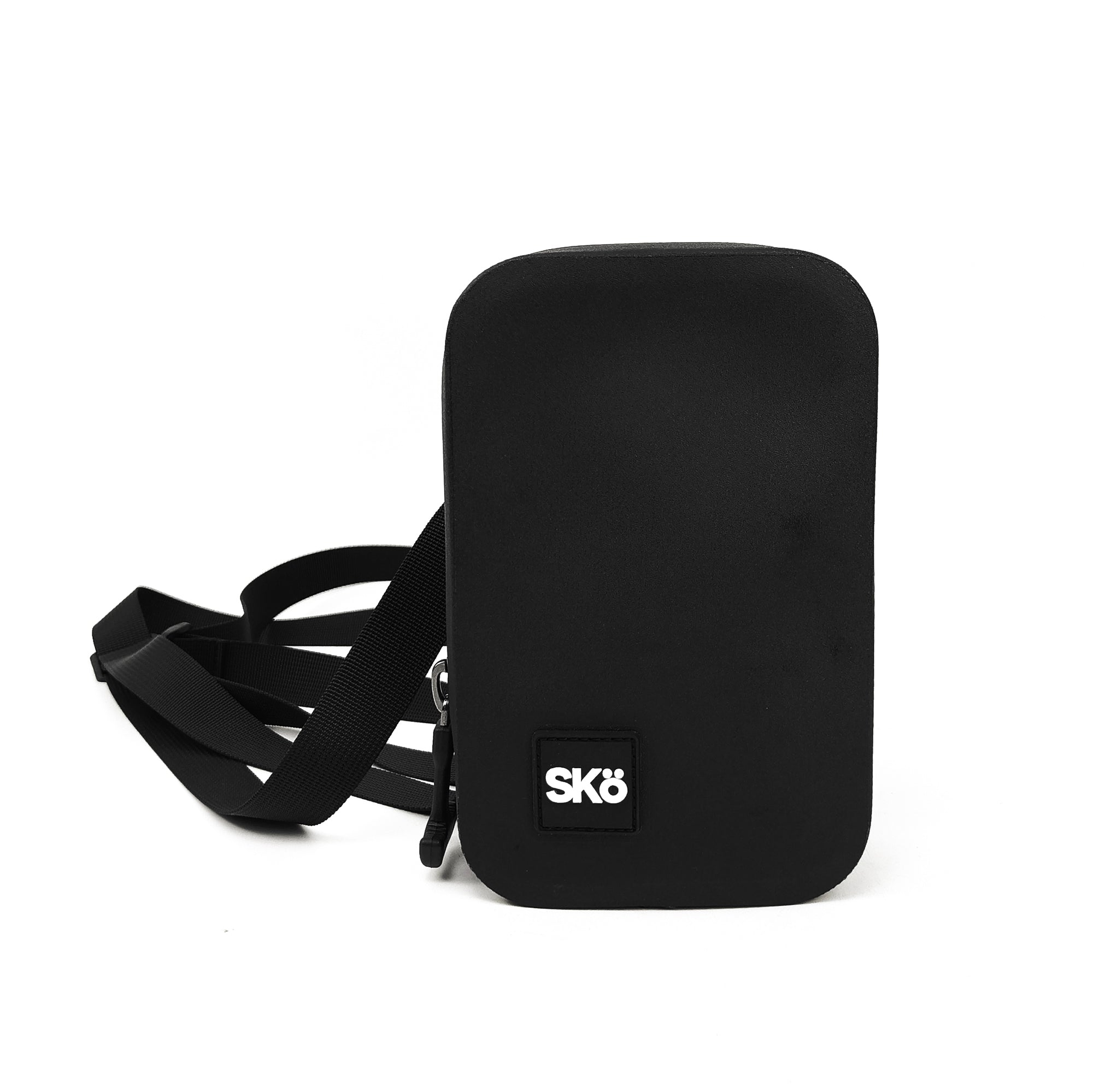
Built for more than a rain shower.
The SKÖ Waterproof Crossbody combines waterproof material, sealed construction and a waterproof closure into one compact compartment for your phone, wallet, keys and other small essentials around water.
Explore more SKÖ guides
Understand waterproof ratings, materials and closures before choosing the right protection for your gear.
 Understanding IPX Waterproof Ratings
 How Waterproof Bags Actually Keep Water Out
 Dry Bag vs. Waterproof Bag: What’s the Difference?
 Roll-Top vs. Waterproof Zipper: Which Dry Bag Closure Wins?