


TPU vs. PVC Waterproof Bags: Which One Actually Holds Up?
TPU vs. PVC Waterproof Bags
Both materials can make a genuinely waterproof bag. The real differences show up in abrasion, weight, flexibility, aging, formulation and cost. Here is what actually matters before you choose one.
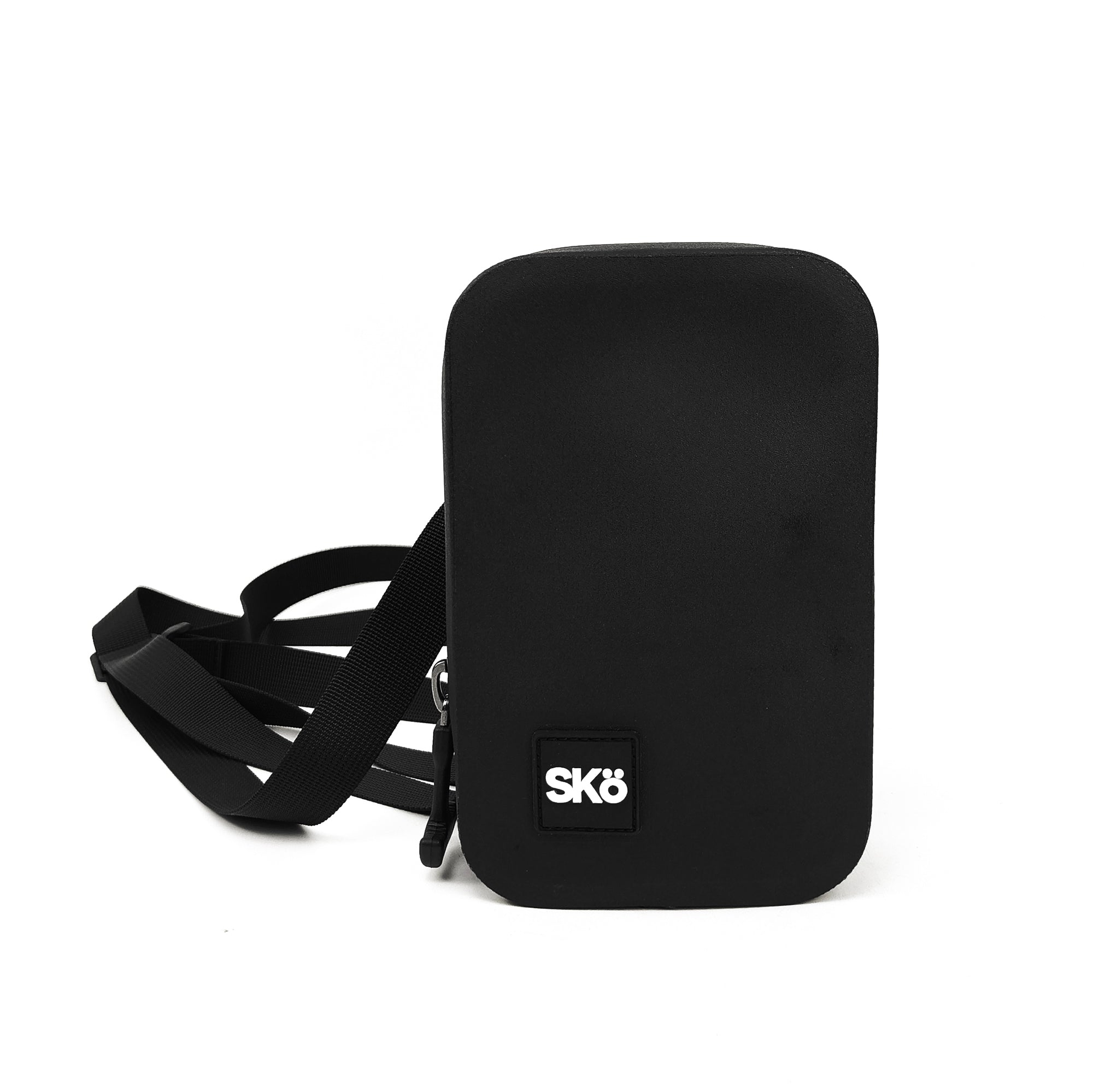
TPU and PVC can both be used to make waterproof gear. The question is not whether one material can keep water out and the other cannot. Both can. The useful question is what happens when the bag is repeatedly folded, carried, dragged, exposed to weather and used for years.
For frequently carried waterproof bags, polyurethane-based constructions often have real advantages. TPU is known for strong abrasion resistance, elasticity and mechanical performance, and major dry-bag manufacturers sell polyurethane-coated models as lighter, more abrasion-resistant premium alternatives to vinyl.
But the internet version of this comparison often goes too far. TPU is not one exact material, and neither is flexible PVC. Formulation matters. So do coating thickness, base textile, seam construction and closure design.
Is TPU or PVC better for a waterproof bag?
For a bag you will carry frequently, TPU or another well-designed polyurethane coating is usually the more attractive premium option because of its strong abrasion resistance, flexibility and potential for lighter construction. PVC remains useful when price matters most and can still make a tough, genuinely waterproof bag. Neither material name alone tells you how waterproof or durable the finished bag will be.
SKÖ uses TPU in its waterproof crossbody, so we have a commercial interest in this subject. For that reason, this comparison keeps PVC's advantages in the article, separates manufacturer-specific evidence from general material properties, and avoids awarding an advantage where the available evidence depends heavily on formulation or construction.
Which material fits the way you will actually use the bag?
The strongest argument for TPU is not that PVC cannot be waterproof. It can. TPU becomes more compelling when the bag needs to be carried, flexed and abraded over and over.
The bag is part of your everyday gear.
- You will wear or carry it frequently.
- Abrasion against rock, sand, docks or other gear matters.
- You value a high-performance flexible coating.
- Weight and packability matter.
- You are willing to pay more for the construction.
Cost matters more than saving weight.
- You want a lower-cost waterproof bag.
- The bag mostly rides in a boat, truck or gear bin.
- It is used occasionally rather than every day.
- Extra weight is not a major problem.
- You have found a well-built vinyl bag from a trusted maker.
SealLine provides a useful real-world example. In its current dry bag line, the company says its polyurethane-coated models provide better abrasion and puncture resistance and weigh roughly 8–14 ounces less than its comparable vinyl-coated bags. SealLine still describes vinyl as durable and budget-friendly.
The waterproof coating sits on top of a fabric structure.
A “TPU bag” or “PVC bag” is often really a textile composite: woven reinforcement provides structure while a polymer coating provides the waterproof surface.
TPU is inherently elastomeric. Its flexibility and elasticity come from the polymer architecture itself rather than requiring the same type of external plasticizer system typically used to turn rigid PVC into flexible vinyl.
Important: TPU formulations can still contain stabilizers, colorants and other additives. “Plasticizer-free” should not be interpreted as “contains no additives.”
Unplasticized PVC is comparatively rigid. Flexible PVC formulations normally use plasticizers to lower stiffness and create the soft vinyl behavior needed for products such as flexible coated fabrics.
Plasticizer chemistry varies widely. Modern PVC formulations may use different plasticizer systems specifically designed to reduce migration and improve long-term properties.
Why does plasticizer migration matter?
Plasticizers in flexible PVC are additives rather than permanent parts of the PVC polymer backbone. Depending on the formulation and environment, plasticizers can migrate or be extracted over time. Material research has documented that this can change the mechanical properties of flexible PVC.
That does not mean every PVC dry bag will quickly harden or crack. Plasticizer type, compatibility, concentration, temperature and formulation all affect migration. It simply explains why long-term flexibility in PVC is partly a formulation problem rather than a property of pure PVC alone.
TPU vs. PVC waterproof bags, side by side.
This table separates properties that are reasonably general from those that depend strongly on the exact grade or finished bag.
| Factor | TPU / polyurethane construction | Flexible PVC / vinyl construction |
|---|---|---|
| Can it be waterproof? | Yes. TPU films and coated fabrics are used in waterproof and inflatable applications. Both can work |
Yes. Flexible PVC has a long history in waterproof coated fabrics and inflatable products. Both can work |
| Abrasion | Strong abrasion and wear resistance is a defining performance characteristic of many TPU grades. SealLine also reports better abrasion resistance in its polyurethane-coated bags. Typical advantage |
Vinyl dry bags can still be very tough, and SealLine describes its vinyl coating as resistant to punctures, tears and mildew. |
| Weight | TPU chemistry alone does not guarantee a lighter finished bag, but polyurethane coatings can enable lighter constructions. SealLine reports an 8–14 oz advantage in its own comparable lines. Often lighter |
Vinyl constructions are commonly heavier in comparable dry-bag applications. |
| Flexibility mechanism | TPU is elastomeric by polymer design and does not require conventional external PVC plasticization to become flexible. Structural advantage |
Flexible PVC typically relies on added plasticizer to produce its soft, flexible behavior. |
| Cold weather | Many TPU grades are engineered for excellent low-temperature flexibility, including grades rated far below freezing. Grade dependent |
PVC performance depends heavily on formulation. Some dry bag brands describe their vinyl as cold-flexible, while other manufacturers report stiffness in cold conditions. Formulation matters |
| Hydrolysis | Not all TPU behaves the same. Polyether TPU is commonly selected when high hydrolysis resistance is important, while flexible polyester TPU can be more vulnerable to prolonged heat and humidity. | Hydrolysis is not the primary TPU-style distinction for PVC. Long-term PVC performance depends on its own stabilizer and plasticizer system. |
| UV / sunlight | Depends on chemistry. Aromatic TPU can yellow under UV. Aliphatic TPU is used when non-yellowing and long-term color stability are important. | PVC UV performance also depends on formulation and stabilizers. There is no responsible universal winner from the material name alone. |
| Price | Frequently positioned as the premium construction. | Commonly the lower-cost choice. Cost advantage |
| Finished waterproofness | Depends on coating integrity, seams, closure and finished product design. No automatic winner |
Depends on coating integrity, seams, closure and finished product design. No automatic winner |
Do not compare two polymers while ignoring the fabric underneath them.
A heavy-duty PVC coating over a strong high-denier base fabric can easily outlast a very thin TPU laminate over a weak base textile. The polymer name matters, but it is only one variable in the finished composite.
“TPU” does not describe one exact material.
TPU is a broad material family. BASF, Covestro and other polymer manufacturers sell many grades engineered around different environments and performance requirements.
Four words can dramatically change the performance story.
Frequently selected when hydrolysis resistance, microorganism resistance and wet-environment durability are priorities.
Can provide excellent mechanical and wear performance, but flexible polyester TPU can be more susceptible to hydrolysis in prolonged hot, humid conditions.
Very common and capable, but aromatic TPU can yellow from UV exposure even when its mechanical performance remains acceptable.
Used when non-yellowing appearance and stronger long-term color stability under UV are important.
So a blanket claim like “TPU is UV-proof” or “TPU can never hydrolyze” is inaccurate. The specific TPU chemistry has to match the environment.
PVC formulation varies too.
Flexible PVC is also not one recipe. Manufacturers can change the plasticizer system, stabilizers, coating thickness, reinforcement and other additives to target flexibility, durability, weather resistance and cost.
This is why a high-quality PVC bag can outperform a poorly designed TPU bag even when TPU has attractive material-level properties.
Four things can matter as much as the coating itself.
A premium polymer cannot rescue poor bag construction. If keeping valuables dry is the objective, evaluate the entire waterproof system.
Look beyond the letters TPU or PVC.
Denier, weave and reinforcement strongly influence tear, puncture and structural performance.
Polymer chemistry, thickness and adhesion determine how the waterproof layer behaves.
Welded, taped or otherwise sealed seams prevent stitching and panel joints from becoming leak paths.
Roll-tops and waterproof zippers create completely different sealing systems and usage requirements.
If you want to understand the closure side of that system, see our guide to how waterproof zippers work .
Match the material to the job.
Why SKÖ uses TPU for compact waterproof carry.
Our crossbody is meant to stay on your body around water rather than sit in the bottom of a boat. For that use case, a durable, flexible TPU construction makes sense because the bag is constantly being carried, flexed and exposed to abrasion.
That does not prove that every TPU bag is superior to every PVC bag. It explains why we chose the material for this particular product.
TPU vs. PVC waterproof bag FAQ
Is TPU more waterproof than PVC?
Not automatically. Both materials can form waterproof coatings and films. The waterproofness of a finished bag depends on the coating, seams, closure, construction and published performance of the complete product.
Is TPU more durable than PVC?
TPU is well known for strong abrasion and wear resistance, and SealLine reports better abrasion resistance from the polyurethane coatings in its own dry bag line. But finished durability also depends on coating thickness, base fabric, seam construction and the specific formulation.
Are TPU dry bags lighter than PVC dry bags?
They often can be, but the polymer name alone does not set the finished weight. As one real-world example, SealLine reports that its PVC-free polyurethane-coated bags are approximately 8–14 ounces lighter than its vinyl-coated alternatives.
Does TPU contain plasticizer?
TPU does not require the conventional external plasticization used to turn rigid PVC into flexible vinyl. Its elasticity comes from the polymer structure itself. However, commercial TPU formulations can still contain stabilizers, pigments and other performance additives.
Does PVC become brittle with age?
Flexible PVC can change as plasticizers migrate or are extracted, and loss of plasticizer can contribute to stiffening. How quickly that happens depends heavily on the plasticizer chemistry, formulation, temperature and environment, so it should not be treated as a fixed lifespan for every PVC bag.
Is TPU always better in cold weather?
No universal statement is safe. Many TPU grades offer excellent low-temperature flexibility, but PVC formulations vary considerably as well. Some manufacturers specifically formulate vinyl-coated bags to remain flexible in cold conditions.
Is TPU UV resistant?
It depends on the TPU chemistry. Aromatic TPU can yellow under UV exposure. Aliphatic TPU is used when non-yellowing appearance and long-term color stability are priorities. UV stabilizers can also change performance.
Is TPU more environmentally friendly than PVC?
That question is more complicated than a simple material label. Some manufacturers market PVC-free polyurethane constructions as environmentally preferable, but a complete environmental comparison should consider formulation, manufacturing, durability, product lifespan and end-of-life handling. We would not claim that every TPU product is automatically environmentally superior to every PVC product.
Primary References
- BASF — Elastollan Thermoplastic Polyurethane
- BASF — TPU Films, Coatings, Fibers and Nonwovens
- Covestro — TPU Optical Properties and UV Yellowing
- Covestro — TPU Chemical and Hydrolysis Properties
- Cascade Designs / SealLine — Polyurethane vs. Vinyl-Coated Dry Bags
- Materials — Review of PVC Plasticizers and Migration
Material matters. The complete construction matters more.
The SKÖ Waterproof Crossbody combines 1680D TPU with a waterproof closure and sealed waterproof construction in a compact bag built for the phone, wallet, keys and small essentials you carry around water.
Explore the Waterproof Crossbody →