


Why Does Saltwater Corrode Zippers? (And How to Fix One)
Why Does Saltwater Corrode Zippers? (And How to Fix One)
Last updated: September 9, 2026

Salt doesn't need a swim to start working on a zipper — salt air does most of the damage before you even notice.
Saltwater corrodes zippers because salt triggers galvanic corrosion in the metal teeth and slider, while the residue that's left behind as it dries crystallizes into an abrasive buildup that jams the mechanism. Both processes can start within about 90 minutes of exposure, and neither one reverses itself.
Here's the short version of what's happening: most zipper teeth are brass, nickel-plated brass, or aluminum, and even alloys marketed as "corrosion-resistant" have trace impurities that create tiny electrochemical reactions when saltwater sits on them. That's the galvanic part. Separately, as the water evaporates, the salt it was carrying doesn't just disappear — it crystallizes on the teeth and inside the slider's coil mechanism, where it acts almost like fine sandpaper and grinds at the internal rails every time you force the pull.
The two problems compound each other. A zipper that's already pitted from corrosion gives salt crystals more surface area to grab onto, and salt crystals scratching the metal expose fresh surface for more corrosion. That's why a zipper that was fine in June can be seizing up by August if it never gets rinsed.
Why does saltwater corrode zippers?
Saltwater corrodes zipper metal through galvanic corrosion — an electrochemical reaction between the metal alloy and dissolved salt — and through salt crystal buildup once the water evaporates. Both start within roughly 90 minutes of exposure. Salt residue is also hygroscopic, meaning it pulls in ambient moisture for days afterward, so a zipper can keep corroding long after it looks dry.
The part that catches people off guard is that you don't need to submerge anything for this to happen. Salt spray off a boat, sea breeze at a campsite, or sweat mixed with sunscreen on a hot beach day all leave the same residue behind. A zipper doesn't have to go underwater — it just has to sit near saltwater long enough to pick up a film of it.
How to actually fix a zipper that's already stuck
If the damage is already done, don't force it — pulling harder on a jammed slider usually just bends the pull tab or strips the coil teeth, and at that point the zipper is done for good. Work through these steps instead.
Use a dry, soft-bristled brush (an old toothbrush works) to knock loose crystals and grit off the teeth and slider before adding any liquid. Skipping this just turns dry grit into wet paste.
Run warm water directly over the zipper track while working the slider gently back and forth, a little at a time — not a hard yank. This alone resolves a lot of minor buildup.
Mix roughly one part white vinegar to three parts water and let the zipper soak for 5–10 minutes. The mild acidity dissolves crystallized salt that plain water can't fully lift.
Air dry fully — don't put anything with a metal zipper into a dryer, which can warp the slider or degrade any waterproof coating nearby. A zipper packed away damp just resumes corroding in the bag.
If none of that frees the slider, the zipper itself may be pitted enough that it needs replacing rather than cleaning. REI's zipper repair guide notes that swapping the slider resolves the large majority of zipper failures — it's often cheaper and easier than most people assume, and doesn't require replacing the whole bag or jacket.
For anything that lives around saltwater regularly — a boat bag, a kayak dry bag, a beach cooler — the fix that actually holds up is prevention, not repair. Sailrite's marine zipper maintenance guidance, aimed at boat owners who deal with this constantly, is blunt about it: rinse zippers in fresh water after every saltwater exposure, and do it before the gear gets packed away, not after you notice a problem.
What this looks like in practice
On a kayak trip, the zipper that fails first usually isn't on the dry bag lashed to the deck — it's on the smaller pouch someone keeps clipped to a PFD or thrown in the cockpit, getting hit with spray all day and then tossed in a gear bag still damp. That's the exact combination — repeated exposure, no rinse, storage while wet — that turns a fine zipper into a stuck one by the end of a season.
Can zipper corrosion be reversed once it starts?
Not fully. Vinegar and rinsing can dissolve salt crystal buildup and restore movement, but galvanic corrosion that has already pitted the metal doesn't repair itself. At that point you're managing wear, not undoing it — and a badly pitted zipper is a candidate for slider replacement rather than continued cleaning.
Does WD-40 work on a saltwater-stuck zipper?
It can free a slider short-term, but it's not a long-term fix. WD-40 and similar oil-based lubricants attract dust, sand, and grit, which builds back up on the teeth and causes the same jamming a few uses later. Rinse it off with fresh water once the zipper is moving again rather than leaving it on.
Sources
If you're tired of babysitting zipper hardware every time it comes near salt air, that maintenance loop is one reason some waterproof gear skips a traditional zipper track altogether — SKÖ's crossbody is built to be fully submersible and abrasion-resistant end to end, so a day of salt spray doesn't turn into a repair project.
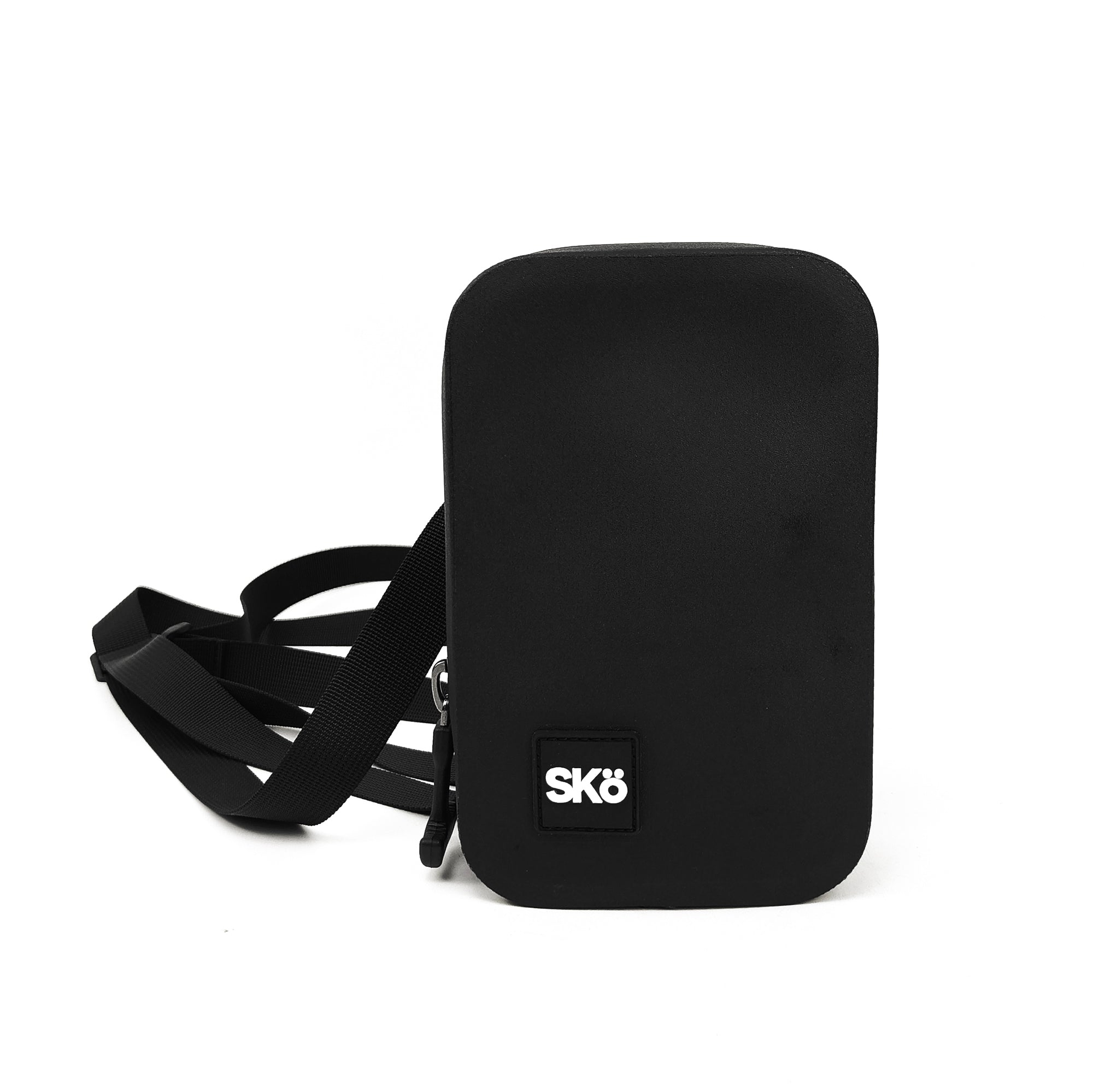
$80 · Limited Lifetime Warranty