
Why Does My Kayak Feel Tippy?
A kayak that feels nervous under you is not automatically unstable. The feeling usually comes from hull design, seat height, body tension or the way weight is loaded into the boat.
Narrower kayaks can feel wobbly while sitting flat but become more supportive as they lean onto their edge. If your kayak feels unstable, first check whether the seat is sitting unusually high, relax your hips so the boat can move underneath you, and confirm that the total load is within the manufacturer's capacity. If the boat is new to you, give it several calm-water outings before deciding that its stability is wrong for you.
A kayak that wobbles at rest and one that feels unstable in waves may have different problems.
“Tippy” is a useful feeling, but it is not a diagnosis.
Some kayaks are intentionally designed to feel very steady when sitting flat. Others sacrifice some of that initial steadiness for efficiency, speed or better support when the hull is leaned onto its edge.
Before changing anything, pay attention to when the instability appears: sitting still, crossing a wake, after raising the seat, or only after adding gear.
Steady while flat and steady while leaned are not the same thing.
Paddling.com defines primary stability as how steady a kayak feels at rest on flat water.
Secondary stability describes how supportive the boat feels as it is leaned onto its edge, which becomes more important when the water is moving.
Wider, flatter recreational hulls generally emphasize that first feeling. Narrower touring designs can feel more active while sitting flat but may provide reassuring support as they edge.
When does the kayak feel tippy?
Match the moment the instability appears to the most likely place to start troubleshooting.
Often points toward hull design and lower primary stability. See Cause 03.
A higher seat can raise your center of gravity. See Cause 01.
Your upper body may be fighting the boat's movement. See Cause 02.
Check total load and how the weight is positioned. See Cause 04.
Four reasons a kayak feels tippy.
The seat sits you high.
Florida Sportsman notes that a raised kayak seat changes stability and that the lower position provides a more stable platform in rougher conditions.
Your upper body is fighting the boat.
Paddling Magazine's rough-water guidance emphasizes allowing the kayak and lower body to move beneath a more stable upper body. Relaxed hips are a skill, not an instant reflex, so practice in controlled water.
The hull is designed for a different balance tradeoff.
If your paddling is almost entirely on calm, protected water and comfort at rest is your priority, a wider recreational hull may genuinely suit you better.
The boat is overloaded or poorly balanced.
REI warns that an overloaded kayak sits too low in the water. Weight carried high or far to one side can also make the boat feel less predictable. For gear that needs to ride inside the boat rather than on your back, compare kayaking backpacks versus hatch storage.
Stability changes when weight moves upward.
Raising the paddler gives body movement more leverage over the kayak.
Weight placed high above the hull can change the way the kayak reacts to side-to-side movement. For a bag that fits the space available in your kayak, see our kayaking dry bag sizing guide.
Heavy equipment generally belongs low and near the centerline rather than stacked high or hanging on one side.
Centering an excessive load does not make overloading the kayak acceptable.
Treat “tippy” as a reason to practice, not a reason to skip safety.
The American Canoe Association recommends wearing a properly fitting Coast Guard-approved life jacket, keeping gear distributed evenly and low, avoiding overloading the boat, and practicing how to exit and re-enter after a capsize.
If a kayak currently feels unstable to you, work on those skills in calm, controlled water before adding wind, current, chop or long distance.
Give your body and the boat time to learn each other.
Start in the lowest factory position if your kayak offers multiple seat heights.
Let the kayak move underneath you instead of trying to keep the hull perfectly flat.
Remove coolers and extra gear while you learn the boat's natural movement.
In controlled water, gradually learn where the hull begins to feel supportive as it leans.
Common beginner questions.
Will my kayak stop feeling tippy with practice?
Often, yes, when the feeling comes from unfamiliarity or a stiff upper body. A boat that feels nervous on the first outing can feel much calmer once you stop fighting its movement. Practice close to shore in calm water while wearing your life jacket.
Should I just buy a wider kayak?
If you mainly paddle calm protected water and want maximum steadiness while sitting flat, a wider recreational hull can be a reasonable choice. If you paddle wind, chop or more open water, secondary stability may matter more once you develop the skills to use it. Our kayak vs. paddleboard guide covers another beginner comparison.
Is my kayak defective if it feels tippy?
Usually not. If the hull is undamaged and not taking on water, first work through seat height, body position, hull design and total load before assuming the boat itself has a defect.
Where should my phone go if I might tip?
Somewhere sealed rather than loose in the cockpit or an ordinary pocket. See our guide to keeping your phone dry while kayaking , or compare waterproof crossbody bags if you want compact on-body storage.


Learning a new kayak is easier when your phone is not loose in the cockpit.
A phone, wallet or car key rolling around inside the boat creates one more thing to think about when you are already learning balance and boat control.
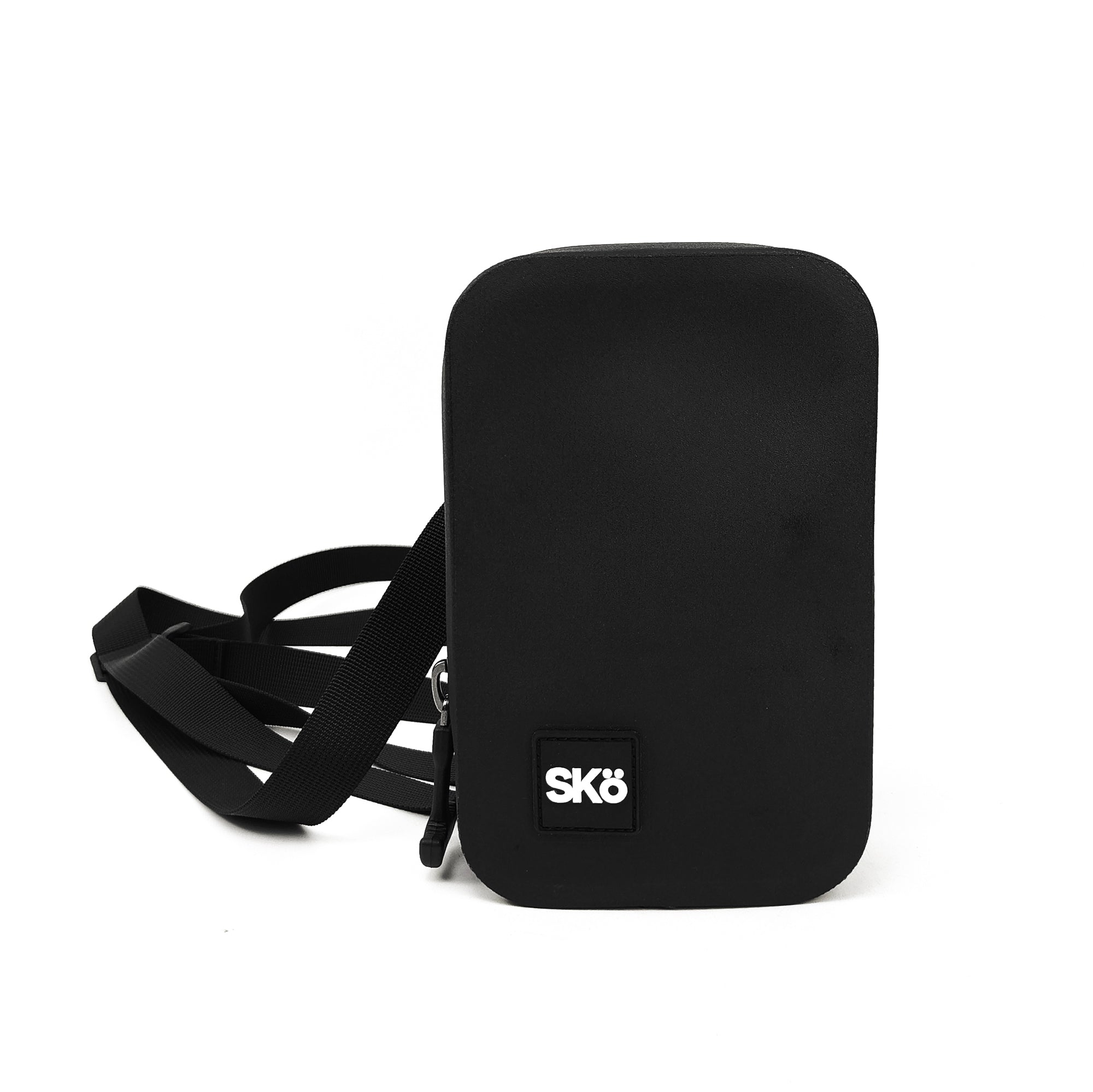
The SKÖ Waterproof Crossbody keeps those smaller essentials together and worn on your body rather than loose inside the kayak. Learn how to secure phone, wallet and keys while kayaking without interfering with a PFD or recovery.
The SKÖ Waterproof Crossbody is storage equipment, not flotation or safety equipment. Wear an appropriate life jacket.