


How to Choose a Life Jacket for Kayaking
How to Choose a Life Jacket for Kayaking
Last updated: September 17, 2026

The jacket that fits your kayak trip isn't the one you already own — it's the one sized to your chest, not your general idea of "medium."
For kayaking, you want a Coast Guard-approved Type III PFD, sized to your chest measurement rather than your body weight, fitted snugly enough that pulling up hard on the shoulder straps doesn't slide it past your ears.
Type III is the category built for paddlers specifically — it spreads flotation evenly across the torso and leaves the shoulders free enough to actually paddle, which is why it's the standard choice for kayaking, canoeing, and paddleboarding rather than the bulkier offshore vests built for open-water rescue scenarios. Size is where most people get it wrong: adult PFDs are sized by chest circumference, not weight, and a jacket that's technically "your size" on the label can still ride up and fail the one job it has if the straps aren't actually snugged down.
To get this right before your next trip: measure around the fullest part of your chest and shoulder blades, match that number to the manufacturer's size chart (not a generic S/M/L guess), then run the fit test below with all your paddling layers on — not over a t-shirt in a store.
What kind of life jacket do I need for kayaking?
A Coast Guard-approved Type III PFD, sized by chest measurement rather than weight. Type III jackets distribute flotation for freedom of movement while paddling, unlike bulkier Type I offshore vests. Fit is confirmed with a pull test: cinch every strap, then pull up on the shoulders — the jacket shouldn't ride up past your ears or chin.
The Coast Guard's Five PFD Types, and Which One Is Actually for Paddling
The U.S. Coast Guard sorts every wearable and throwable flotation device into one of five types, and the type tells you what situation it was built for — not just how much it floats. Knowing the difference matters because a jacket built for open-ocean rescue and a jacket built for paddling solve two different problems.
| Type | Built For | Best Use | Fit for Kayaking |
|---|---|---|---|
| Type I | Offshore, rough or remote water, delayed rescue | Open ocean, commercial vessels | Too Bulky |
| Type II | Near-shore, calm inland water, fast rescue expected | Casual boating on lakes | Not Built for Paddling |
| Type III | Flotation aid with full range of motion | Kayaking, canoeing, paddleboarding | Best Fit |
| Type IV | Throwable device — not worn | Ring buoys, cushions, backup on boats | Not Wearable |
| Type V | Special-use, task-specific features | Whitewater rescue vests, inflatable belt packs | Situational |
Type I vests provide the most buoyancy and are designed to roll an unconscious wearer face-up, which is exactly why they're overbuilt and awkward for something as active as paddling. Type III trades some of that raw buoyancy for even distribution and shoulder mobility — a fair trade for a sport where you're actively moving your arms for hours, not floating passively waiting for a rescue boat, according to BoatUS Foundation's breakdown of PFD types.
How to Actually Get the Fit Right
Wrap a soft tape measure around the widest part of your chest and across your shoulder blades — snug, but with enough room to slide one finger underneath. Check that number against the specific jacket's size chart rather than assuming your normal clothing size carries over; ranges vary by brand and style, and a jacket built with less foam runs differently than a bulkier offshore-style vest.
Once it's on, cinch every strap — waist, sides, and shoulders — snug against your body. Then have someone pull up firmly on the shoulder straps, or hook your own thumbs under them and pull. A properly fitted PFD stays put; if it slides up past your ears or chin, it's too big or too loose, full stop, regardless of what the size tag says.
One kayaking trip on a cold-water river is a good example of why this matters beyond comfort: a paddler wearing a drysuit under a jacket sized for bare skin found the shoulder straps couldn't cinch down enough over the extra bulk, and the vest rode up toward the chin on every stroke. The fix wasn't a different PFD — it was resizing up one size to account for the layer underneath, then re-running the pull test before getting back on the water.
Do inflatable life jackets work for kayaking?
Some Type V inflatable belt packs are rated for paddling, but most require manual activation and aren't designed to keep you face-up automatically the way a foam Type III is. For moving water, rapids, or solo trips, a standard foam Type III is the more reliable default; inflatables are more common in flatwater paddling and stand-up paddleboarding.
Can I use a boating life jacket instead of a paddling-specific one?
You can wear any Coast Guard-approved Type I, II, or III jacket while kayaking, but Type I and II vests are bulkier through the shoulders and chest, which restricts the paddling motion. A Type III built for paddlesports will be far more comfortable over a multi-hour trip.
Sources
A properly fitted PFD handles the safety side of a paddling trip — keeping your phone, keys, and wallet dry while you're wearing it is a separate problem, and a waterproof crossbody worn underneath or alongside a life jacket is a simple way to close that gap without adding bulk to your setup.
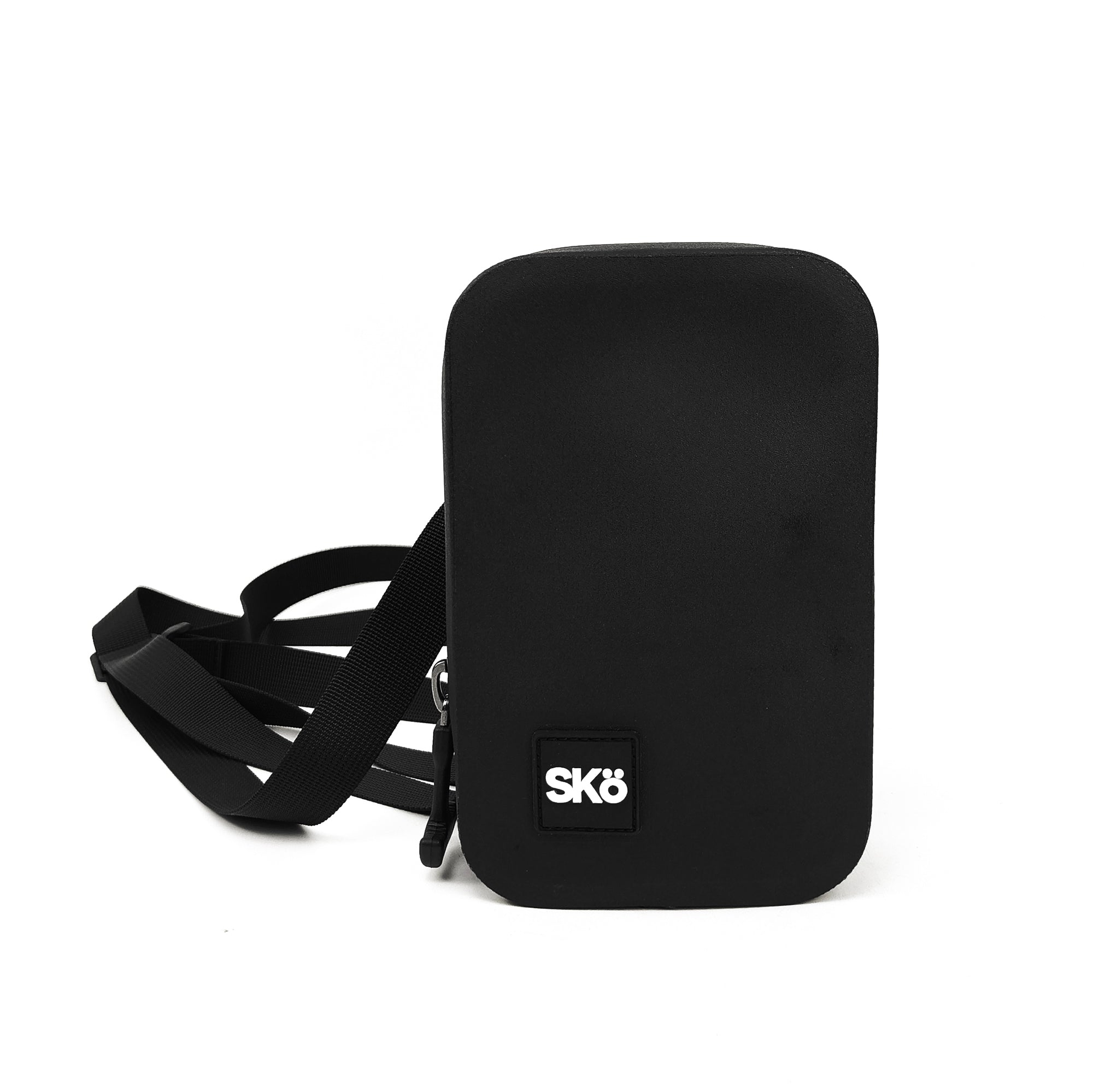
$80 · Limited Lifetime Warranty