


Kayak vs. Paddleboard: Which Should Beginners Choose?
Kayak vs. Paddleboard: Which Should Beginners Choose?
Last updated: September 20, 2026

Seated and stable, or standing and working harder for it — the two boats teach you completely different skills.
For most beginners, a kayak is the easier boat to learn. The seated position and two-bladed paddle make it more stable and faster to pick up, especially in wind or moving water. A paddleboard demands more balance and gives you a harder full-body workout, but it's lighter, simpler to store, and easier to transport.
The two aren't really competing for the same job. A kayak puts you low, gives you a fixed seat and footrests, and uses a double-bladed paddle that lets you correct your direction with almost no thought. A paddleboard puts you standing on a flat deck with a single-bladed paddle, which is closer to surfing than boating. That difference in posture is the reason one feels intuitive on day one and the other takes a little longer to trust.
If you're only going to own one, the honest answer depends on what you're optimizing for: comfort and distance (kayak), or fitness and simplicity (paddleboard). Everything below breaks down exactly where each one wins.
Should a beginner get a kayak or a paddleboard?
A sit-on-top kayak is the easier boat for most beginners — the seated position and two-bladed paddle make it more stable and quicker to learn, especially in wind. A paddleboard is easier to transport and store, and delivers a better full-body workout, but it demands more balance and takes longer to feel confident on. Choose based on whether you want stability or exercise first.
The Real Difference Is Posture, Not Just the Boat
A kayak has you sitting inside or on top of a hull, using a double-bladed paddle with a stroke on each side. That symmetry is what makes kayaking forgiving — you correct course almost automatically, and your center of gravity stays low the entire time. A paddleboard has you standing on a flat, planing hull using a single blade, which is a much less stable starting point and closer to the stroke mechanics of canoeing or surfing than kayaking.
Recreational and fishing models of both boats run roughly 8 to 11 feet, so size on the roof rack usually isn't the deciding factor. What actually differs is hull shape: kayaks use displacement hulls built to track straight and cut through wind, while paddleboards use planing hulls built to skim the surface and turn easily — good for calm water and surf, less good for a windy afternoon crossing.

Where Each One Actually Wins
Kayaking is generally faster to learn, more stable, and better suited to wind, cold water, and longer distances. Paddleboarding is simpler to gear up for, easier to transport, and a noticeably better workout since it engages your legs and core for balance on top of your arms and back for propulsion. Neither claim is marketing — both come from the same head-to-head breakdown paddling guides have settled on for years, and it holds up in practice: kayaking is typically easier to learn than paddleboarding, and the sport delivers a far better workout on a SUP than a kayak, according to Paddling Magazine's kayak vs. paddleboard comparison.
Pick a Kayak If You Want...
- The most stable, forgiving option for a first time on the water
- Better performance in wind, current, or cold water
- More onboard storage for a day trip or an overnight paddle
- A boat that's easier to keep going in a straight line
Pick a Paddleboard If You Want...
- A real full-body workout, not just an upper-body one
- Something that inflates, rolls up, and fits in a closet or trunk
- A simpler gear list — a paddle, a PFD, and a leash
- Better visibility into shallow water for fishing or exploring
Cost doesn't cleanly favor either one — it depends where you shop. Decent recreational kayaks retail between $500 and $1,000, with plenty of sub-$300 big-box models for casual, calm-water use only. Quality paddleboards run $1,000 to $1,500 for hard boards, though inflatables are cheaper and often the better beginner pick since they're forgiving to store and transport, per Paddling Magazine's pricing breakdown. If you're buying at a specialty paddlesports shop rather than a big-box store, expect the price relationship to flip — a quality kayak there usually costs more than a comparable SUP.
Both boats require a U.S. Coast Guard-approved, wearable life jacket for every person on board, and that rule doesn't bend for beginners. Canoes and kayaks are specifically exempted from the extra throwable (Type IV) device that larger boats need, but the wearable PFD requirement applies the same way to a kayak, a paddleboard, or anything else you're paddling, according to the U.S. Coast Guard's boater safety guidance. Most national park waterways enforce this just as strictly — the National Park Service requires a wearable, Coast Guard-approved life jacket for kayaks, canoes, and paddleboards alike, regardless of the vessel's length.
A Realistic First Trip on Each
On a mid-size lake with a light afternoon breeze, a beginner in a sit-on-top kayak will usually get comfortable within the first ten minutes — the seat and low position do most of the stabilizing for you, and the double-bladed paddle makes correcting your line automatic. The same beginner on an inflatable paddleboard will likely spend that first ten minutes just finding their balance, sitting or kneeling before standing, and will notice the breeze pushing them around far more than it would in a kayak. Neither experience is a bad one — it's just a longer warm-up before a paddleboard starts to feel natural.
Which One Should You Actually Buy First?
If you've never paddled anything before and want the least frustrating first outing, start with a kayak. If you already have decent balance, want the workout, and care more about storage and transport than top speed, start with a paddleboard. Renting both once before buying either is the cheapest way to settle this — most waterfront towns offer both, and an afternoon on each will tell you more than any spec sheet.
Is a kayak or paddleboard safer for someone who isn't a strong swimmer?
A sit-on-top kayak is generally the safer starting point — you stay seated and low, and it's harder to end up fully in the water by accident. On a paddleboard, falling in is more common while you're learning, and you need to be comfortable swimming back to the board and climbing on. Either way, wear a Coast Guard-approved life jacket every time you're on the water.
Can a beginner learn to paddleboard in one day?
Most people get the basics of balance and steering within a few hours on calm, flat water. What takes longer is efficient forward paddling without wasting energy correcting your line — that usually takes a few outings. Starting on a wide, stable beginner board and calm water makes the learning curve much shorter than starting on a narrow or advanced model.
Sources
Whichever one you end up choosing, you'll still want somewhere dry and within reach to keep your phone, keys, and wallet — a waterproof crossbody clips onto a kayak's deck bungee or a paddleboard's tie-down just the same, so you're not digging through a dry bag mid-paddle.
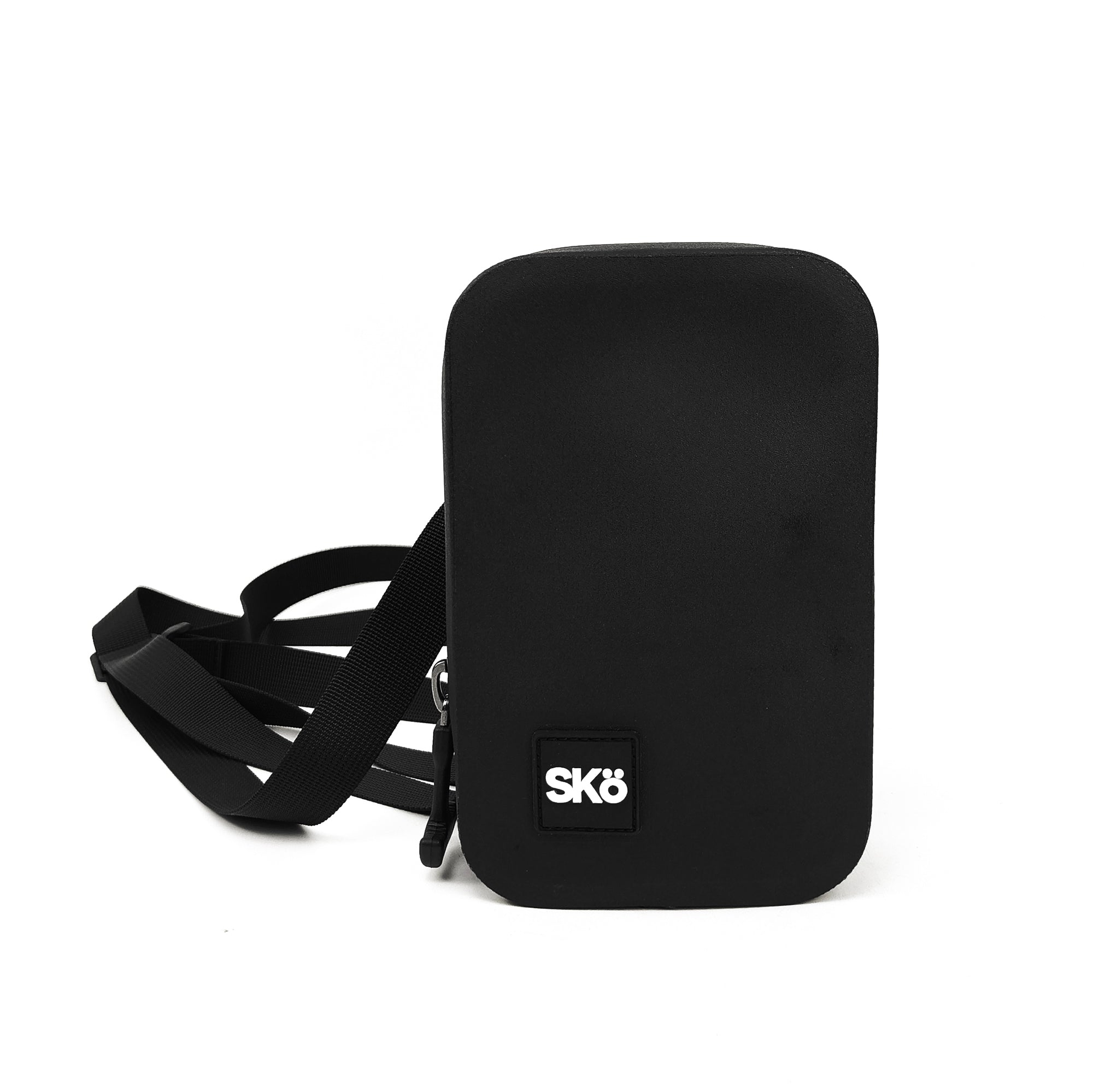
$80 · Limited Lifetime Warranty