


Kayaking Essentials for Beginners: What to Actually Bring
Kayaking Essentials for Beginners: What to Actually Bring
Last updated: August 24, 2026

Most of what actually matters for a first kayak trip fits in a short list — the trick is not skipping the boring parts of it.
The essentials for beginner kayaking are a properly fitted personal flotation device, a paddle sized to your height and the boat, a sit-on-top kayak if you're brand new, sun protection, a way to keep your phone and valuables dry, and a plan for what happens if you end up in the water. Everything past that is comfort, not necessity — but skip any of these six and a good first trip can turn into a bad one fast.
A recreational sit-on-top kayak is the easiest entry point because there's no enclosed cockpit to climb out of if you tip, and it self-drains instead of filling with water. Your PFD is not optional and not something to leave clipped to the boat "just in case" — it needs to be worn the entire time you're on the water. Past those two, most of what beginners actually forget isn't the big stuff, it's sun protection, drinking water, and somewhere dry to put a phone and keys that isn't just a jacket pocket.
What do you need for kayaking as a beginner?
A U.S. Coast Guard-approved PFD worn at all times, a properly sized paddle, a sit-on-top kayak for your first trips, sun protection (hat, sunscreen, sunglasses with a strap), a dry storage solution for your phone and keys, and drinking water. A whistle and a basic plan for re-entering the kayak if you capsize round out the real essentials — most other gear is optional comfort, not safety.
Safety Gear Comes First
Your PFD is the one item on this list that isn't negotiable. The U.S. Coast Guard reports that the large majority of boating drowning victims weren't wearing one at the time, and most of those drownings happened on calm days when a capsize felt unlikely — which is exactly the situation most beginner kayak trips are in. A Type III PFD is the standard choice for kayaking because it's designed for consciously swimming rather than just floating, and it needs to actually fit snugly, not just be present in the boat. Pair it with a whistle clipped to the PFD itself, since a whistle carries much farther than your voice if something goes wrong.
The Rest of the Checklist
Past safety gear, the beginner list is short but easy to underpack. A paddle that's too long or too short makes the whole trip more tiring than it needs to be — most outfitters and beginner guides size it to your height and the width of the kayak, so don't just grab whatever's leaning against the rack. Beyond that:
- PFD sized to fit snugly, worn the entire time you're on the water
- Paddle sized to your height and the kayak's width
- Sit-on-top kayak for your first several trips
- Whistle clipped to your PFD
- Sunscreen, a hat, and sunglasses with a retention strap
- At least one liter of water per hour you plan to be out
- Dry storage for your phone, keys, and wallet
- A change of dry clothes left in the vehicle for after
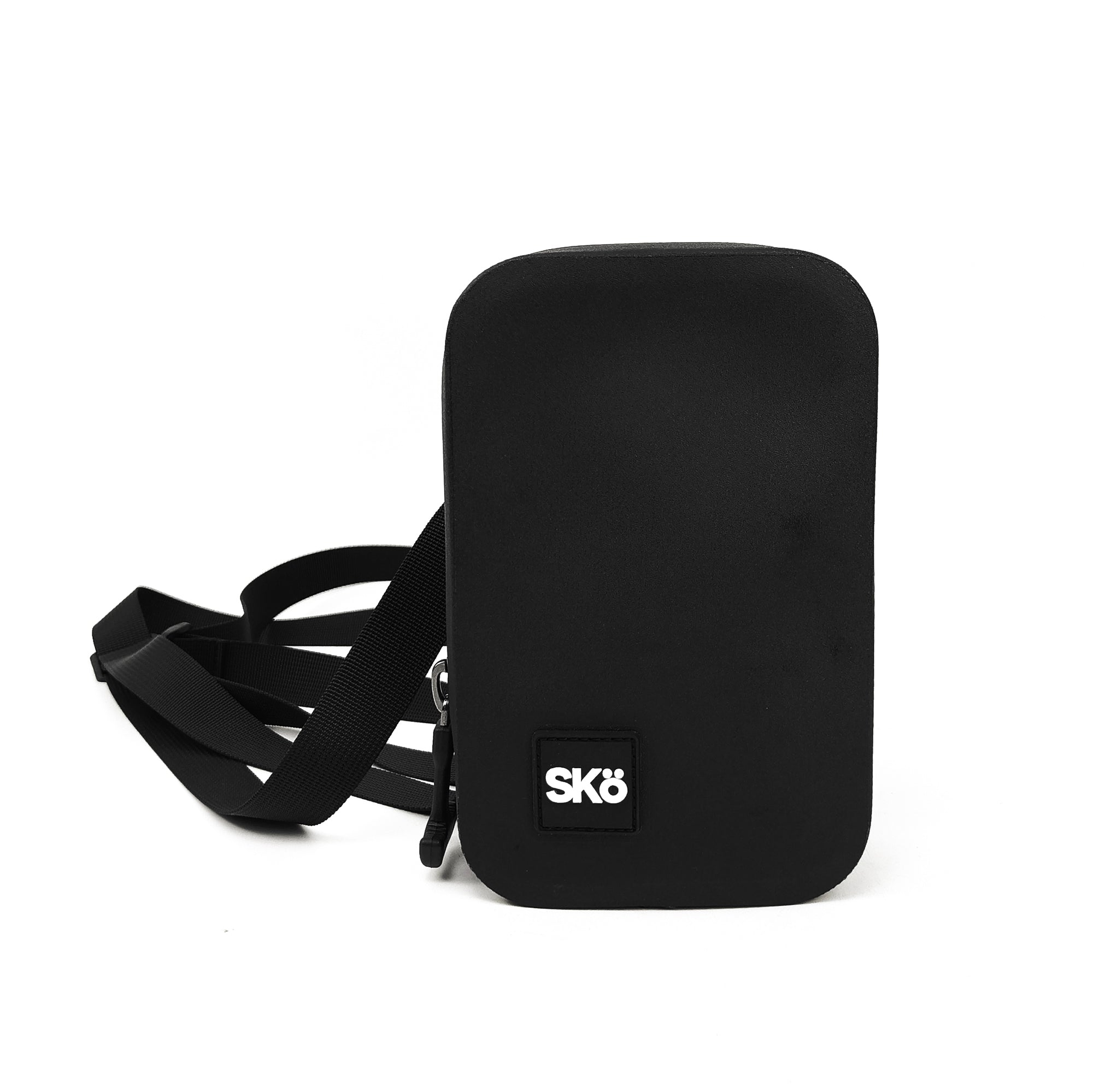
For the phone, keys, and wallet specifically, most beginners either shove them in a pocket (they get soaked the first time a wave or wake hits) or bring a full-size roll-top dry bag meant for overnight gear, which is overkill and awkward to dig through mid-paddle. A compact waterproof crossbody, worn on the body rather than stashed in a hatch, solves this more directly — SKö's version is sized for exactly that kit and is fully submersible rather than just splash-resistant, so a wave over the side isn't a problem the way it would be with a jacket pocket.
A typical first paddle on a calm lake doesn't need much of this gear tested — most beginners never capsize, never need the whistle, and are back at the dock with a dry phone. But the trips where something does go slightly wrong (a wake from a passing boat, a sudden gust, a wet exit practiced for the first time for real) are exactly why the PFD stays on the whole time and the phone lives somewhere that shrugs off a splash instead of somewhere that doesn't.
Do I need a wetsuit for beginner kayaking?
Usually not for a warm-weather lake or slow river paddle. A wetsuit matters more when water temperature is cold enough that an unexpected swim could cause cold shock — check water temperature, not just air temperature, before deciding, since the two can differ significantly in spring and early summer.
What size PFD do I need for kayaking?
PFDs are sized by body weight and chest size, not height, and a loose-fitting one can ride up or fail to keep your head above water. Try it on and do a quick tug test on the shoulder straps while it's zipped — if it rides up past your chin, it's too loose, regardless of what size label is on it.
Sources
If you're only bringing a phone, wallet, and keys rather than a full overnight kit, a compact waterproof crossbody worn on your body beats digging through a rolled dry bag every time you want your phone mid-paddle.
$80 · Limited Lifetime Warranty