

What Is a Wet Exit?
A spray skirt keeps water out. A wet exit is the basic skill that gets you out of the cockpit when a skirted kayak goes upside down.
A wet exit is the practiced sequence for leaving a capsized sit-inside kayak. After the boat turns over, lean forward, locate the spray skirt's grab loop, release the skirt, free your knees from the thigh braces and push yourself out of the cockpit. Your PFD helps keep you afloat as you surface. Learn and repeat the skill in calm water with a qualified instructor, experienced partner or lifeguard before you ever depend on it unexpectedly.
The goal is to make going upside down familiar before it ever happens by accident.
The first time you feel a spray skirt holding you inside a capsized kayak should not be in moving water.
Wet exits are deliberately practiced because the underwater sequence is much easier to perform when your hands already know where to go.
The American Canoe Association explicitly includes practicing the wet exit in its paddling-safety guidance, while REI recommends learning the skill with an experienced instructor or guide in calm, controlled water.
Not every capsize uses the same exit.
The full spray-skirt wet exit is specific to sit-inside kayaks that actually use a skirt around the cockpit.
You normally separate from the kayak during the capsize. The key skills are staying with the boat, righting it and climbing back aboard.
No spray-skirt releaseThere is no skirt to release, but you still need to get clear of the cockpit while the boat is upside down and practice what happens next.
Practice capsize exitTouring, sea and whitewater kayaks commonly use this setup. The skirt must be released from the cockpit rim before you push free.
Learn with an instructorSet it up so the only unfamiliar part is going upside down.
Use an instructor, guide, experienced partner or lifeguard rather than teaching yourself alone.
Start somewhere controlled with an easy entry and exit, not in current, surf or rough water.
Fit it properly before you launch. Do not leave it behind the seat for a skill designed around entering the water.
Make sure the spray-skirt release loop is outside the cockpit rim and positioned in front of you.
Forward. Loop. Out.
The complete process has six steps, but these three words give you the core physical sequence to remember while learning with an instructor.
Fold toward the front deck rather than leaning backward while the kayak is upside down.
Find the spray-skirt grab loop by feel and release the skirt from the cockpit coaming.
Free your knees from the thigh braces, push from the cockpit rim and exit forward.
How to do a kayak wet exit.
This is the sequence described by REI Expert Advice and sea-kayaking instructor Wayne Horodowich. Reading it is preparation. Practice it in the water with qualified help.
Hold the paddle if practical and take a breath.
REI recommends trying to keep hold of the paddle without making it the thing you focus on above everything else. Take a quick breath before your head goes underwater.
Why: the paddle is useful after you surface, but your safe exit matters more than hanging onto equipment.
Lean forward toward the deck.
REI teaches the forward position often described as “kissing the deck.” Horodowich notes that an inexperienced paddler's panic reaction is often to lean backward instead.
Why: the forward position is the sequence you want your body to default to rather than fighting upward against the kayak.
Find the grab loop by feel.
The release loop should be outside the cockpit coaming at the front of the skirt. Do not allow it to become trapped underneath the skirt where you cannot reach it.
Slide your hands forward until you locate the loop. Horodowich teaches paddlers to find it by feel rather than relying on being able to see clearly underwater.
Why: underwater visibility may be poor, and the skill should not depend on visually locating the release.
Pull the loop and release the spray skirt.
Grip the release loop and pull firmly so the skirt comes free of the cockpit rim. Horodowich summarizes the release action as grabbing, pushing and lifting the skirt away from the coaming.
Why: the skirt is stretched around the cockpit lip. Releasing that seal is what opens the cockpit.
Bring your knees together and push out.
Place your hands on the coaming near your hips, bring the knees together to free them from the thigh braces and push yourself forward and out of the cockpit.
Why: once the skirt is released, the thigh braces are the remaining point that can keep your legs engaged inside the kayak.
Surface and stay with the boat when safe.
Your PFD assists with flotation after you leave the cockpit. Retrieve the paddle if it separated from you and maintain contact with the kayak when doing so is safe.
The next skill is recovery: righting the kayak and re-entering it yourself or with assistance.
Why: Pennsylvania paddling guidance recommends holding onto the boat after a capsize unless the kayak itself creates an immediate life-threatening situation.
Horodowich teaches a secondary release in which the paddler grabs the edge of the spray skirt along the side of the cockpit and lifts it off the coaming. The ACA's Level 2 kayak-touring assessment expects paddlers to demonstrate both a grab-loop release and a secondary method. Learn both with an instructor rather than improvising one for the first time underwater.
Wet exit vs. kayak roll.
You leave the kayak.
The spray skirt is released and the paddler exits the cockpit after the boat capsizes.
- Fundamental capsize skill
- Learned before relying on a roll
- Leaves you swimming beside the kayak
- Followed by a recovery and re-entry
You stay in the kayak.
A roll rights the kayak while the paddler remains seated in the cockpit with the spray skirt attached.
- More advanced recovery skill
- Keeps you inside the boat
- Can fail
- The wet exit remains the fallback
The ACA Level 2 assessment describes a successful wet exit as calmly leaving the cockpit after a complete capsize. The point of repetition is to make the sequence controlled rather than panicked.
You are going into the water.
A practiced exit does not eliminate cold-water risk. The National Center for Cold Water Safety warns that sudden immersion in cold water can trigger a powerful gasp and rapid breathing response.
That is why wet-exit practice should be paired with appropriate thermal protection and a properly fitted PFD. See what to wear kayaking and how to choose a life jacket for kayaking .
Before you deliberately tip the kayak.
Wet-exit practice checklist
Common questions before practicing.
Do sit-on-top kayaks need a wet exit?
Not in the spray-skirt sense. A sit-on-top has no enclosed cockpit or skirt to release. After a capsize, the focus is staying with the kayak, righting it and practicing how to climb back aboard.
What if I cannot find the grab loop?
Keep the forward position and move your hands along the cockpit rim. If the grab loop has accidentally been trapped underneath the skirt, a secondary method is to lift the side of the skirt from the coaming. Practice that backup with an instructor before you need it.
Will I automatically fall out of a sit-inside kayak?
It depends on the kayak, outfitting and whether a spray skirt is being used. Thigh braces and a fitted skirt can keep the paddler connected to the boat, which is why deliberately practicing the exit sequence is important.
Do I need to learn a wet exit before learning to roll?
Yes, the wet exit is the basic fallback skill. A roll is intended to right the kayak while you remain inside, but if the roll fails you still need to know how to leave the cockpit calmly.
What should I do with my phone while practicing?
Leave it on shore during deliberate capsize practice. For normal paddling days, see our guide to keeping your phone dry while kayaking .


Your phone and keys need storage. They do not belong in the wet-exit lesson.
Deliberate capsize practice is a good time to leave unnecessary valuables on shore.
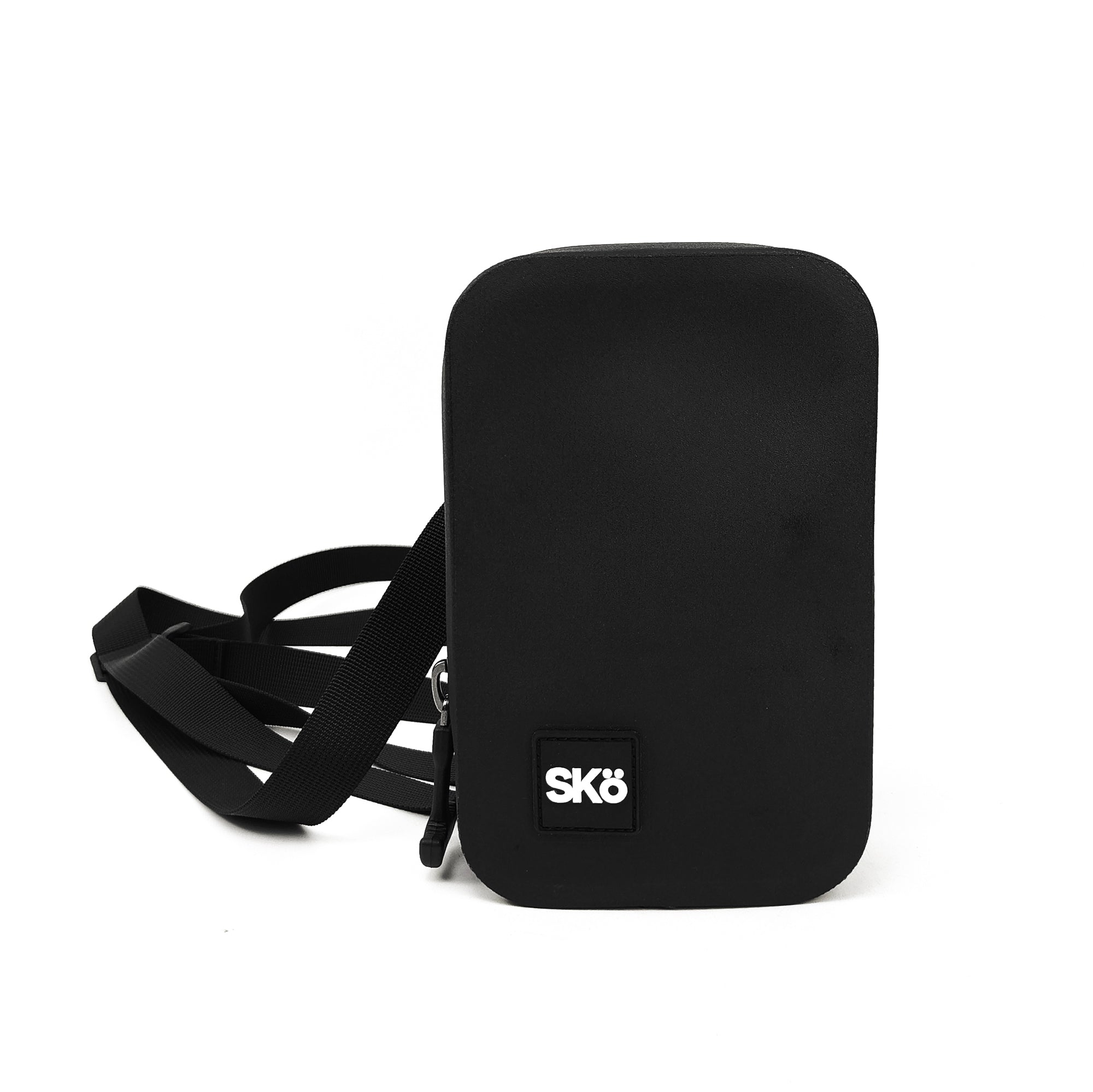
For normal paddling days, the SKÖ Waterproof Crossbody is compact waterproof storage for smaller essentials such as a phone, wallet and keys. For retention and safe PFD clearance, see our guide to carrying a phone, wallet and keys while kayaking.
Storage equipment only. It does not replace a PFD, spray skirt, paddling instruction, rescue training or any other safety equipment. Position any carried item so it does not interfere with your PFD or your ability to exit the kayak.
Sources
- REI Expert Advice — How to Do a Wet Exit from a Kayak
- Paddling.com — Wet Exit, Wayne Horodowich / University of Sea Kayaking
- American Canoe Association — Top 10 Paddle Safely Tips
- American Canoe Association — Level 2 Essentials of Kayak Touring Skills Assessment
- National Center for Cold Water Safety — Cold Shock
- National Center for Cold Water Safety — Always Wear Your PFD
- U.S. Coast Guard — 2024 Recreational Boating Statistics
- Pennsylvania Fish & Boat Commission — Paddlesports Safety