
Beach Day Essentials You’ll Actually Use
A good beach bag is less about bringing everything and more about solving four problems before they happen: sun, water, valuables and the ride home.
Pack broad-spectrum sunscreen, shade or sun-protective clothing, plenty of water, a dry place for your phone and wallet, towels, heat-safe snacks, a small first-aid kit, a full change of clothes and a simple bag system that keeps wet and sandy gear away from the things that need to stay clean.
The best beach packing list is built around what usually goes wrong.
Beach days rarely fall apart because someone forgot a fancy accessory. They fall apart because the sunscreen stayed in the car, the only towel got soaked before lunch, the phone ended up beside a wet swimsuit, or everyone ran out of water while the sun was still high.
That makes beach packing surprisingly simple. You need to cover the things with the biggest consequences first, then add comfort items around them.
Think of your bag as four zones: sun protection, hydration and food, dry valuables, and the wet/sandy stuff that comes home with you. For a longer trip with less luggage, pair this day bag with our light beach vacation packing guide.
Organize the day before you organize the bag.
Packing by function makes it much easier to find what you need when everyone is sandy, wet and ready to leave. If snorkeling is part of the plan, our snorkeling-specific packing checklist covers the additional mask, fin and water-entry decisions.
Sun protection
Sunscreen, hat, sunglasses, rash guard, umbrella or shade. Keep these at the top of the bag because they are used throughout the day.
Water + food
Drinks and snacks should stay easy to reach and protected from direct heat whenever possible.
Dry valuables
Phone, keys, wallet and cards need a sealed place away from splashes, wet towels and loose sand.
Wet + sandy return
Give swimsuits, towels, shoes and sandy toys somewhere to go so the trip home does not contaminate everything else.
The beach-day essentials list.
☀️ Sun
- Broad-spectrum sunscreen
- Hat with useful face and neck coverage
- UV-blocking sunglasses
- Umbrella, canopy or access to shade
- UPF shirt or rash guard for long exposure
💦 Water
- Refillable water bottles
- Cooler or insulated storage when appropriate
- Extra drink for a long walk or hot parking lot
- Simple snacks that tolerate heat
📱 Valuables
- Phone in waterproof or sealed storage
- Wallet and cards
- Keys
- Small cash when parking or vendors may require it
- Compact battery pack for a long day
🏖️ Comfort
- Towel for drying
- Blanket or separate towel for sitting
- Dry change of clothes
- Sandals or water shoes
- Bag for wet clothing and towels
Sunscreen is part of the plan, not the whole plan.
FDA and CDC guidance both pair sunscreen with other protection such as shade, clothing, hats and sunglasses. For swimming and sweating, use a product labeled water resistant and follow the exact reapplication directions on the label.
FDA sunscreen directions call for generous application before sun exposure. Read the label instead of assuming every formula works the same way.
Water-resistant sunscreens are tested for either 40 or 80 minutes of swimming or sweating, not for an unlimited beach day.
FDA labeling calls for reapplication at least every two hours and sooner after the labeled swimming time or immediately after towel drying.
Hats, sunglasses, shirts and shade reduce how much of the day depends on sunscreen alone.
Make one small dry zone and stop moving valuables around.
The easiest way to lose track of the important stuff is to put the phone in one towel, the keys in somebody's shoe and the cards in a side pocket that gets moved every time someone grabs a snack.
Do not let it bounce between a wet towel, cooler lid and open beach bag all day.
One protected valuables compartment is easier to monitor than three separate hiding places. For situations where everyone wants to swim at once, see our guide to keeping valuables safe at the beach.
Fine grit works into ports, zipper tracks and cases even when nothing gets submerged.
Water-resistant is not the same as waterproof.
If your valuables are only being protected from a little spray, a weather-resistant bag may be enough. If the bag may be dropped in the water, taken swimming or hit by repeated waves, use a product designed for actual submersion. For wet excursions, consult our snorkeling and beach waterproof bag buying guide before choosing a pouch.
See the deeper breakdown in Waterproof vs. Water-Resistant: What's the Actual Difference?
What to do before the day gets chaotic.
Check the beach forecast and surf conditions.
Weather can look perfect while currents or surf conditions are still hazardous. Look at local beach warnings and know whether lifeguards are on duty.
Set up shade and the dry zone first.
Put sunscreen, water and valuables where they will stay. This is easier than reorganizing after everyone is already wet and sandy.
Reapply, refill and reset.
Use the sunscreen label as the timer, keep water available, and put phones and keys back into the same protected location every time.
Separate wet from dry.
Bag wet swimsuits and towels, shake sand from gear, make sure valuables are accounted for, and keep one dry shirt or towel available for the ride home.
Pack for heat, not for the kitchen counter.
Hot sand, direct sun and a closed vehicle can warm food and drinks quickly. Keep perishable items properly chilled, keep water accessible and choose snacks that do not create a mess the moment they get warm.
Easy beach choices
- Cold water in insulated bottles
- Fruit that travels well
- Crackers, pretzels or shelf-stable snacks
- Nuts or nut-free alternatives as appropriate
- Food kept chilled when refrigeration is required
Things that need more planning
- Chocolate or foods that melt easily
- Dairy or meat left without adequate cooling
- One tiny water bottle for an all-day trip
- Sticky snacks that collect sand instantly
- Anything packed in a container that leaks
A beach bag cannot make the ocean safe, but a little preparation matters.
Swim near a lifeguard when possible.
The National Weather Service recommends checking beach conditions, watching posted warnings and swimming at lifeguarded beaches when available.
Do not try to overpower the current.
NWS guidance says not to swim directly against a rip current. Move sideways along the shoreline to escape the flow when possible. If you cannot escape, float or tread water and signal for help.
Bring a compact kit for ordinary minor problems.
Bandages, antiseptic wipes and any personal medication can be useful for small cuts or scrapes. For marine stings or serious injuries, follow local lifeguard or medical guidance rather than relying on one universal home remedy.
Assign active supervision.
Do not let a busy beach setup substitute for an adult actually watching children around water. Float toys and inflatable gear are not substitutes for supervision or approved flotation when needed.
The useful stuff is usually boring.
One to sit on, one to dry with.
It sounds excessive until your only towel has spent three hours collecting sand and somebody actually wants to get dry.
Separate the ride-home mess.
A simple reusable bag keeps wet swimsuits and sandy towels away from electronics, snacks and clean clothing.
A small battery can save the trip back.
Maps, parking apps, photos and music can drain a phone faster than expected on a long beach day.
Hot sand is part of the problem.
Sandals, water shoes or another easy-on option matter for parking lots, hot sand, shells and rough shoreline entries.
Beach day packing checklist.
Beach day packing questions.
What are the most important things to bring to the beach?
Prioritize sun protection, water, a secure dry place for valuables, towels, appropriate footwear and a dry change of clothes. Everything else is secondary to those basics.
How often should sunscreen be reapplied at the beach?
Follow the label on your sunscreen. FDA labeling calls for reapplication at least every two hours and, for water-resistant products, after either 40 or 80 minutes of swimming or sweating depending on the product, plus immediately after towel drying.
How do I keep my phone safe at the beach?
Keep it in a dedicated dry, sand-protected compartment rather than loose beside wet towels. If it may actually enter the water, use storage designed for submersion, not only splash resistance.
Do I need a first-aid kit for one beach day?
A small kit can be useful for ordinary cuts and scrapes, especially at rocky or shell-covered beaches. Keep it basic and follow lifeguard or medical guidance for marine stings, significant wounds or other serious problems.
What should I bring for kids at the beach?
Add extra sun protection, water, snacks, dry clothes and age-appropriate flotation when needed. The most important safety item is active adult supervision around water.


Keep one dry zone on your body.
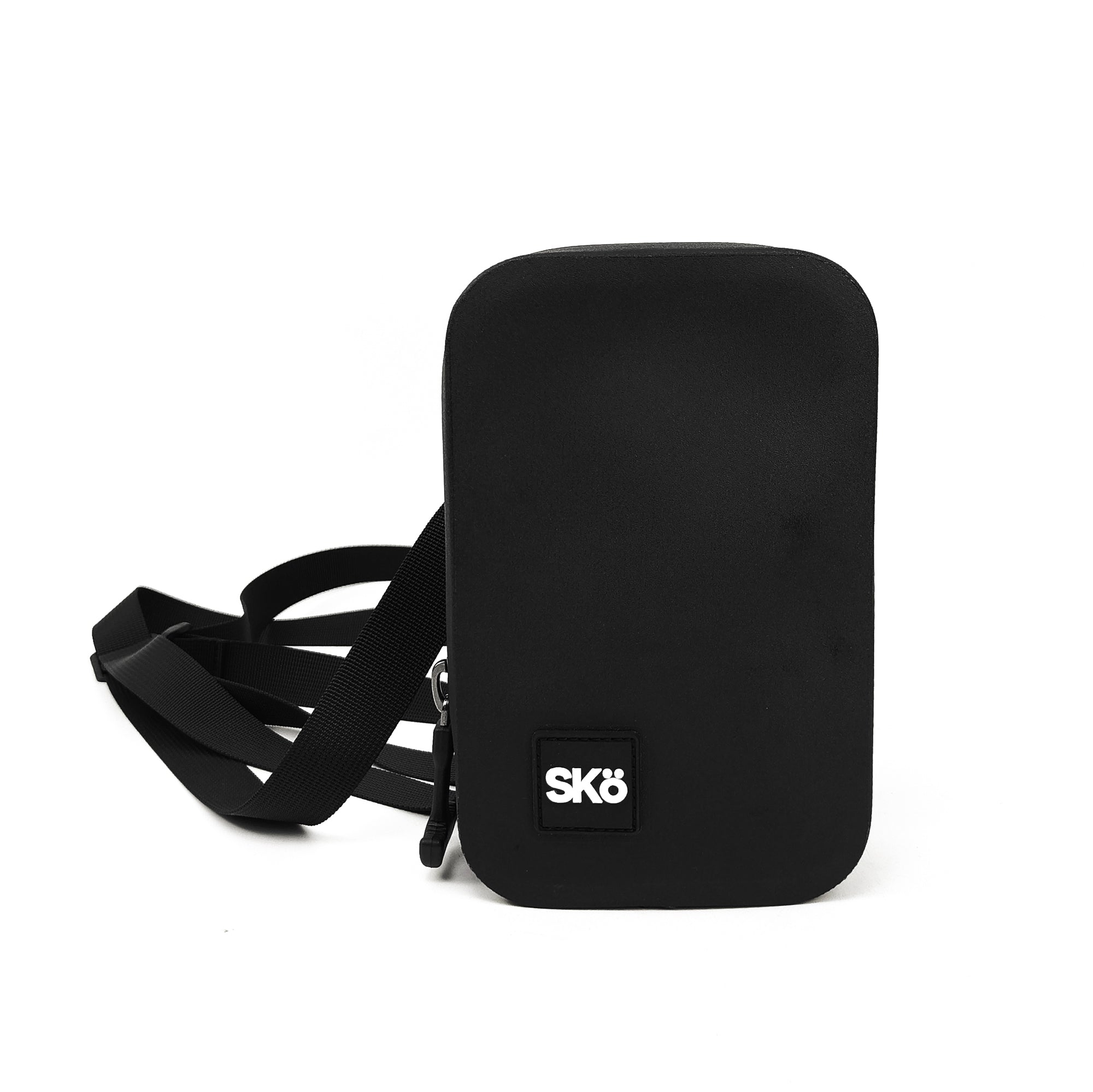
The SKÖ Waterproof Crossbody is built for the small essentials that are awkward to leave on a towel. SKÖ publishes an IPX8 waterproof rating, 1.14 L capacity, 1680D TPU construction and a waterproof zipper.
It is designed to be waterproof and submersible when the waterproof zipper is fully closed and properly sealed, making it a practical option for beach days where the valuables may end up much closer to the water than planned.