
How to Pack Light for a Beach Vacation
Packing light for the beach is not about surviving with as little as possible. It is about removing duplicate jobs from your suitcase so a small number of clothes, shoes and travel essentials can carry the entire trip.
Choose the carry-on before you build the packing list, then pack clothing that can repeat and mix rather than planning a different outfit for every possible scenario. For a week at the beach, a few swimsuits, 4 to 5 tops, 2 to 3 bottoms, one versatile cover-up or nicer outfit, and one useful pair of sandals can cover most of the trip. Keep carry-on liquids within TSA limits and solve beach-day valuables separately with compact water protection.
People pack for imaginary scenarios instead of actual days.
Most beach vacations involve a fairly small number of repeated activities: swimming, walking around, eating, sitting outside and occasionally going somewhere slightly nicer.
Overpacking starts when every possibility gets its own outfit. One outfit for dinner. Another for a cooler evening. Another in case something gets dirty. Another because maybe there will be a nicer restaurant. The bag fills before the trip has even begun.
Warm-weather clothing gives you an advantage. Shirts, shorts, swimsuits and cover-ups are generally lighter and easier to repeat than bulky cold-weather layers.
The goal is therefore not to eliminate choices completely. It is to make a small number of pieces work together often enough that you stop needing a separate solution for every day.
Your suitcase should create the ceiling.
If you give yourself unlimited space, almost every extra item can sound reasonable. A smaller bag forces each piece to justify the space it occupies.
Do not build an oversized packing pile and then search for luggage large enough to hold it.
When the bag is full, adding something means removing something else. That is useful pressure.
A cover-up that works off the beach or sandals that work for both walking and dinner save more space than clever folding.
Every hypothetical item consumes the same real suitcase space as something you know you will use.
Ten useful pieces can do more than twenty unrelated ones.
The numbers do not have to be exact, but the structure matters. Repetition is easier when tops and bottoms share a common color palette and the “nice” pieces still work during ordinary parts of the trip.
Swimsuits deserve slightly more redundancy because they may still be damp when you want another one.
Lightweight tops should work with more than one bottom instead of being tied to one specific outfit.
Shorts, skirts or lightweight pants can usually be repeated more easily than tops.
Look for something that works at the beach, around the resort and as a light layer in strong air conditioning.
One intentional dinner option is usually more useful than several “maybe we'll go somewhere fancy” outfits.
Pack combinations, not complete outfits.
A top that only works with one pair of shorts occupies more suitcase capacity than its physical size suggests. The real question is how many combinations the piece creates.
Three tops and three compatible bottoms create more usable variety than three unrelated “complete outfits.”
Neutral or coordinated bottoms make it much easier for every top to work with nearly everything else.
A pair of lightweight shorts can often work across several days without anyone noticing or caring.
On beach-heavy days, the swimsuit is already part of the outfit, reducing how much normal clothing you need.
A cover-up or lightweight overshirt can handle restaurants, air conditioning and evenings without creating a separate category.
Sunscreen can fill a carry-on faster than your clothes.
Under the TSA's 3-1-1 liquids rule , liquid, aerosol and gel containers in carry-on baggage generally need to be 3.4 ounces or 100 mL or smaller and fit within the permitted liquids bag.
Refill small containers instead of carrying multiple full-size bottles from home.
Solid sunscreen and other solid-format toiletries can reduce pressure on the liquids bag.
If your destination makes it easy, sunscreen or after-sun products can be purchased once you land instead of flown across the country.
Container capacity matters for carry-on screening, not how much product happens to remain inside.
Packing light should not mean packing too little sunscreen.
Sunscreen is one category where reducing luggage volume can create the wrong incentive. A tiny bottle is not useful if you avoid applying enough because you are trying to make it last the entire trip.
The CDC's sun-safety guidance recommends broad-spectrum sunscreen along with other forms of sun protection. The packing solution is therefore to make sunscreen easier to carry or buy, not to use less of it.
Pack less product and ration it.
- Tiny bottle for a long trip
- Skip reapplication to conserve it
- Use less than you normally would
- Let packing efficiency override the actual job
Reduce suitcase pressure instead.
- Use permitted travel-size containers
- Consider solid-format sunscreen
- Buy larger sunscreen after arrival when practical
- Keep enough product available for normal use
Pack for the week you are actually taking.
This is one category where a little redundancy helps because wet swimwear may not be ready the next morning.
Favor shirts that work with multiple bottoms and can handle repeat wear during a warm trip.
Shorts, skirts or lightweight pants can anchor several combinations.
Choose one that can leave the beach and still make sense at lunch, dinner or in cold air conditioning.
Comfortable enough for walking, presentable enough that you do not need another pair just for dinner.
Use travel-size liquids, solid alternatives or purchase larger products after arrival.
Phone, cash, cards and room key need a different solution than clothing inside the hotel room.
Plan around repeatable jobs instead of hypothetical events.
Every possibility gets an item.
- What if the restaurant is fancy?
- What if one night is cold?
- What if I suddenly want different shoes?
- What if I do not want to repeat a shirt?
- What if we do an activity we never planned?
Each item solves several real needs.
- One dinner-capable outfit
- One light layer
- One comfortable versatile shoe
- Mix-and-match clothing
- Rent or buy unusual gear only if plans require it
At some point, laundry beats more luggage.
Once a trip extends beyond roughly a week, adding another week of clothing is rarely the only option. A quick wash during the trip can reset the same small clothing system.
Mix tops, bottoms and swimwear rather than treating each day like a sealed outfit package.
Rewear clean bottoms, cover-ups and other pieces that still make sense.
Swimsuits, lightweight tops and underwear are much easier to wash than another suitcase is to carry.
A small laundry reset allows the same capsule to cover a trip much longer than seven days.
You do not need your whole vacation packed beside the water.
Once you arrive, the problem changes. Your suitcase stays at the hotel. The things that matter on the beach are much smaller: phone, room key, a payment card or cash, and whatever small essentials you actually need with you.
Packing light continues after arrival. Do not turn every beach day into a second luggage problem. For more on this specific choice, see waterproof bags for snorkeling and beach trips.
Maps, photos, communication and payment can all depend on one device, which makes water protection particularly useful. For more on this specific choice, see how to keep beach valuables safe.
Small, easy to lose, and usually one of the only hotel items you genuinely need beside the water.
Carry what the day requires instead of moving the entire wallet onto the beach.
If those few items are the only things that need serious water protection, use a container sized for that job.
Before you zip the suitcase.
Light-packing checklist
The questions that usually add another bag.
How many outfits do I need for a week at the beach?
You usually do not need seven completely separate outfits. A small group of mix-and-match tops and bottoms, several swimsuits, one versatile cover-up or layer, and one slightly nicer outfit can cover most week-long beach trips.
How many swimsuits should I pack?
Three or four can make sense for a week if swimming is a major part of the trip. Swimsuits may take longer to dry than lightweight everyday clothing, so this is one category where some redundancy can be useful.
Can I bring full-size sunscreen in my carry-on?
Standard liquid sunscreen in carry-on baggage must comply with applicable TSA liquid-container limits. Larger bottles can go in checked baggage, or you can use permitted smaller containers, solid sunscreen or purchase a larger bottle after arriving.
Does solid sunscreen count as a carry-on liquid?
Solid products are handled differently from liquids, gels and aerosols under the TSA liquids rule. Check current TSA guidance before traveling if you are unsure how a particular sunscreen format is classified.
What should I do if my beach vacation is longer than a week?
Instead of doubling the wardrobe, plan a small laundry reset during the trip. Washing swimsuits, underwear and a few lightweight tops can allow the same capsule wardrobe to cover a much longer vacation.
Finish packing for the beach
A few helpful guides for keeping your beach gear light and your valuables dry.

Snorkeling trip packing list

Beach day essentials
Waterproof bags for snorkel trips

Compare waterproof crossbody bags
Also explore: Browse all guides · SKÖ waterproof crossbody
Your beach-day bag should be smaller than your vacation bag.
Once the suitcase is back at the hotel, the high-consequence load gets very small. Phone, room key, cards and a little cash are often the only things that need to stay protected and accessible beside the water.
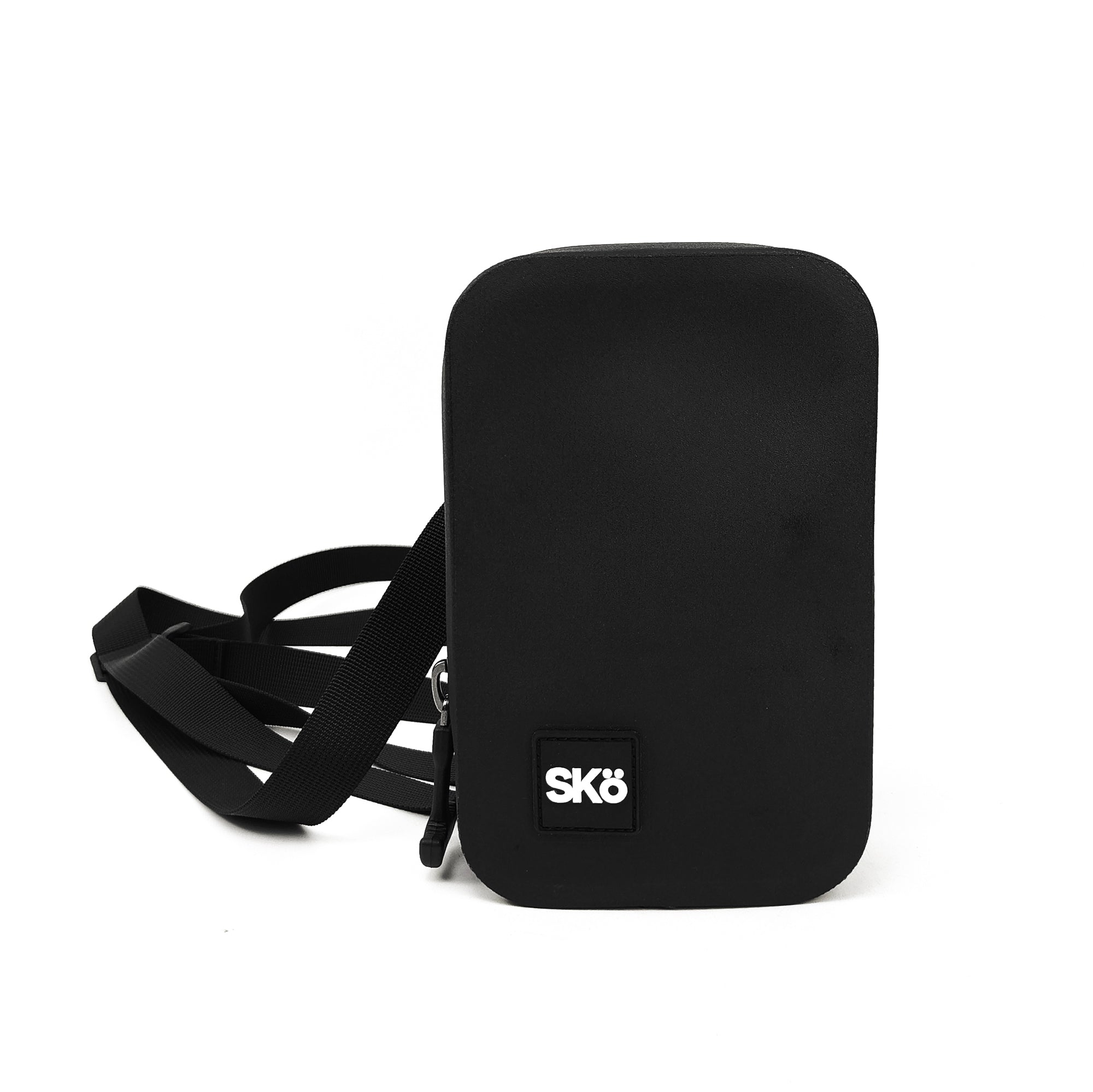
The SKÖ Waterproof Crossbody is designed around that smaller load, giving you compact on-body storage for the essentials without turning a beach walk or swim day into another full packing exercise.