
Best Waterproof Bag for Canoeing
An open canoe exposes gear to paddle drip, rain, water in the hull and the possibility of a capsize. The cleanest setup separates bulky gear from the essentials you cannot afford to lose.
For most canoe trips, use two waterproof storage jobs: a roll-top dry bag secured low in the canoe for clothing, food and other bulky gear, plus separate sealed storage for your phone, wallet, keys, ID and small essentials. The bulk bag should stay with the boat. The essentials should stay controlled and accessible without creating an entanglement hazard or interfering with your PFD.
A canoe gives water more ways to reach your gear.
There is no deck hiding your load. Paddle drip, splash, rain and water in the hull can all reach the same bags sitting beside you.
The bigger failure mode is a capsize. Maryland paddling guidance tells paddlers to expect that capsizes and swims can happen, while Kansas paddling guidance recommends tying down gear and distributing weight evenly. Do not count on an unsecured dry bag floating back to you; see why dry bags sometimes sink instead of float.
That means the best canoe setup has to solve both water exposure and gear retention.
What happens when the canoe fills, flips or separates from you.
A bag can be waterproof and still be badly positioned. Think about where the gear goes if the trip stops being upright.
Paddle drip and rain can leave the floor wet for hours. Clothing and electronics should not depend on the hull staying dry.
A bag that is not secured may float away from the canoe just when you are managing the boat, paddle and other people.
That is why the items needed to call for help or get home deserve a different plan from the camping gear.
Bulk gear stays with the canoe. Critical small items get their own protection.
Roll-top dry bag secured low in the canoe
Use this for gear that is bulky, soft and important to keep dry, but does not need to be accessed every few minutes.
- Dry clothing
- Food and snacks
- Towel
- First-aid supplies
- Camp gear on overnight trips
Compact sealed storage you control directly
Use a separate small waterproof bag or pouch for the things that are hardest to replace or most useful if the day goes wrong.
- Phone
- Car key
- Wallet or ID
- Small medication
- Permit or paper document if required
Decide where every item belongs before launching.
- Phone
- Car key
- ID / wallet
- Small medication
Keep these in compact sealed storage that remains controlled without compromising the fit or function of your PFD.
- Dry clothing
- Food
- Towel
- First-aid kit
Keep heavier gear low and centered, and secure dry bags so they do not become loose cargo during a capsize. For carry-versus-hatch planning, compare waterproof backpack and hatch storage options for kayaking.
- Extra cash
- Laptop
- Unnecessary electronics
- Other valuables
Anything you do not need on the water is one less item to waterproof, secure and recover.
Tie the bag to the canoe. Never tie yourself to the canoe.
Pennsylvania paddlesports guidance says ropes should be kept coiled and secured and should never be tied to you or another paddler. Secure dry bags with a short connection to an appropriate thwart or lash point so long loose rope cannot create an entanglement hazard.
Wear a properly fitted life jacket. Waterproof storage is not flotation or rescue equipment.
What to use by trip type.
| Trip | Storage approach | Priority |
|---|---|---|
| Short calm-water paddle | Compact sealed storage may cover the phone, key and ID if that is nearly all you bring. | Keep the load simple and secure. |
| Full day on flatwater | Small essentials storage plus a separate dry bag for food, a towel and a dry layer. | Keep bulky gear low and tied in. |
| Cold water / shoulder season | Use the same split system, but give dry clothing and insulation more protected space. | Dress for immersion and keep a dry change protected. |
| Overnight / canoe camping | Multiple dry bags or a waterproof pack can make organization easier than one huge bag. | Balance the load and preserve access to safety gear. |
Thirty seconds before pushing off.
Canoe waterproof-storage checklist
Common questions before the first paddle stroke.
Do I need a dry bag for a short canoe trip?
Should I tie my dry bag to the canoe?
Is one giant dry bag better than several small ones?
Should my phone stay in the canoe or on me?
Related SKÖ guides.


Let the dry bag carry the load. Keep the phone, wallet and keys separate.
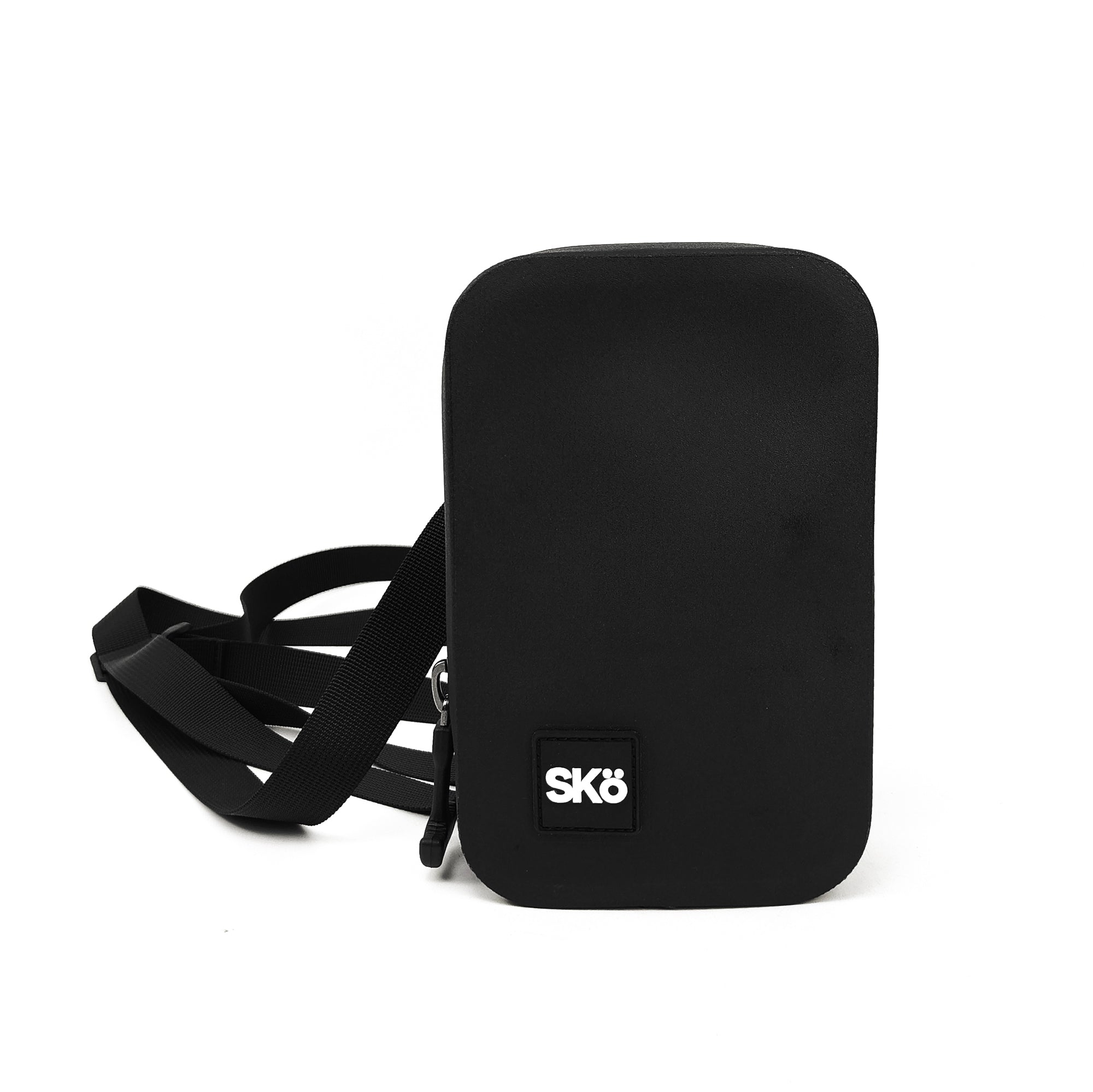
The SKÖ Waterproof Crossbody uses a waterproof zipper and is built around compact essentials rather than clothing or camp gear.
On a canoe trip, position any worn storage so it does not interfere with your PFD, paddling stroke, swimming or rescue.
Storage equipment only. It is not flotation or rescue equipment, and SKÖ does not publish a specific depth-and-duration rating.