
How to Store a Kayak or Paddleboard in the Off-Season
The off-season is mostly a battle against four things: UV, heat, uneven pressure and trapped moisture. Get those right and the boat you pull out in spring should look much closer to the one you put away.
Rinse and dry the craft completely, drain every compartment, store it out of direct sun and heat, keep it off bare ground, and support the hull broadly enough that its own weight does not create pressure points. For inflatable SUPs, current REI guidance favors clean, fully dry, loosely rolled storage in a cool dry place with the valve open. Your own manufacturer’s instructions always take priority.
Most off-season damage is slow, quiet and completely avoidable.
Kayaks and paddleboards are designed to handle water, impact and sun while you are actually using them. That does not mean they like spending six months under the same concentrated load, baking beside a garage heater, holding standing water or sitting uncovered in UV.
REI’s current kayak-storage guidance puts indoor storage first, warns that UV and heat can degrade or deform hull materials, and recommends distributing the boat’s weight on padded supports rather than leaving it directly on the floor or ground. Perception’s owner guidance similarly calls for freshwater rinsing, avoiding direct sunlight and supporting long-term stored kayaks at roughly one-third of the hull length from each end.
The exact orientation can vary by craft, so think in principles first: clean, dry, shaded, supported and unstressed.
What actually damages a boat while nobody is paddling it.
UV
Long-term sunlight can fade finishes and degrade plastics, coated fabrics and other hull materials. Shade matters even when the boat is not being used.
Heat
Extreme heat can soften or deform hull materials. Do not park the craft beside a heater, furnace or other hot zone simply because it is indoors.
Pressure points
A kayak sitting for months on a narrow edge, hard floor or overtight strap can take a set. Broad padded support spreads the load.
Water left inside
Standing water, damp hatches and packed-away inflatable gear encourage odor, mold, corrosion and freeze-related problems.
The room determines how much protection you have to build around the boat.
Indoors
Garage, shed or another protected space gives the easiest control over UV, precipitation and wind.
- Keep clear of heaters
- Use padded rack arms or wide straps
- Leave enough airflow for the craft to stay dry
Sheltered outdoors
REI lists protected locations such as under a deck, beneath eaves or below a properly suspended tarp as workable options.
- Prioritize full shade
- Keep the craft off soil and concrete
- Prevent rain or snow from pooling on the cover
Exposed or unsupported
Direct sun, bare ground and concentrated long-term support loads are the storage conditions most worth fixing.
- No uncovered full-sun storage
- No hanging by grab handles
- No tight straps crushing one area for months
Support the hull, not the handles.
REI recommends padded cradles or wide nylon straps that match the curve of the kayak and says supporting the boat about one-third of the way in from each end is effective. Perception gives similar long-term guidance for kayaks slung on their sides.
Broad, soft contact spreads load better than a hard metal edge or narrow rope.
Transport straps are meant to restrain a moving boat. Months of tight pressure can distort a hull.
Handles are for carrying. Long-term suspended weight belongs on a support system designed for the hull.
The six-step off-season reset.
Rinse away salt, sand and mud.
Freshwater rinsing matters most after saltwater use, but dirt and grit are worth removing from every craft before storage. Pay attention to rudders, foot braces, fins, scupper plugs, pedal drives and hardware.
Drain every place water can hide.
Empty the cockpit, hull and hatches. Old Town specifically recommends draining the hull on sit-on-top kayaks and leaving the drain plug open during storage on applicable models so the hull can vent.
Dry it completely.
“Dry on top” is not enough. Let hatches, storage wells, straps and fabric accessories air out. Red Paddle warns that storing an inflatable SUP damp makes mold buildup much more likely.
Inspect before spring makes you rush.
Look over handles, rudders, valves, drain plugs, fins, foot braces, hardware, pedal-drive parts and obvious hull damage now. Old Town recommends using the offseason to clean and inspect pedal-drive components and replace worn parts.
Set the craft on broad padded supports.
Use the storage orientation recommended for your model and distribute the weight. For many hard kayaks, side storage on wide straps or hull-up storage on padded supports are common manufacturer-approved patterns.
Protect it without trapping moisture.
If the craft must stay outdoors, provide shade and weather protection while keeping airflow. REI and Old Town both caution against wrapping a tarp directly against the hull because trapped heat and moisture can create new problems.
The safest storage setup depends on what you own.
Spread the load.
- Indoor storage is preferred when practical
- Use padded cradles or wide straps
- REI suggests support around one-third in from each end
- Do not store long-term directly on the floor or ground
- Avoid tight tie-down pressure during storage
Check the hull and drive system.
- Drain the hull completely
- Inspect drive, prop, pins and hardware where applicable
- Old Town says some pedal models benefit from leaving the seat or support structure installed
- Follow the model manual before removing structural accessories
- Keep pedal drives dry and ice-free
Treat it like a long rigid hull.
- Rinse and fully dry before storage
- Use padded racks or wide straps that distribute weight
- Protect from UV and heat
- Avoid narrow contact points that can create dents or deformation
- Store fins separately if the manufacturer recommends removal
Clean, dry, loose and cool.
- Current REI guidance says fully deflate for compact storage
- Leave the valve open while stored
- Loosely roll rather than compressing tightly
- Red Paddle warns against sharp bends and creases
- Store indoors in a cool, dry place whenever possible
Create a roof, not a plastic oven.
Use the north side of a building, beneath a deck or another naturally shaded location when possible.
REI and Old Town both recommend air space rather than laying a tarp tightly against the boat.
Snow or rain collecting on a sagging cover can load and distort the boat. Give the shelter enough pitch to shed water.
Old Town warns that wind can catch an outdoor-stored boat. Secure the storage system without cinching straps tightly around the hull.
The garage can damage a kayak just as easily as the river.
Flat on one hard floor spot for months
Long-term concentrated pressure can deform some hulls. Lift the craft onto broad padded supports instead.
Hanging from grab handles
Handles are not designed to carry the entire craft’s weight for a season. Support the hull.
Tight ratchet straps left under tension
A strap that is perfect for highway transport can create a permanent pressure point when left tight for months.
Wrapping a wet craft airtight
Moisture plus poor airflow creates mold, odor and corrosion. Dry first, then cover in a way that still allows ventilation.
The off-season checklist.
Kayak + SUP storage reset
Kayak and paddleboard storage questions.
Can I store a kayak outside all winter?
Yes, if you have no better option and the kayak is properly supported, shaded, secured and protected from precipitation. REI lists sheltered outdoor storage as workable. Keep the boat off the ground and use a suspended cover rather than wrapping a tarp tightly against the hull.
Should a kayak be stored upside down or on its side?
Both can be correct depending on the hull and rack. REI and Perception both describe side storage on broad straps and hull-up storage on padded supports. Follow the instructions for your specific model and avoid narrow pressure points.
Can I hang my kayak from the grab handles?
No. REI and Old Town advise supporting the hull rather than suspending a kayak by its handles or grab loops for long-term storage.
Should I store an inflatable paddleboard rolled up or inflated?
Manufacturer instructions vary, but current REI guidance for compact storage says to fully deflate the board, leave the valve open, make sure it is completely dry, roll it loosely and keep it in a cool dry location. Red Paddle likewise recommends loose rolling without sharp bends or heavy compression.
Can freezing temperatures damage a kayak?
Heat and UV are usually the larger storage concerns, but freezing becomes more problematic when water is trapped in the craft, fittings or hardware. Drain the boat thoroughly and follow the manufacturer’s winter-storage guidance for your hull material and accessories.


Store the kayak correctly, then keep the small waterproof gear in rotation.
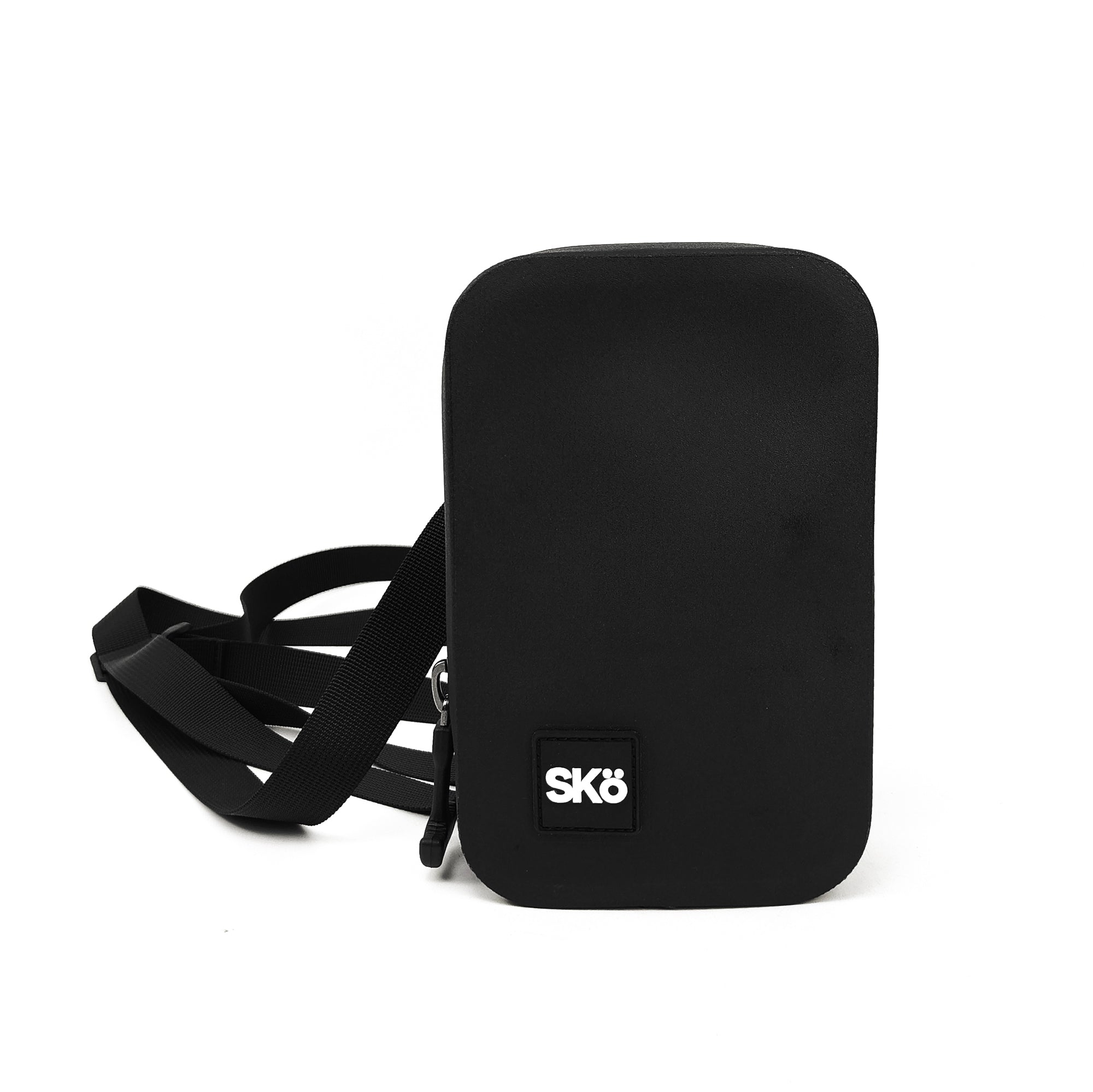
The SKÖ Waterproof Crossbody is built for a different job than your kayak rack: keeping the phone, wallet and keys protected around water, travel and everyday use.
SKÖ publishes an IPX8 waterproof rating, approximately 1.14 L capacity, 1680D TPU construction and a waterproof zipper. Before long-term storage, clean the bag, dry it completely and leave it open enough to air out. For the storage-friendly cleaning routine, see how to clean and maintain a waterproof bag.