


Why Is My Inflatable Paddle Board Losing Air Overnight?
Why Is My Inflatable Paddle Board Losing Air Overnight?
Last updated: September 21, 2026

A board that felt rock-hard at launch can read a few PSI lower the next morning — and that's not always bad news.
A 1–2 PSI overnight drop on an inflatable paddle board is normal and almost never means you have a leak. Air contracts as the temperature drops, so a board pumped up in warm afternoon sun will read lower by morning even with a perfect seal.
The confusion is understandable — you check your gauge before a dawn session, see the needle sitting below where you left it, and assume something's wrong with the board. Most of the time it's basic physics, not a defect. Inflatable SUPs are sealed air chambers, and sealed gas responds to temperature the same way it does in a car tire: cooler air takes up less volume, so pressure reads lower even though no air actually escaped.
The number that matters is how much you lost and under what conditions. A board that drops 1–2 PSI overnight in a garage or on a cool dock and still feels board-stiff underfoot is behaving normally. A board that's noticeably soft, that keeps losing air after you top it off, or that drops pressure fast during a session on the water has an actual leak — and that's worth tracking down before your next trip, not during it.
Why is my inflatable paddle board losing air overnight?
A 1–2 PSI drop overnight is normal — air contracts as the board cools, so a board inflated in warm afternoon air will read lower by morning with zero leaks. Losing more than that, or losing pressure fast during a paddle, usually points to a loose valve seal, a slow puncture, or worn seam tape. Re-test at a stable temperature before assuming it's a real leak.
How to tell normal pressure loss from a real leak
1–2 PSI down, board still feels firm
Classic thermal contraction. This is more noticeable if you inflated during the heat of the day and the board sat through a cold night — the same swing a car tire sees between afternoon and morning.
Board feels soft or flexes underfoot
If you can press a noticeable dip into the deck or it feels noodly compared to launch day, you're past normal contraction. That's air actually leaving the chamber.
You can hear air at the valve under load
A hiss or whistle right at the valve base when you stand near it usually means the valve fitting has loosened or the internal seal has worn out — a common wear point, not a defect in the board's material.
It keeps dropping after you top it back off
Re-inflating and losing pressure again within an hour, especially at a stable temperature, means there's an active leak somewhere — valve, seam, or a puncture from a sharp rock or oyster shell at launch.
How to actually test for a leak
Use the PSI printed on your board (most inflatable SUPs run 12–20 PSI). A garage or living room removes the sun/shade swing that causes false readings.
Same room, same temperature. This isolates whether pressure loss is thermal or real — if the room didn't get colder, the board shouldn't lose air either.
Loose or worn valves are the most common source of "mystery" leaks — more common than punctures. Spray the valve threads and the seam around it and watch for bubbles.
Inflate fully, submerge or spray section by section, and look for a steady stream of small bubbles rather than the occasional random one (which can just be surface bubbles popping).
A loose valve fitting can usually be hand-tightened or snugged with a valve wrench. A pinhole gets a proper vinyl patch from the included repair kit. A cracked valve housing needs a replacement valve, not a patch.
If you're testing before a trip and don't have 24 hours to spare, a rough field check works too: top the board off to spec, paddle for your normal session, and see how it feels at the end. A board that's noticeably softer after two or three hours on the water — independent of temperature — has a leak worth chasing down before you count on it again.
Storage matters here too. Boards left fully inflated in a hot car or a sun-baked garage cycle through bigger temperature swings than boards deflated and rolled for storage, which stresses valve seals and seam tape faster over a season. Paddling Magazine's maintenance guidance and REI's paddle boarding care and repair resources both point to the same pattern: most "my board won't hold air" complaints trace back to a valve issue rather than a puncture, which lines up with valve-specific troubleshooting guidance from board manufacturers as well.
How much PSI drop overnight is actually normal?
Roughly 1–2 PSI in cool conditions is typical and driven by temperature, not a leak. If you're losing more than that, or losing air fast during a session rather than overnight, treat it as a real leak and run the soapy-water test on the valve and seams before your next trip.
Should I store my paddle board fully inflated or deflated?
For anything longer than a few days, deflate to a light pressure (around 5 PSI), roll loosely, and store it out of direct sun. Leaving a board fully inflated in heat or freezing cold repeatedly stresses the valve seal and seams faster than a normal inflate/deflate cycle would.
Sources
None of this fixes a soft board, but it's worth thinking about what you're carrying on it — if your phone, keys, and car fob are riding in a pocket or a dry bag that isn't sealed as well as the board itself, a wobble getting back on after checking the valve is exactly when something goes in the water. A waterproof crossbody worn close to the body solves that specific risk without adding anything bulky to carry.
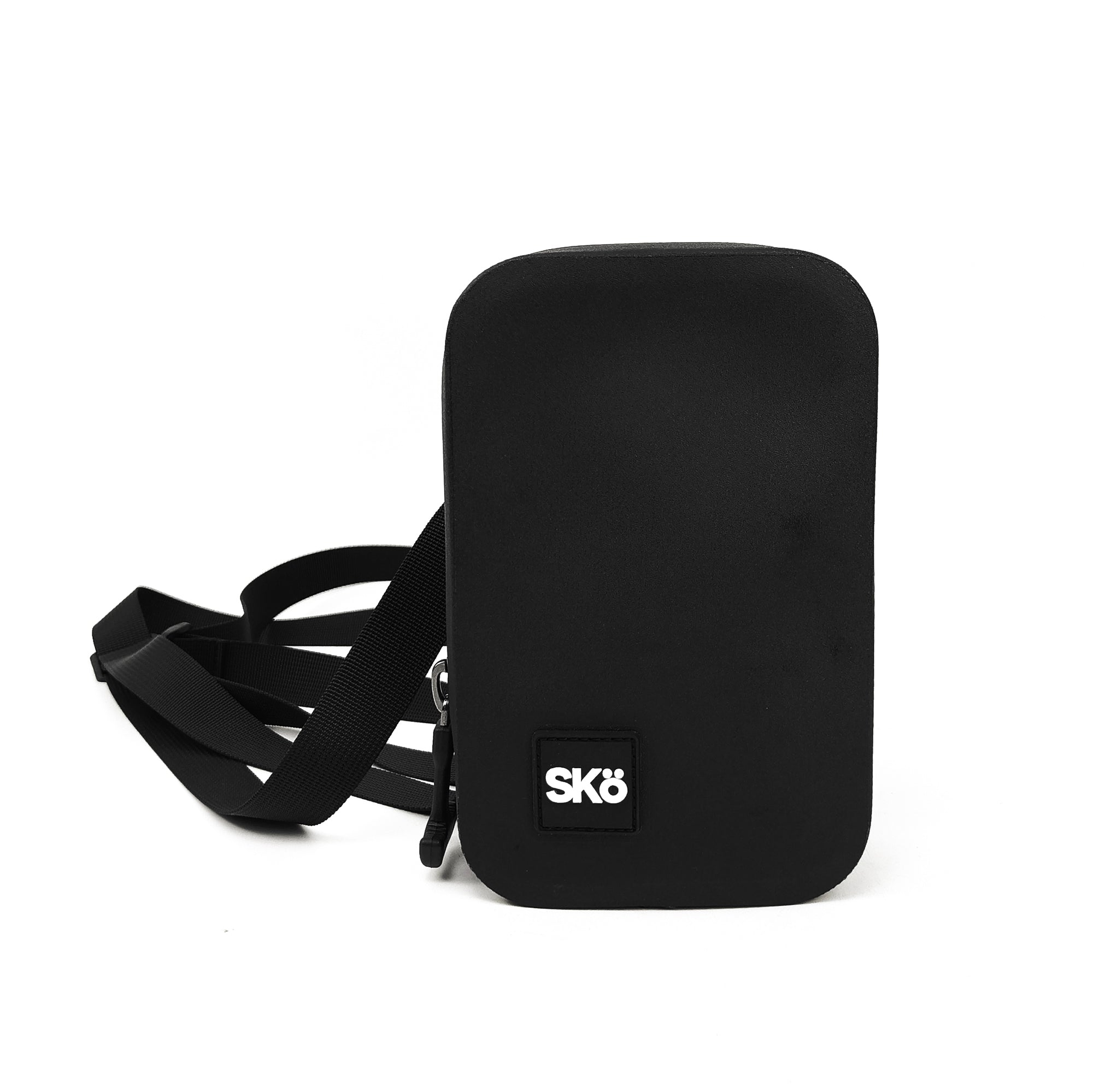
$80 · Limited Lifetime Warranty