


Keep the Essentials Dry. Keep Moving.
Waterproof carry and practical trail guidance for protecting phones, electronic keys, wallets, maps and small electronics from rain, wet ground, leaking bottles and unexpected water crossings.
Waterproof storage is one part of a hiking system. Choose clothing, navigation, emergency equipment and other gear for your specific route, season, terrain and conditions.
Not everything on the trail needs to stay perfectly dry.
Water bottles, trekking poles and plenty of outdoor equipment can tolerate moisture. A phone, electronic car key, wallet, paper map, battery pack or headlamp is different.
The farther you get from the trailhead, the more useful it becomes to separate critical dry items from the rest of your gear. Rain covers, pack liners, dry bags and compact waterproof carry each solve a different part of that problem.
Prioritize the gear moisture can disable.
Your exact packing list depends on the route, weather, season and trip length. Start waterproofing with the small items that are difficult to replace or use once soaked.
Phone & Navigation
Phones, GPS devices and paper maps may be important for route finding, communication and documentation.
Electronic Keys
A soaked key fob can become a major problem when the trail ends back at your vehicle.
Power & Electronics
Battery packs, headlamps and other small electronics deserve separation from leaking bottles and wet clothing.
Critical Dry Gear
On longer trips, insulation, sleep systems and dry clothing need appropriately sized waterproof protection of their own.

Water can come from inside the pack too.
Rain is only one source of exposure. Wet clothing, a leaking bottle or hydration system, damp ground and an unexpected creek crossing can all reach electronics packed inside an ordinary backpack.
Give quick-access valuables their own protected space.
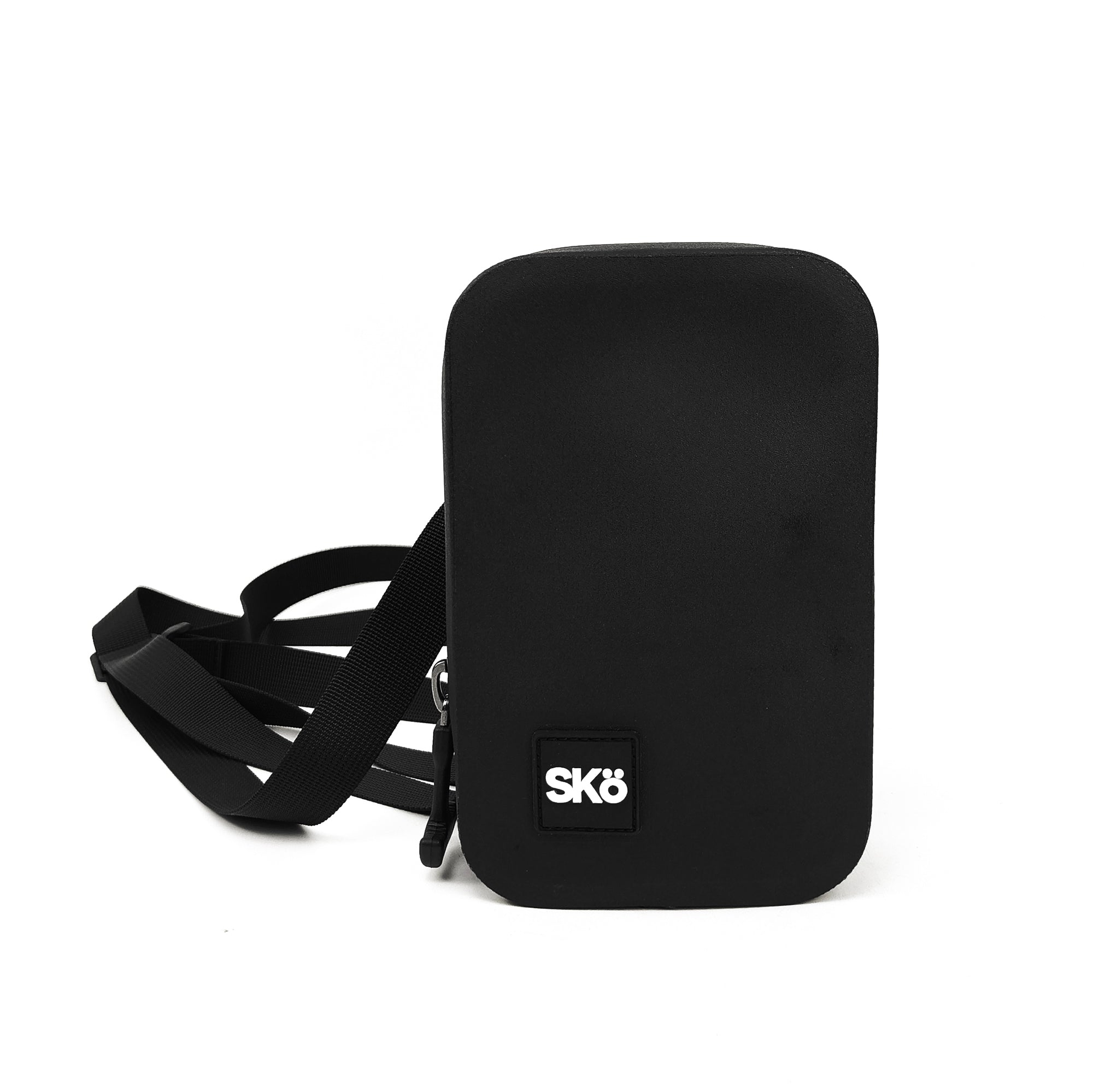
Small essentials. Separate from the main pack.
The SKÖ Waterproof Crossbody is designed for waterproof and submersible protection when its waterproof zipper is properly closed and sealed. Its approximately 1.14-liter capacity gives phones, electronic keys, wallets and compact electronics a dedicated layer of protection while your primary backpack carries the larger load.
SKÖ manufactures this product. It complements rather than replaces a hiking backpack, pack liner, sleeping-bag dry storage or other higher-capacity backpacking systems.
A dry trail and a wet crossing are different waterproofing problems.
Hiking is one activity where water resistance may be enough for some gear and conditions, while critical electronics or wet routes justify a stronger waterproof layer.
More time outside means more gear that cannot afford to stay wet.
A short day hike may only require dedicated protection for valuables. Backpacking adds insulation, clothing, sleep systems and electronics that benefit from separate waterproof layers.
Water crossings change the risk quickly. If soaking a phone, electronic key, dry clothing or sleep system would create a serious problem, protect it before entering the crossing rather than after conditions worsen.
Go deeper on waterproof trail gear.
Explore waterproof bag choices, closure systems and practical ways to protect small electronics and larger gear when conditions turn wet.

Best Waterproof Bag Setup for Hiking
Compare practical waterproof bag options for wet hikes and outdoor trips.
Best Waterproof Crossbody Bags for 2027
Compare compact options for phones, keys, wallets and other small moisture-sensitive valuables.
Best Waterproof Sling Bags for 2027
Compare larger waterproof sling options when you need more room than a compact crossbody provides.
How Do Waterproof Zippers Actually Work?
Learn why the closure matters when protecting electronics and valuables from serious water exposure.
Why Is There Condensation Inside My Dry Bag?
Understand how moisture can become trapped inside waterproof storage even when the bag has not leaked.Why Won't My Dry Bag Roll-Top Seal Properly?
Learn the common reasons a roll-top closure may not seal the way you expect.Dry the gear before storing the adventure with it.
Mud, dust, sand and moisture can collect around waterproof closures and straps. A simple post-trip routine helps keep sealing surfaces clean and equipment ready for the next route.
Clean
Remove mud, dust, sand and other trail debris from the bag, zipper, straps and hardware.
Clear
Inspect zipper tracks and sealing surfaces and remove grit before closing waterproof storage again.
Dry
Allow wet gear to dry before extended storage and follow the manufacturer's closure-care instructions.
Hiking, backpacking & waterproof gear FAQs
How do I keep my phone dry while hiking?
Give it dedicated waterproof storage instead of relying only on the outer backpack. This can protect it from rain, leaking bottles, wet clothing, damp ground and unexpected water exposure.
Do I need a waterproof backpack for hiking?
Not necessarily. Depending on the route and weather, a hiking backpack can be combined with a rain cover, pack liner, dry bags or separate waterproof storage for the items that actually need it.
What's the best way to waterproof gear while backpacking?
A layered approach is often useful: appropriate dry storage for clothing and sleep systems, plus separate waterproof protection for critical electronics and valuables.
Should I keep my car keys waterproof while hiking?
Protecting an electronic key fob from heavy rain and accidental immersion is useful, especially on remote routes or hikes involving water crossings.
Is water-resistant enough for hiking?
It can be for lower-risk gear in light exposure. Sensitive electronics, sustained rain and routes with possible immersion may justify stronger waterproof protection.
Is a waterproof crossbody useful for hiking?
It can provide quick access to small valuables such as a phone, electronic key, wallet and compact electronics while your main backpack carries larger hiking gear.
Is a waterproof crossbody enough for backpacking?
No. A compact crossbody only covers small personal essentials. Backpacking still requires appropriate storage for clothing, shelter, food, sleep systems, water and other equipment.
Explore by activity.


Protect the gear that matters when the trail gets wet.
Keep your phone, electronic keys, wallet and small electronics in dedicated waterproof storage while your primary pack handles the larger load.