


Leave the Clutter. Take What Matters.
Waterproof gear and practical field guidance for protecting phones, electronic keys and small valuables around waves, saltwater and full submersion.
Waterproof protection and suitability for active surfing are separate questions. Any body-worn storage should stay secure and should not interfere with paddling, swimming or movement.
Surfing turns “water exposure” into the whole environment.
A wet paddle, a passing shower or a splash from the bow is one thing. Surfing means repeated waves, duck dives, wipeouts, salt and sand. If a phone or electronic key enters the water with you, protection should be chosen for that level of exposure.
The first decision is not which bag to buy. It is whether the item needs to enter the surf at all. Secure shore storage is usually simpler. When valuables must stay with you, keep the load small and separate water protection from the question of whether the carry system is appropriate for active surfing.
Protect the few things you cannot leave behind.
A full wallet and a bag of extras create problems in the water. Most surfers only need to solve for a small set of valuables before and during a session.
Electronic Key
Key fobs contain electronics and should be isolated from direct saltwater exposure if they need to stay with you.
Phone
If it enters the surf, plan for complete immersion rather than relying on ordinary rain or splash protection.
ID & Payment
Carry only what you need. One ID and one payment method usually create less bulk than a full wallet.
Surf Essentials
Board, leash, wax, appropriate sun protection and drinking water for before and after the session.

The best surf setup often starts with deciding what stays out of the water.
Lockers, secure vehicle solutions or someone you trust can eliminate the need to carry valuables in the surf. When that is not practical, choose protection for actual submersion and keep the carry system compact.
Compact protection for the valuables you do not want sitting on the beach.
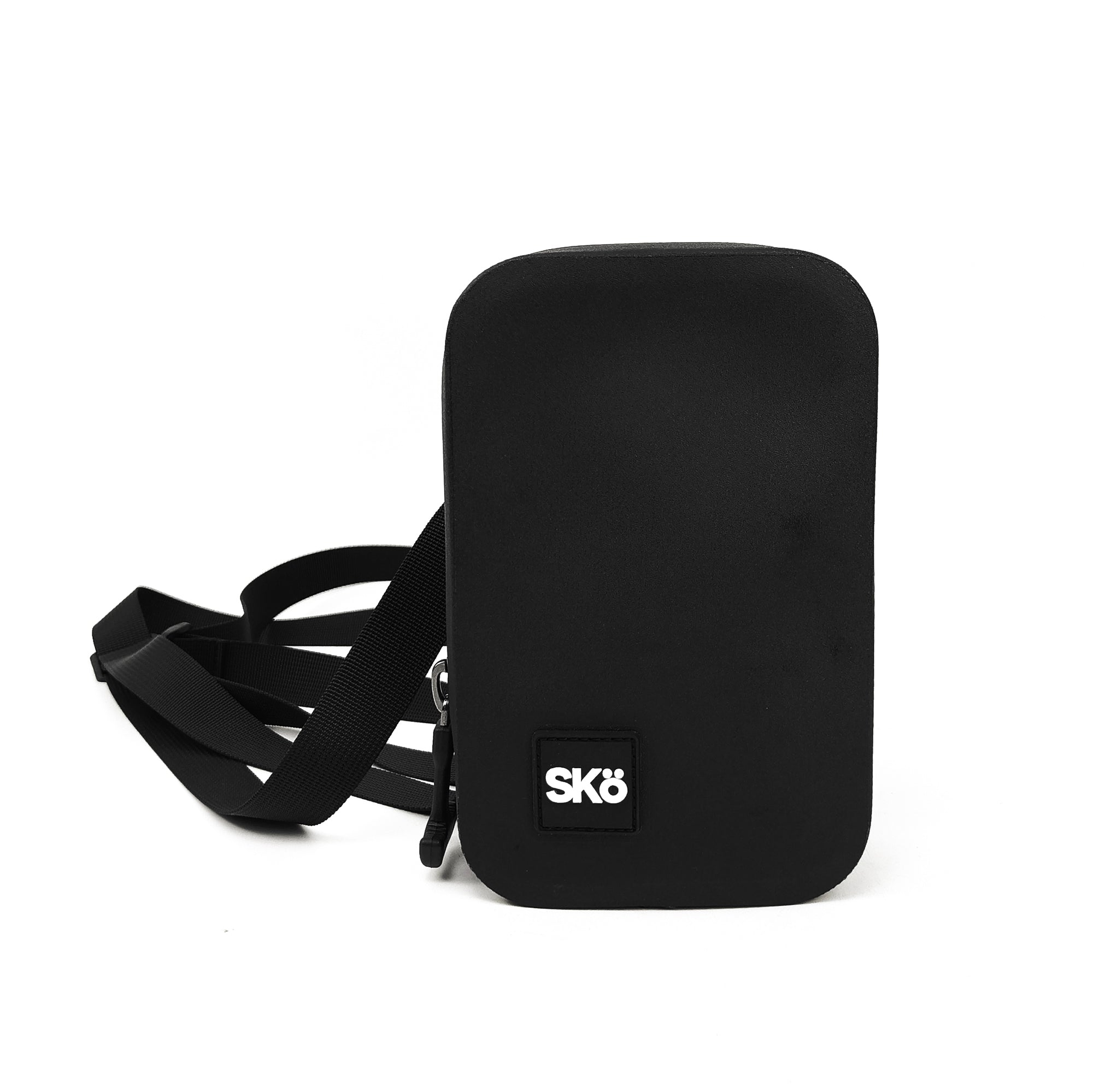
Phone. Key. ID. One waterproof place.
The SKÖ Waterproof Crossbody is designed for waterproof and submersible protection when its waterproof zipper is properly closed and sealed. Its compact size is intended for small valuables around beaches, swimming, paddling and other water-intensive activities.
SKÖ manufactures this product. SKÖ does not currently publish a surfing-specific certification, drag rating or strap-load rating. Do not infer those specifications or assume that waterproofing alone makes any body-worn bag appropriate for active surfing.
Surfing can move from spray to complete submersion in seconds.
Marketing terms are not interchangeable. Check the manufacturer's stated conditions instead of assuming every product labeled “waterproof” is intended to go underwater.
Three ways to solve the phone-and-keys problem.
The right answer depends on your vehicle, beach, available security and whether the valuables truly need to enter the surf.
A towel is not security. Hiding a phone in a shoe, under clothing or beneath a towel may keep it out of the water, but it does not make it secure.
Go deeper on surf-adjacent water protection.
These existing SKÖ guides cover beach security, submersible carry, waterproof closures, wet-phone behavior and choosing the right size of waterproof storage.

Best Waterproof Crossbody Bag for the Beach
What to look for when your phone, wallet and keys need protection around sand, saltwater and swimming.
How to Keep Your Valuables Safe at the Beach
Compare body-worn waterproof storage, lock-box approaches and the buddy system instead of relying on a towel.
Best Waterproof Crossbody Bags for 2027
Compare compact carry options and see which products are actually rated for full submersion.
Why Won't My Touchscreen Work Through a Waterproof Case?
Learn why wet touchscreens misbehave and what changes when you try to use a phone around the ocean.
How Do Waterproof Zippers Actually Work?
Understand why a closure built for real submersion is different from a zipper designed mainly to shed surface water.
Best Waterproof Bag for Snorkeling and Beach Trips
See when compact body-worn storage makes sense and when a larger dry bag is the better tool for shore gear.Salt and sand deserve a simple post-surf routine.
Ocean water can leave salt residue after evaporation, while beach sand can collect around zipper tracks, sealing surfaces, straps and hardware.
Rinse
Rinse the exterior, zipper, closure surfaces, straps and hardware with fresh water after ocean exposure.
Clear
Remove loose sand from zipper tracks and sealing surfaces before opening or storing the gear.
Dry
Allow gear to dry before extended storage and follow the product's closure-care instructions.
Surfing & waterproof gear FAQs
Where do surfers put their car keys?
It depends on the vehicle and beach. Options can include a secure locker, a compatible vehicle-specific solution, leaving the key with someone you trust, or waterproof storage when the key must stay with you. Electronic fobs should be protected from direct saltwater exposure.
Can I take my phone surfing?
You can, but if it actually enters the surf you should plan for possible complete submersion. You also need to decide whether carrying it will interfere with paddling, swimming, duck diving or movement.
Can I surf with a waterproof bag?
Waterproofing alone does not establish that a bag is suitable for active surfing. Any body-worn storage should fit securely and should not interfere with movement, swimming or your ability to manage the board safely.
Is water-resistant enough for surfing?
Not for something that may actually go underwater. Water-resistant gear can be useful around shore, but valuables entering the surf need protection appropriate for the expected water exposure.
Should I rinse waterproof gear after surfing?
After saltwater use, rinse the exterior, zipper, straps and hardware with fresh water and allow the gear to dry before storage.
Should I leave valuables hidden on the beach?
Hiding a phone under a towel or inside a shoe is not secure storage. When possible, use a locker, a trusted person, a compatible secure vehicle solution or another genuinely secure option.
Explore by activity.


Protect the few things you actually need.
Explore compact waterproof carry for phones, keys, cards and small valuables around beaches, swimming, paddling and other wet environments.