

Why Does My Waterproof Bag Smell Musty?
A sealed bag can keep rain out and still trap the moisture you put inside it. The fix is not masking the odor. It is identifying where the moisture came from, cleaning the right surfaces, and drying the bag completely before it goes back into storage.
A musty smell usually means moisture was trapped long enough for odor-producing microbes, residue or mold growth to become a problem. Do not assume every odor is visible mildew. Empty the bag, inspect the lining, corners and closure, hand-wash according to the manufacturer's care instructions with mild soap or detergent, rinse thoroughly, and let the bag dry completely open before storage. If you can see mold, treat it as mold rather than simply spraying fragrance into the bag.
Musty does not automatically mean “the waterproofing failed.”
Waterproof construction works in both directions. The same coated fabric, welded seams or sealed closure that keeps outside water away from your gear can also slow the escape of moisture already inside the bag.
That moisture can come from a damp swimsuit, condensation, wet hands, a leaking bottle, saltwater spray, sweaty gear, or simply washing the bag and closing it before the interior dried.
The old version of this article called a musty smell “almost always mildew.” That is too certain. CDC notes that mold can produce a musty odor, but a bag can also smell from residue, bacteria, damp fabric or other contamination. The useful question is not “What do I call the smell?” It is where did the moisture and residue stay trapped? A newly purchased bag with a material-like odor is a different issue; see why a new waterproof bag might smell like plastic.
Four clues tell you what kind of cleanup you need.
Musty, no visible growth
Start with ordinary cleaning and complete drying. Do not jump straight to harsh chemicals when you have not identified actual mold.
Specks, patches or fuzzy areas
CDC says mold may appear as spots in many colors and can smell musty. Clean it promptly and eliminate the moisture source.
Sticky, salty or dirty interior
Body oils, sunscreen, salt, food residue and dirty water can create odor even when visible mold is absent.
Smell strongest near zipper or fold
Grit, organic residue and trapped water can remain in zipper tracks, folded closures and tight corners long after the flat panels look dry.
Waterproof storage can become moisture storage.
EPA's mold guidance is built around one principle: moisture control. Mold does not grow without moisture, and damp materials should be dried promptly. The “24–48 hour” guidance you often see applies to wet building materials and furnishings, not as an exact countdown timer for a dry bag, but the prevention lesson carries over: do not leave damp gear sealed for days.
A wet swimsuit, damp towel, condensation, rinse water or spill puts water inside the bag.
The bag does exactly what it was designed to do: slow water movement through the enclosure.
Corners, fabric backers, zipper tracks and folded surfaces can remain damp longer than the exterior.
Residue and microbial growth can create a persistent musty smell that a quick surface wipe does not remove.
Clean first. Deodorize second.
Check corners, folds, liners, attachment points and the closure for dampness, staining, grit or visible growth.
Remove sand and dry debris before turning it into abrasive slurry with wash water.
Sea to Summit's current care guidance for compression dry bags recommends hand washing with mild soap and rinsing thoroughly.
Soap residue can become another source of film and odor. Pay attention to tight corners and closure channels.
Do not machine-dry unless the manufacturer explicitly permits it. Keep the bag open in a ventilated dry place until hidden areas are dry too.
If you can see mold, the cleanup becomes more material-specific.
CDC and EPA say visible mold should be removed and the moisture problem corrected. Their general hard-surface guidance uses water plus detergent and complete drying. A waterproof bag, however, may contain TPU, PVC, coated nylon, foam, fabric backing, adhesives or specialty zipper materials.
That is why the safest gear-care rule is to use the bag manufacturer's cleaning instructions rather than assuming a household mold treatment is compatible with every coated fabric or seal. For a step-by-step method covering safe washing, rinsing and drying, see our waterproof bag cleaning and maintenance guide.
Hard TPU, fabric lining and foam do not behave the same way.
Easiest to wipe + rinse
Smooth TPU or similar coated interiors are usually easier to wash because residue stays near the surface. Follow the manufacturer's soap and temperature guidance and dry every seam or fold.
Odor can linger longer
Woven or porous layers can retain water and residue longer than a slick coated face, so drying time matters more and repeated gentle cleaning may be needed.
Hardest to fully dry
Thick absorbent sections can trap moisture internally. If visible mold or odor persists after proper cleaning and complete drying, replacement may be more practical than repeated soaking.
Use the gentlest method that actually solves the problem.
The zipper track can stay dirty after the bag walls look clean.
GEAR AID notes that dirt, sand and salt deposits can build up in zipper systems and recommends removing debris before applying a compatible zipper-care product.
Grit is easier to remove before it mixes with water, oil or cleaner.
Use the bag maker's cleaning instructions, especially with waterproof zipper seals and coated tracks.
Do not prescribe generic silicone, wax, lip balm or household oil to every waterproof zipper. Different zipper systems use different materials and care products.
More lubricant is not automatically better. Excess product can attract dirt and migrate onto the bag.
Do not judge by the outside panel.
Sea to Summit currently recommends storing compression dry bags in a cool, well-ventilated dry place and says not to use a dryer. A waterproof bag can feel dry on the exterior while corners and folded closure areas are still damp.
Press a dry paper towel into the lowest corners and seams. If it picks up moisture, keep drying.
Inspect zipper teeth, tracks, roll folds and gasket-like areas where drops can hide.
Webbing and foam often dry slower than the waterproof shell. Do not close the whole system while these remain damp.
If the smell disappears while open but returns soon after closure, moisture or residue is probably still present somewhere in the system.
Do not trade odor for coating damage.
Skip these shortcuts
- Closing the bag because the exterior feels dry
- Masking odor with fragrance instead of cleaning
- Using household bleach without checking material compatibility
- Machine washing or machine drying unless explicitly approved
- Leaving wet towels or swimwear sealed overnight
- Applying random oils or silicone to a waterproof zipper
Use these habits instead
- Empty the bag as soon as practical after wet use
- Rinse salt, dirt and organic residue when needed
- Hand-wash with mild soap when manufacturer guidance allows
- Dry the bag fully open in a ventilated place
- Inspect the closure before storage
- Store clean and dry rather than sealed with damp contents
The best odor treatment is a storage routine.
Empty it the same day.
Do not let a damp swimsuit, towel or rash guard turn the bag into a closed humidity chamber for the next week.
Rinse before storage.
Remove salt and grit from the bag and closure instead of letting residue sit through multiple trips.
Dry open, not zipped shut.
Keep the main compartment, pockets and closures open until the slowest-drying parts are finished.
Store cool, dry and ventilated.
Sea to Summit's current care guidance uses the same principle for dry storage: cool, ventilated and dry rather than sealed while damp.
The musty-bag reset checklist.
Clean + dry storage check
Musty waterproof bag questions.
Does a musty smell mean my waterproof bag has mold?
Not necessarily. Mold can create a musty odor, but damp residue and other microbial growth can smell similar. Inspect for visible spots or fuzzy growth, then clean and dry the bag rather than diagnosing the odor by smell alone.
Can mold grow inside a waterproof bag?
Yes, if enough moisture remains on a surface or absorbent component. EPA and CDC emphasize that mold growth depends on moisture and that wet materials should be dried promptly. A sealed bag can slow drying if moisture is trapped inside.
Can I use bleach inside a waterproof bag?
Do not assume so. Bleach is used in some household mold-cleanup guidance, but waterproof bags can contain coatings, adhesives, fabrics and specialty zipper components that may not be bleach-compatible. Follow the bag manufacturer's care instructions.
Can I put a dry bag in the washing machine or dryer?
Only if the manufacturer specifically permits it. Sea to Summit currently tells users to hand-wash compression dry bags with mild soap, rinse thoroughly, avoid the dryer and store them in a cool, well-ventilated dry place.
Should I lubricate a waterproof zipper after cleaning it?
Only with a product compatible with that zipper system. GEAR AID sells several zipper-care products with different formulas, including silicone-free options, and waterproof-zipper manufacturers may have their own required lubricant. Clean first, then follow the closure maker's instructions.
What if the smell comes back after cleaning?
Recheck absorbent liners, foam, webbing, zipper channels and hidden folds for retained moisture or contamination. If visible mold or persistent odor remains in porous components after proper cleaning and complete drying, replacement may be more practical than repeated aggressive chemical treatment.
Finish the waterproof gear-care system.
Clean, dry and maintain your gear to help prevent musty odors and damaged closures.

Clean a waterproof TPU bag
Remove residue while caring for bag materials.

Why saltwater corrodes zippers
Understand corrosion and preventive rinsing.

Waterproof zipper hard to open?
Troubleshoot grit, friction and zipper care.

Condensation inside your dry bag
Identify moisture and improve storage habits.
Keep phone, wallet and keys separate from wet towels and swim gear.
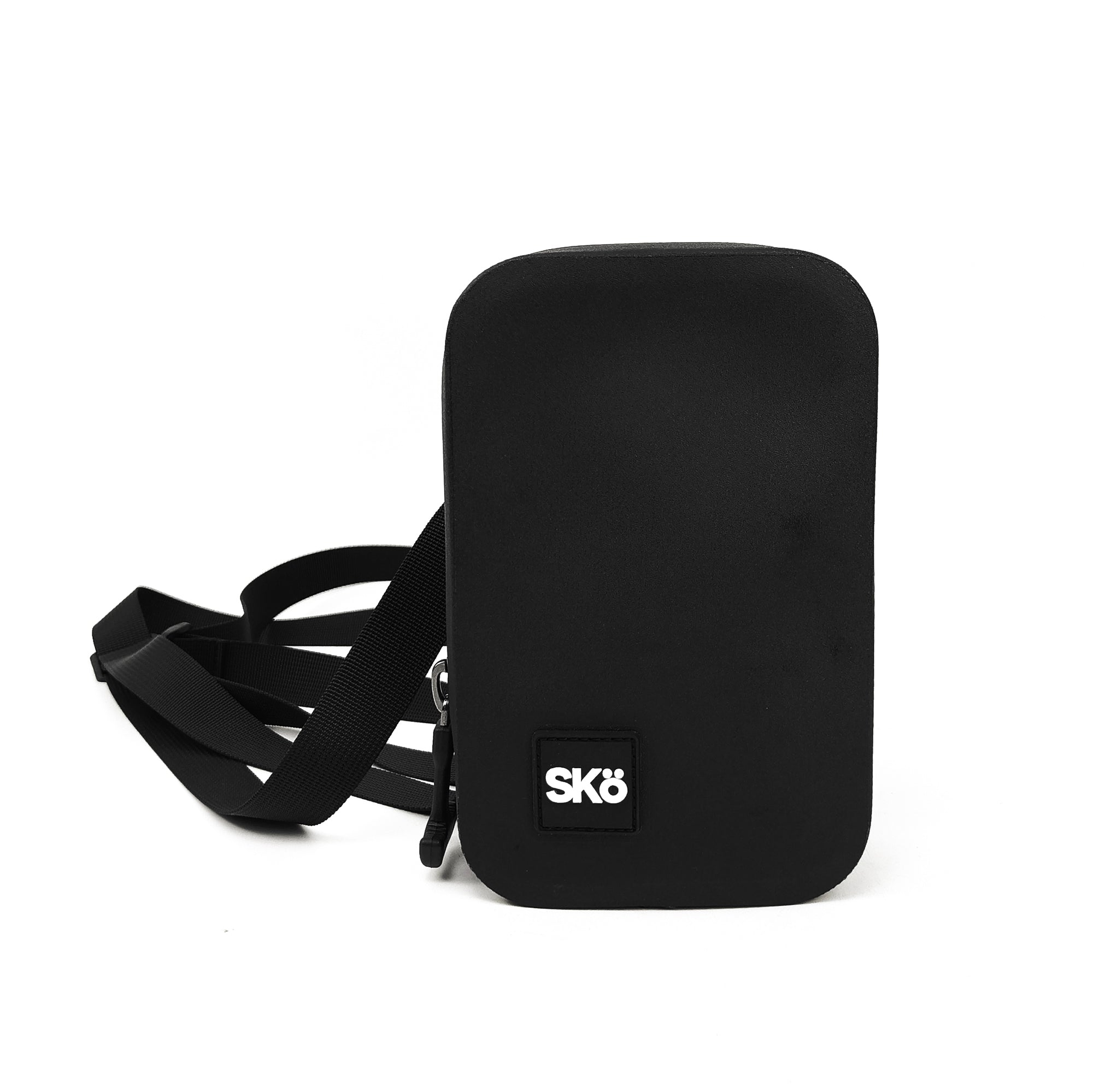
The SKÖ Waterproof Crossbody is compact waterproof storage for small valuables rather than a catch-all bag for wet clothing. That separation matters: the phone and key can stay sealed while damp towels, swimwear and other gear dry somewhere ventilated.
SKÖ currently publishes an IP68 rating, approximately 1.14 L capacity, 1680D TPU construction, a waterproof zipper, dimensions of 7.5 × 4.7 × 2 inches and an approximate weight of 13 oz. The product page describes the finished bag as waterproof and submersible when the zipper is fully and properly sealed.
Like any sealed waterproof enclosure, it should be emptied, cleaned when needed and completely dried before storage if moisture gets inside.
Explore more SKÖ guides
Learn how to clean, dry, maintain and troubleshoot waterproof bags so they last longer.
 Why Is My Waterproof Bag Sticky or Tacky? Causes & Fixes
 How Long Do Dry Bags Last? Signs to Repair or Replace