

How to Keep Your Phone & Valuables Safe at the Pool
The pool water is only half the problem. Phones, wallets and keys are also vulnerable when they are left sitting unattended on towels, chairs and open bags while everyone is swimming.
Minimize what you bring to the pool. For the valuables that must come, either keep them with you in waterproof storage designed for the water exposure you expect, place them in a properly secured locker or lockable container, or leave them with a separate trusted adult who is actually staying out of the water. Do not make the designated water watcher responsible for valuables too. Their attention belongs on the swimmers.
A folded towel is not a security system.
The normal pool routine creates an awkward gap: everyone gets into the water, but phones, room keys, wallets and car keys stay behind.
They may be partially hidden beneath a towel or pushed into an open tote, but they are still sitting in a public or semi-public space where the owner is no longer beside them.
The better approach is to decide where those valuables will live before everyone jumps in. For a full day with towels and other essentials, use the water park packing checklist.
Swimmer supervision and valuables security should not compete for attention.
Watch the water.
CDC and American Red Cross water-safety guidance emphasizes attentive, distraction-free supervision around swimmers, particularly children.
Secure the valuables separately.
The phone, wallet, room key and car key need a system that does not depend on the water watcher dividing their attention. The same question comes up on shorelines; our beach valuables safety guide compares supervised storage, lockers and on-body options.
The valuables are on the deck. You are in the water.
The farther your attention moves from the chair, the more the security system depends on assumptions: someone will notice, someone nearby is trustworthy, or you'll look back often enough.

A phone beneath a towel may be less visible, but it is still unsecured.
The pool day becomes a repeated cycle of looking back at your belongings instead of being present in the water.
Bags, towels, shoes and identical lounge chairs make it harder to keep track of small items.
Even if nothing goes missing, a splash, wet towel or accidental drop can still damage inadequately protected electronics.
Do not turn the water watcher into the bag watcher.
The CDC and American Red Cross emphasize active, attentive supervision around water.
If an adult is designated to supervise swimmers, let that be the job. Secure the valuables another way instead of asking the same person to monitor children, bags, messages and everything else at once.
Pick the one that fits your pool day.
Match the storage method to the situation.
| Situation | Best starting point | Why |
|---|---|---|
| Hotel pool | On-body or room safe | You often only need a room key and phone. Reduce what comes down to the deck. |
| Public community pool | Locker if secure | A secure locker separates valuables from the open pool deck. |
| Swimming with kids | Secure valuables first | The adult supervising swimmers should not be distracted by repeatedly checking a chair. |
| Resort / water day | Compact waterproof carry | Keeps room key, ID and payment essentials together as you move between pool areas. |
| You only need one key | Bring less | The easiest item to protect is the one you did not bring. |
Give waterproof gear a simple reset before storing it.
Pool use leaves moisture and pool chemicals on the exterior of bags, pouches, straps and closures. A quick rinse and proper drying make more sense than throwing wet gear directly into a hot car or closed suitcase. For the complete after-use process, see how to clean and maintain a waterproof bag.
Remove pool residue from the exterior, strap and closure.
Look for hair, sunscreen or debris around the closure.
Let moisture escape before putting the bag into enclosed storage.
Avoid unnecessary prolonged heat and sun exposure between trips.
Decide where the valuables go before anyone gets wet.
Pool-day valuables checklist
Common questions before you jump in.
Can I take my phone into a chlorinated pool?
Only if the enclosure you are using is intended for the type and duration of water exposure you expect. A splash-resistant product should not automatically be treated as suitable for intentional submersion.
Are pool lockers safer than leaving a phone on a chair?
A properly secured locker generally offers more physical security than leaving a valuable openly accessible on the pool deck. Locker designs vary, so confirm that the locker actually locks and keep control of the key or code.
Should the adult watching children also watch the bags?
The safer approach is to separate those jobs. CDC and Red Cross guidance emphasizes attentive supervision around water, so secure valuables in a way that does not require the water watcher to divide attention.
Is a waterproof phone pouch enough for a pool day?
It can be if you only need to carry a phone and the pouch is designed for your intended water exposure. If you also need a wallet, key, room card or other small essentials, a larger waterproof bag may be more practical.
Should waterproof gear be rinsed after swimming?
A fresh-water rinse after pool or saltwater use is a sensible care step. Pay particular attention to closures, straps and areas where sunscreen or debris can collect, then let the gear dry before storage.
Related SKÖ guides.
The things people worry about at the pool are usually small.
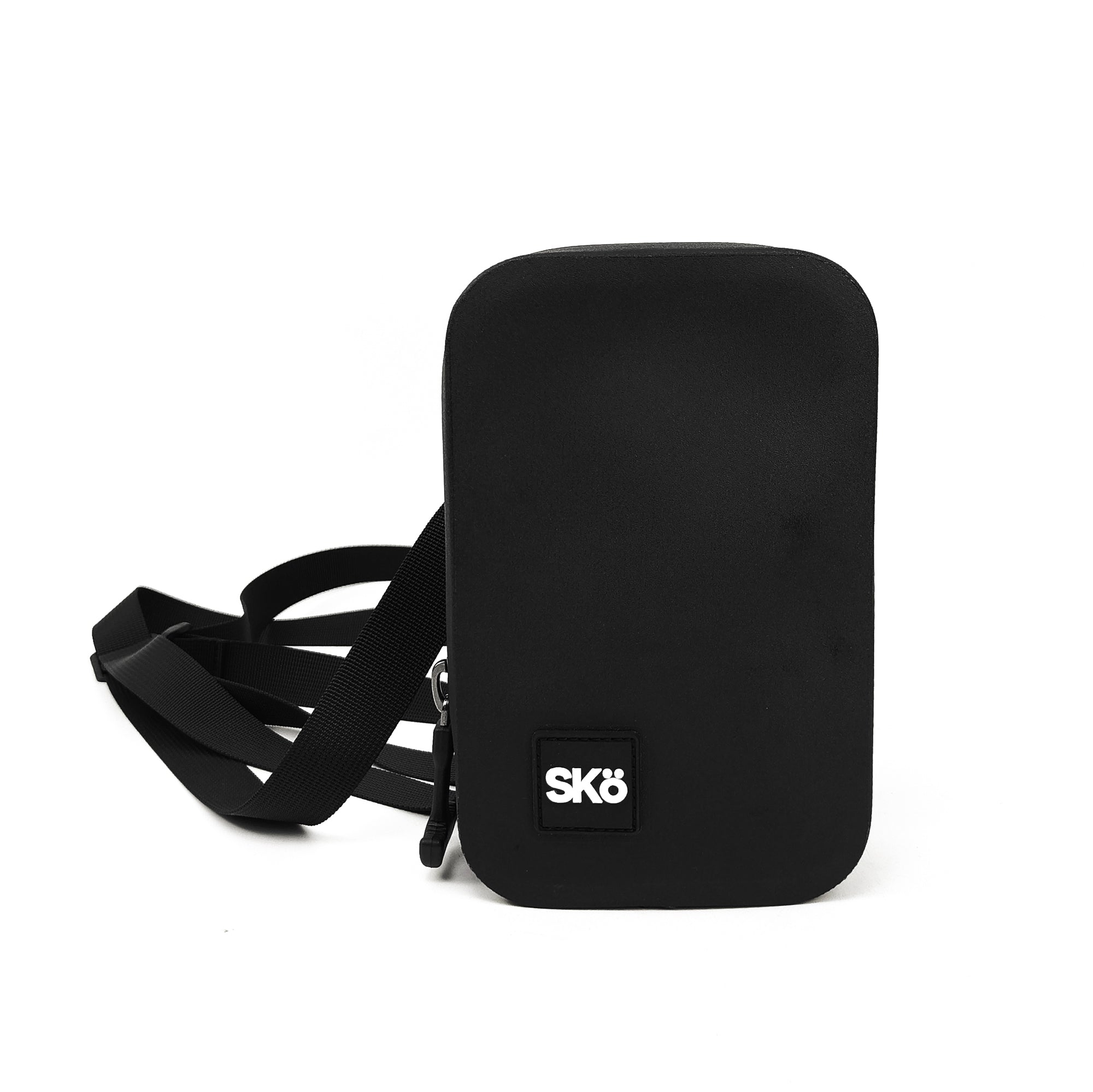
A phone, wallet, room key and car key do not require a large dry bag. The SKÖ Waterproof Crossbody is built around compact essentials and on-body carry. For hotels and excursions beyond the pool, see how to keep your phone and wallet dry while traveling.
It uses a waterproof zipper and is designed for real water exposure when properly closed. SKÖ currently does not publish a specific depth-and-duration rating, so always use the product within the manufacturer's stated guidance rather than assuming a standardized immersion limit.
Made by SKÖ, publisher of this guide.
Explore more SKÖ guides
Plan your next pool or water-park day with practical tips for protecting small valuables.
 What to Pack for a Water Park: Complete Packing List
 Best Waterproof Bags for Water Parks (2027): Wear, Locker or Handoff
 How to Protect Your Phone at the Beach
 Best Small Waterproof Bags for Phone, Wallet & Keys (2027)