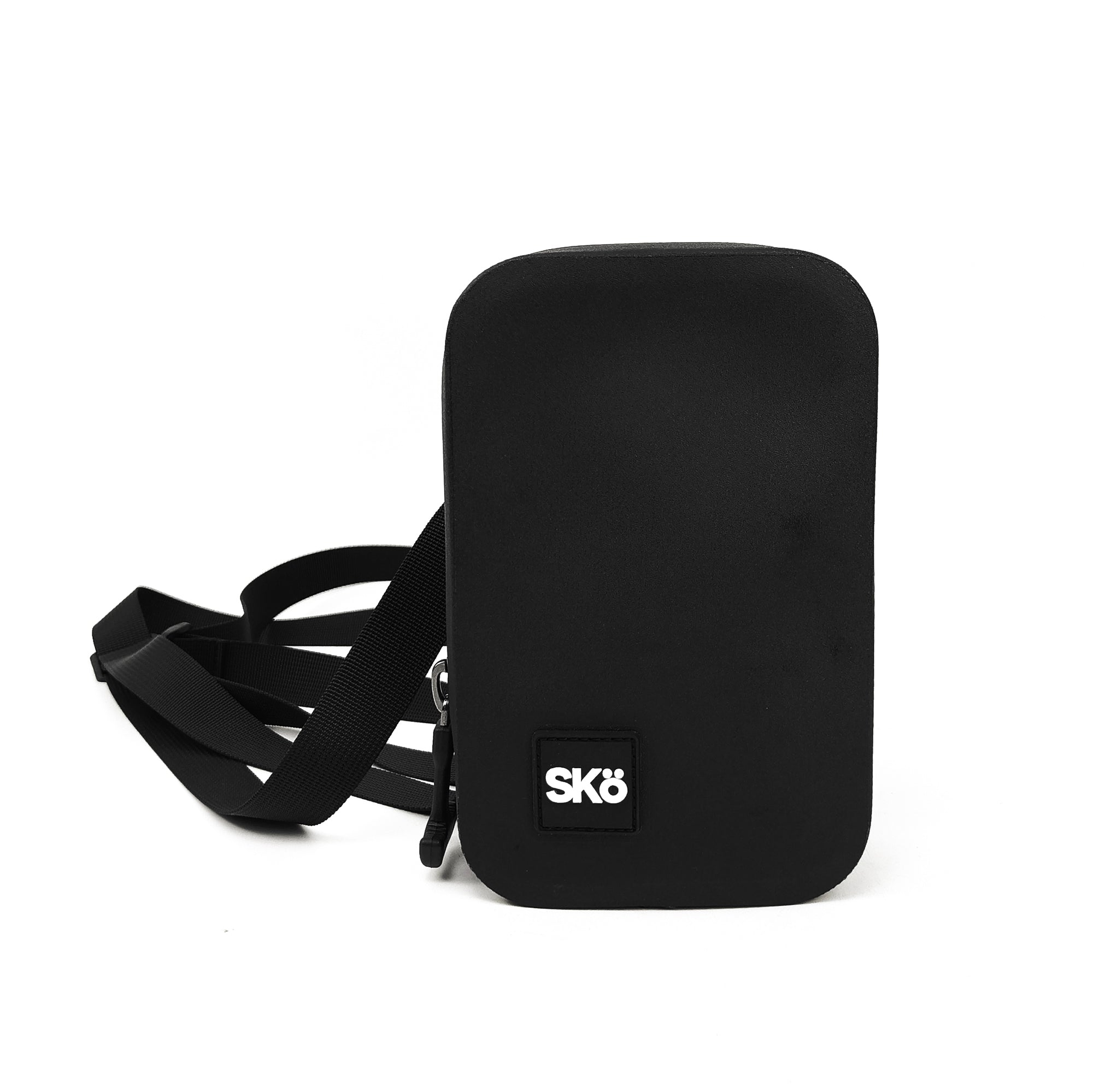

Waterproof Crossbody Bag vs. Phone Pouch: Which Do You Need?
The choice is not really “bag versus pouch.” It is phone-first access versus a protected pocket kit. Count what you carry, decide how often you need the screen, then match the waterproof claim to the water you expect.
Choose a waterproof phone pouch when the phone is the main thing you need protected and you want to see, photograph or use the screen while it remains sealed. Choose a waterproof crossbody when you routinely carry phone, wallet, keys, sunglasses, passport or other small essentials together. The tradeoff is simple: phone pouches usually win on phone access and low profile; crossbody bags win on multi-item storage and everyday wearability. In either category, the individual product's published immersion claim matters more than the word “waterproof.”
These two products overlap, but they are designed around different priorities.
A waterproof phone pouch starts with the phone. Its shape, clear panels and closure are usually built around protecting one device while keeping that device usable.
A waterproof crossbody starts with the things that normally live across several pockets: phone, wallet, keys, sunglasses, cards, hotel key and sometimes a passport. It sacrifices through-bag touchscreen use in exchange for more flexible storage and a carry style that behaves more like an everyday bag. If you are also considering an everyday nylon bag for dry outings, our SKÖ vs. Thread crossbody comparison explains that separate choice.
The original article captured that basic distinction well, but a few statements were too absolute. A phone pouch is not always phone-only. Some current pouches have space for cash, cards or keys. A crossbody is not automatically the best swimming format simply because it is waterproof. And neither category is automatically submersible just because “waterproof” appears in the title.
What do you actually need the carrier to do?
The screen is part of the activity.
If you are taking photos, checking a map, answering messages or using the phone frequently around water, a clear waterproof pouch can protect the device without making you open the enclosure every time.
- Phone is the primary item
- Touchscreen or camera access matters
- Lowest-profile carry is a priority
- Built-in flotation is available on some models
Your valuables need one wearable home.
If the phone travels with a wallet, car key, room key, sunglasses, passport or other small items, a compact waterproof crossbody gives that entire pocket kit one sealed compartment. Compare small waterproof bags for phone, wallet and keys if that is your everyday load.
- Phone + wallet + keys travel together
- Hands-free everyday wear matters
- You move between wet and dry activities
- You do not need to operate the phone through the bag
Phone-only and “phone plus everything else” are different shapes.
The liter number does not tell the whole story. Wallets add width. Keys and fobs add hard thickness. Sunglasses change the required opening again.
A purpose-built phone pouch is usually the cleanest answer, especially when through-pouch camera or touchscreen use matters.
Either format can work. Some phone pouches accommodate small extras, but check whether those items distort the closure or press against the phone.
This is where the crossbody's flexible compartment becomes much more useful than trying to build a second pocket around a phone-shaped pouch.
Where each format actually wins.
These are category-level tendencies, not promises about every product. The final column should always be the manufacturer's current rating and instructions.
| Factor | Waterproof phone pouch | Waterproof crossbody |
|---|---|---|
| Primary job | Protect and keep a phone usable around water | Protect several small valuables in one wearable bag |
| Best load | Phone; sometimes card, cash or slim key | Phone, wallet, keys, sunglasses, passport-sized essentials |
| Phone use while sealed | Often yes through clear TPU panels | Usually no; open the bag to use the phone |
| Carry style | Lanyard, neck/chest strap, wrist or inside another bag | Adjustable shoulder strap, worn front, side or across the body |
| Swimming profile | Lower-profile phone-only designs can be easier for active water use | More storage but more material and strap to manage in the water |
| Floatability | Some models float; many do not | Product-specific; never assume |
| Immersion protection | Ranges from splash resistance to published IP67/IP68/IPX8 products | Ranges from water-resistant fashion bags to purpose-built submersible designs |
| Best advantage | Fast phone access with minimal bulk | One protected place for the whole pocket kit |
Current product examples below show why the exact rating matters more than the category.
You can protect the phone without putting the screen away.
Current purpose-built phone pouches from brands such as Nite Ize and Sea to Summit use transparent TPU so the screen and camera remain accessible while the enclosure stays closed.
A clear front/back pouch can let you use cameras without exposing the phone to wet hands, spray or sand every few minutes.
Nite Ize's current RunOff Waterproof Phone Pouch is touchscreen-friendly and supports front/back camera use while sealed.
Paddling Magazine reports that some tested models maintain touchscreen operation underwater. Do not assume every clear pouch behaves the same way.
A waterproof enclosure can trap humid air. Sea to Summit notes that condensation can form inside waterproof electronics storage when the trapped air cools.
Compare the published condition, not the marketing word.
Nite Ize RunOff Phone Pouch
Nite Ize currently publishes IP67 protection, which it defines for this pouch as submersion in 1 meter of water for up to 30 minutes.
Sea to Summit TPU Guide
Sea to Summit currently publishes IPX8 testing for its TPU Guide Waterproof Phone Case at 10 meters for one hour.
SKÖ Waterproof Crossbody
SKÖ currently publishes IP68 and describes the Crossbody as waterproof and submersible when its waterproof zipper is fully and properly closed.
The categories are more flexible than they look.
Nite Ize RunOff Phone Pouch
Current published features include an IP67 rating, touchscreen-friendly clear material, front/back camera use, an adjustable lanyard and TPU construction.
- Submersible to 1 m for up to 30 min
- Fits phones up to 3.38 × 6.53 × 0.55 in internally
- Designed around direct phone use
- Good illustration of the pouch category's access advantage
SKÖ Waterproof Crossbody
Current published specifications include IP68, approximately 1.14 L, 1680D TPU, a waterproof zipper and a 7.5 × 4.7 × 2 inch body.
- Designed for phone, wallet, keys and other small essentials
- Approx. 13 oz
- No through-bag touchscreen window
- Good illustration of the crossbody category's multi-item advantage
The same person can need a different answer tomorrow.
You should be able to choose without guessing.
Choose the phone pouch if...
- The phone is genuinely the main item
- You want to use the touchscreen while sealed
- You take photos constantly around water
- You want the lowest-profile wearable format
- The exact pouch fits your phone and case
- Its published immersion rating matches your activity
Choose the crossbody if...
- Your phone always travels with wallet and keys
- Sunglasses, passport or other essentials join the kit
- You move between water, walking, food and travel activities
- You want one bag instead of several pockets
- Phone-through-window access is not important
- The exact crossbody's water rating matches your exposure
Category shortcuts can send people to the wrong product.
“Phone pouches only hold phones.”
Some are phone-only in practice, but current products can also accommodate cash, cards or keys. Fit is product-specific.
“A crossbody can replace a pouch for swimming.”
A rated crossbody may handle immersion, but active swimming favors a lower-profile setup for many users. Water protection and swim ergonomics are separate questions.
“Waterproof means safe at any depth.”
Published ratings have conditions. Use the maker's actual depth, duration and closure instructions rather than treating the label as unlimited protection.
“More capacity is automatically better.”
If you only need a phone, extra volume adds bulk. The best format is the smallest one that handles the real load and the real water exposure. If a camera, bottle or extra layer is part of the load, see our sling bag guide and check each option's water-protection limits.
SKÖ makes one side of this comparison.
SKÖ does not manufacture the phone pouches referenced here. The article intentionally gives the phone-pouch format the win when through-pouch touchscreen use, camera access or a lower-profile phone-only carrier is the better fit.
One question usually settles it.
What is leaving the hotel, car or house with you?
Waterproof crossbody vs. phone pouch questions.
Should I get a waterproof crossbody bag or a phone pouch?
Get a phone pouch when the phone is the main thing you need protected and you want to operate it while sealed. Get a waterproof crossbody when your phone travels with a wallet, keys, sunglasses, passport or other small essentials and you want one wearable compartment for all of them.
Can a waterproof phone pouch hold my wallet and keys?
Some can hold cards, cash or a small key, but many are shaped around the phone. A bulky wallet or key fob can make the pouch hard to close correctly. Check the internal dimensions and test the closure with the exact items you plan to carry.
Can a waterproof crossbody be used for swimming?
Only when the product is actually rated for the water exposure you expect. Even then, immersion protection does not automatically make a larger crossbody the best ergonomic option for active swimming. A low-profile phone pouch can be more convenient when the phone is the only item you need.
Do waterproof phone pouches actually work?
Purpose-built models can publish substantial immersion ratings. Nite Ize currently rates its RunOff Phone Pouch to IP67, 1 meter for up to 30 minutes, while Sea to Summit rates its TPU Guide Phone Case to IPX8, 10 meters for one hour. Correct closure and product condition still matter.
Can I use the touchscreen through a waterproof phone pouch?
Many purpose-built TPU pouches are designed for touchscreen use while sealed. Performance varies with the phone, screen protector, pouch material, water and the specific model, so use the manufacturer's compatibility guidance.
Is IP68 better than IP67?
The higher IP immersion digit indicates a different test category, but it is not enough by itself to compare two consumer products. Read the manufacturer's exact depth, duration and intended-use statement. Nite Ize publishes a specific 1 m / 30 min condition for its IP67 pouch. SKÖ publishes IP68 for the Crossbody but does not currently publish one universal depth/time number.
Go one level deeper.
Compare compact waterproof bags, phone pouches and practical ways to keep valuables dry.

Best waterproof crossbody bags
Compare small waterproof carry options.

Touchscreen not working through a case?
Learn why wet screens and plastic covers can interfere.

Keep phone and wallet dry while traveling
Build a simple travel protection system.

SKÖ vs Nite Ize RunOff Waist Pack
Compare waterproof access, capacity and carry.
The SKÖ Crossbody is the multi-item side of this comparison.
The SKÖ Waterproof Crossbody is built as compact, hands-free storage for small valuables. It is not trying to replace a transparent phone pouch when your priority is using the screen through the enclosure.
SKÖ currently publishes an IP68 rating, approximately 1.14 L capacity, 1680D TPU construction, a waterproof zipper, dimensions of 7.5 × 4.7 × 2 inches and an approximate weight of 13 oz. The product page describes the finished bag as waterproof and submersible when the zipper is fully and properly closed.
SKÖ does not currently publish a universal immersion depth or time condition for this bag, so this guide does not invent one.