


Best Way to Carry Your Phone, Wallet, and Keys While Kayaking
Best Way to Carry Your Phone, Wallet, and Keys While Kayaking
Last updated: August 21, 2026

The right answer depends on whether you need to touch your phone mid-paddle or just keep it dry until you're back on shore.
The best way to carry a phone, wallet, and keys kayaking is a waterproof pouch or crossbody worn on your body, not stored loose in the kayak — tethered or clipped so it can't sink or drift away if you capsize. Which specific option is best comes down to how often you need to actually touch the phone while paddling.
If you need in-and-out access — checking a map, taking photos, answering a call — a clear touchscreen-compatible waterproof pouch worn around the neck or waist is the standard choice. If you mainly want your essentials sealed and out of the way until you're back on shore, a waterproof crossbody or a small dry box clipped to the deck line works just as well and holds more than a phone alone.
The one thing that matters more than which style you pick: whatever you choose needs to float or be tethered to the kayak. That's the detail that actually prevents a lost phone or wallet, not the waterproof rating.
What's the best way to carry your phone, wallet, and keys while kayaking?
Wear a waterproof pouch or crossbody on your body rather than storing valuables loose in the kayak, and make sure it's tethered or floats. Choose a clear touchscreen pouch if you need phone access mid-paddle, or a sealed crossbody/dry box if you just want everything protected until you're back on shore.
Why "Just Put It In a Dry Bag" Isn't the Full Answer
A dry bag stashed in the kayak's hatch or bungee cords keeps things dry, but it doesn't keep them accessible or attached to you. If you flip, everything not tethered to the boat or your body can end up downstream before you do. REI's kayaking checklist specifically recommends a dedicated dry bag for personal items in addition to whatever's stored in hatches — the small stuff you actually need travels with you, not with the boat.
Matching the Option to How You Paddle
For recreational flatwater paddling where you want to check your phone for photos or navigation, a clear waterproof pouch with a neck or waist strap is worth the tradeoff of slightly bulkier handling — you can use the touchscreen without opening anything. Paddling Magazine's testing on whitewater and swimming conditions found these pouches hold up well for exactly this kind of frequent access.
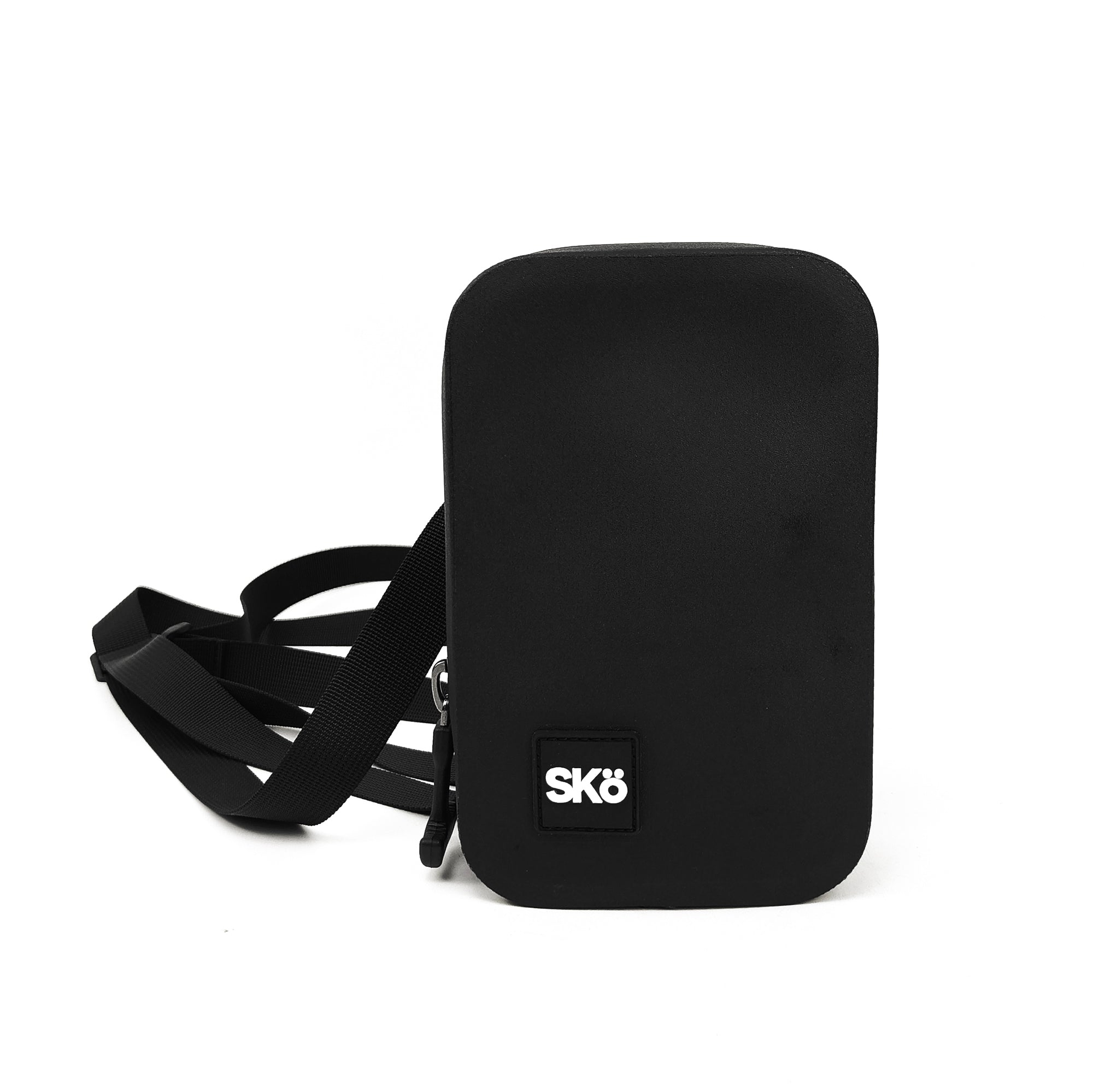
For a day on the water where the phone stays off until you're back at the car — fishing, a longer paddle, moving between put-ins — a sealed crossbody worn under your PFD keeps a phone, wallet, and keys close to your body without you reaching for it constantly. This is where something like SKö's waterproof crossbody fits: it's rated fully submersible rather than just splash-resistant, worn front or side with an adjustable strap, and sized for exactly this kind of everyday-carry kit rather than a full change of clothes. It won't give you touchscreen access mid-paddle, but for a bag you seal once and forget about until shore, that's not really the job it's doing.
On a flatwater lake trip carrying a phone for photos and a car key for the return drive, the difference between a bungee-stashed dry bag and a strap-clipped pouch showed up the first time a wake from a passing boat rocked the kayak — the dry bag slid, the clipped pouch didn't move.
Do I need a waterproof phone case if I already have a dry bag?
Not necessarily, but a dedicated small pouch or crossbody for your most important items — phone, key, ID — is worth having in addition to a larger dry bag for gear. It's faster to access and easier to keep on your body during a capsize than digging through a bigger bag.
Where's the safest place to store keys while kayaking?
On your body in a sealed, tethered pouch or crossbody — not in a hatch or loose pocket. If you're kayaking alone, a spare key left with your vehicle-parking arrangement or a trusted contact is a reasonable backup in case the primary key goes in the water.
Sources
If you want your phone, wallet, and key sealed and out of the way for the whole paddle rather than checking a pouch constantly, this is the simpler version of that setup.
$80 · Limited Lifetime Warranty