

Why Does My Wetsuit Smell? Causes, Cleaning & Prevention
The smell comes from the combination wetsuit makers keep warning about: damp neoprene, organic residue and time. Break that loop after every session.
Turn the wetsuit inside out, soak it in cool fresh water with a wetsuit cleaner according to the product directions, rinse thoroughly, and dry it inside out in the shade. After that, rinse inside and out after every session and never leave the wet suit sealed in a bag or hot car.
Damp neoprene + residue + time.
Xcel describes wetsuit odor as a bacteria problem that can also lead to mildew. Other maker guides point to the same conditions from different angles: sweat, saltwater, runoff, urine and storage while the suit is still damp.
The point is not to sterilize the wetsuit with harsh chemicals. It is to rinse out what feeds the odor and let the neoprene dry completely.
Four parts of the same cycle.
The lining spends hours against skin and traps what you sweat into it.
Ocean water, sediment and post-rain runoff add more material for the suit to hold.
Several maker-care discussions acknowledge it as part of the odor load in a used suit.
A closed bag or hot car keeps the suit wet long enough for odor and mildew problems to build.
The details vary. The pattern does not.
| Question | Common ground | Where guidance differs |
|---|---|---|
| Rinse after every session? | Yes. Fresh water, inside and out. | Some makers say cold water, some allow cool or lukewarm water. |
| Hot water? | Avoid it. Heat can damage neoprene or shorten its useful life. | The exact permitted temperature language varies by maker. |
| What cleaner? | Avoid ordinary laundry detergent. | Many recommend wetsuit cleaner; some allow a small amount of mild soap. |
| How often to deep clean? | Regularly, and sooner when the suit smells. | Some guides say roughly monthly; others recommend more frequent cleaning depending on use. |
| Machine wash / dryer? | No. Wetsuit makers consistently steer users away from both. | No meaningful disagreement in the source set used here. |
| How to dry? | Inside out first, in shade, away from direct sun and heat. | Some recommend a wide hanger; others allow lying the suit flat or folding it over a broad bar. |
Use the gentlest process that the suit maker allows.
Fill a tub with cool fresh water.
Start cool, not hot. Heat is one of the recurring “do not” items in wetsuit-care guidance.
Add wetsuit cleaner according to the bottle.
If your exact suit maker permits mild soap, use only the small amount it recommends.
Goal: remove body residue and odor without leaving a cleaner film in the neoprene.
Turn the suit inside out and soak it.
Billabong’s cited care guidance uses a 10–15 minute soak. Gently move water through the lining rather than scrubbing or wringing the suit.
Rinse thoroughly.
Quiksilver’s guidance emphasizes rinsing again after washing. Keep going until cleaner residue is gone.
Dry inside out in the shade.
Use the hanger or flat-drying method your suit maker recommends, with airflow and no direct sun, dryer or heater.
The maintenance routine is shorter than the deep clean.
Flush fresh water through the neck, arms and legs rather than only wetting the outside.
Move excess water out gently so seams and neoprene are not twisted aggressively.
The lining holds body residue and is usually the side that needs airflow most.
Do not leave the suit in a closed bag, trunk or hot car after the drive home.
They trap sweat and water in a small enclosed volume and often get tossed into the same wet bag after the session.
Quiksilver’s care guidance calls out booties as capable of becoming disproportionately smelly. Rinse them separately, open them as much as the construction allows, and give them their own airflow instead of leaving them nested inside the wetsuit.
On the drive home, treat the whole wetsuit kit as wet gear. Keep it separate from your phone, wallet, camera and dry clothing. For a broader wet-versus-dry gear plan before your next outing, use our snorkeling trip packing checklist.
Do not reach for bleach, laundry detergent or the washing machine.
The maker guidance used here consistently favors fresh water, wetsuit-specific cleaner or limited mild soap rather than aggressive laundry methods. When one brand’s care instructions differ from another’s, follow the label and warranty guidance for the exact wetsuit you own.
Wetsuit odor questions.
Can I put my wetsuit in the washing machine?
The care guides used here say no. Machine agitation, detergents and heat can damage neoprene, seams or laminates.
Can I dry it in the sun?
The maker guidance consistently prefers shade. Prolonged UV exposure can age neoprene and adhesives.
Can I use ordinary laundry detergent?
Use a wetsuit cleaner or the mild soap your exact manufacturer permits. Ordinary detergent can leave residue and may be too harsh for the suit.
What if the smell returns immediately?
Check the booties, gloves, changing mat and storage bag too. If those stay damp or dirty, a clean wetsuit can pick the odor back up.
Keep wet gear separate from the things that need to stay dry.
The wetsuit belongs with wet gear. Your phone and keys do not.
The SKÖ Waterproof Crossbody is compact sealed storage for small essentials around surf, dive and beach days. It is not meant to store a wet wetsuit.
See the Waterproof Crossbody →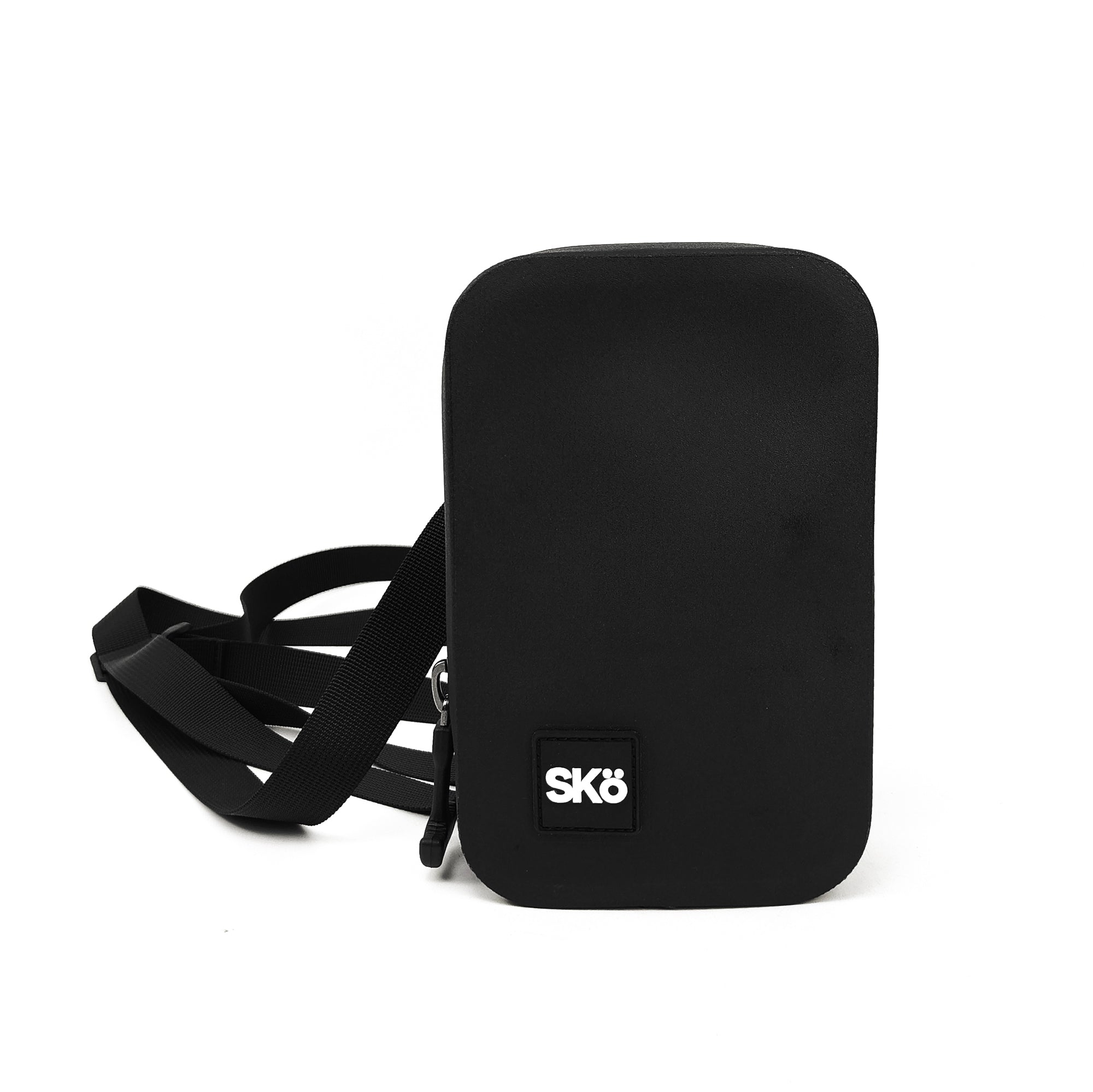
Explore more SKÖ guides
More useful guides for keeping your gear protected and your essentials ready.
 How to Clean a Waterproof TPU Bag Without Ruining It
 Why Does My Waterproof Bag Smell Musty?
 Why Does Saltwater Corrode Zippers? (And How to Fix One)
 Best Waterproof Bags for Snorkeling & Beach Trips (2027)