
Why Does My New Waterproof Bag Smell Like Plastic?
A noticeable plastic or vinyl-like odor can happen when a newly made waterproof bag has spent weeks sealed inside packaging. Airflow is usually the first thing to try.
Open the bag completely and leave it somewhere shaded with good airflow. A mild new-material smell that steadily fades is generally less concerning than one that remains very strong or causes irritation. If airing does not help enough, hand wash the bag according to its care instructions with a mild, non-detergent soap. Avoid solvents and high heat. If the odor irritates your eyes, nose or throat, gives you a headache, or does not improve at all, stop using the bag and contact the seller or manufacturer.
New-plastic odor and musty odor are different problems.
The timing and character of the smell tell you more than the strength of the smell alone.
A bag that smells plastic-like immediately after being removed from its packaging points toward new materials and trapped product emissions. A bag that smelled fine for months and later becomes sour or musty points toward moisture, storage or mildew instead.
Start by figuring out which problem you actually have before reaching for cleaners.
Work through four quick checks.
Most new-bag odor questions become much clearer once you separate a freshly manufactured smell from a later moisture problem.
A plastic or vinyl-like odor may be coming from the new coated materials and trapped packaging air. Continue to Check 02.
If the smell appeared later after use or storage, skip ahead and consider moisture or mildew instead.
Keep ventilating the bag. Gradual improvement is what you want to see.
Hand washing with mild soap may help remove manufacturing or packaging residue before another round of airing.
That points more toward moisture or mildew than new coating. See why a waterproof bag smells musty .
Continue to Check 04 and pay attention to whether the odor produces physical irritation.
Stop using the bag, move it to a ventilated area and contact the seller or manufacturer.
If the odor is steadily fading, continue airing rather than trying aggressive cleaning methods.
A waterproof bag is a stack of materials, not just one fabric.
Waterproof construction can include a textile base, a polymer coating or laminate, welded or bonded seams, printed graphics and packaging. Fresh materials may produce noticeable odor, especially after being enclosed for shipping.
Waterproof bags commonly rely on coated or laminated fabric such as TPU- or PVC-based constructions.
Depending on the product, welded construction, bonding materials or other manufacturing processes may contribute to a new-product odor.
Printed logos, inks and finished surfaces can add their own odor when the product is freshly manufactured.
A waterproof product sealed inside packaging has very little opportunity for odor to dissipate before you open the box.
The feature that keeps water out also limits airflow.
When a coated bag is closed and then enclosed again inside shipping packaging, odor has fewer opportunities to dissipate. Opening the product may therefore expose you to the most concentrated smell it has had during its time in storage.
The product may not have spent much time exposed to circulating air before packaging.
Waterproof fabrics and sealed seams naturally allow less air exchange than breathable materials.
Boxes, plastic packaging and warehouse storage can keep the product enclosed for days or weeks.
No. Palm Equipment has explained why it prefers TPU over PVC, including differences in plasticizer use, but that does not mean every TPU product will have no new-material odor. For the broader material comparison, see TPU vs. PVC waterproof bags .
How to air out a new waterproof bag.
Gentle cleaning and steady airflow are safer than trying to speed the process up with heat or harsh chemicals.
Open it completely and hang it in the shade.
Unzip or unroll the closure fully. If the construction allows, expose as much of the interior as possible. Hang the bag somewhere with moving air and keep it out of strong direct sun.
Why: the EPA recommends increasing ventilation when dealing with product emissions, while dry-bag manufacturers commonly recommend cool, shaded storage.
Hand wash it if airing alone is not enough.
Follow the care label on your particular bag. Sea to Summit recommends hand washing coated sacks and avoiding detergents and solvents that can damage waterproof coatings. For broader care after the new-material odor has faded, use our waterproof bag cleaning and maintenance guide.
Why: a gentle wash can remove surface residue without subjecting the material to machine agitation or aggressive chemicals.
If needed, use a product made for odor rather than a solvent.
Sea to Summit suggests an enzyme-based odor treatment for stubborn smells. SealLine guidance warns against exposing dry bags to solvents and recommends washing them if those chemicals contact the material.
Why: aggressive solvent-based cleaners can damage the waterproof coating you are trying to preserve.
Air dry completely and keep the bag open during storage.
Do not put the bag in a clothes dryer unless the manufacturer specifically allows it. Let the interior and exterior dry fully, then store the bag somewhere cool and ventilated with the closure open while the new-material odor continues to fade.
Why: sealing a damp bag can replace the original plastic smell with a moisture or mildew problem.
- Fresh moving air
- Shade
- Hand washing
- Mild soap allowed by the care label
- Enzyme odor treatment if manufacturer-compatible
- Air drying
- Solvents
- Harsh chemical cleaners
- Machine drying unless specifically allowed
- High heat
- Long direct-sun exposure
- Storing the bag damp and sealed
Clothes, towels and similar fabric items can pick up odor inside a newly unboxed bag. Let the bag air first, then use it normally once the smell has diminished. For routine care later, see how to clean a waterproof TPU bag .
Irritation is different from simply noticing an odor.
The U.S. EPA lists eye, nose and throat irritation, headaches, dizziness and nausea among possible effects associated with exposure to some volatile organic compounds.
If a bag's odor causes symptoms like those, move it to a ventilated area, stop using it and contact the seller or manufacturer. The same applies if the smell remains unusually strong and does not improve after steady ventilation and appropriate cleaning.
Plastic, musty and irritating are three different signals.
Starts when the product is new and should move in the right direction with ventilation.
More likely to appear after damp storage or use. Investigate moisture, mildew and drying practices.
Stop using the product and ask the manufacturer or seller about the specific materials and odor.
Common questions after unboxing.
Is the plastic smell from a new waterproof bag harmful?
A general article cannot determine the chemistry of one specific product. A mild odor that decreases with ventilation is different from a strong, persistent odor that causes irritation. If the smell causes symptoms or does not improve, stop using the bag and contact the manufacturer.
Can I put a waterproof bag in the washing machine?
Follow the care instructions for your bag. Sea to Summit's dry-sack guidance recommends hand washing and air drying, while warning that detergents, solvents and dryers can damage coatings or seam tape.
Will the smell transfer to my clothes or towels?
Soft items stored inside a closed new bag can pick up odor. Let the bag air before using it to store clothing, towels, snacks or other items that readily absorb smells.
How long should I air the bag out?
There is no universal number of days because materials and storage history vary. What matters is the trend. Keep ventilating it while the odor is clearly diminishing. If it is not improving after continued airing and appropriate hand cleaning, contact the seller.
What if the bag smells musty instead of plastic-like?
That suggests a different issue, often involving moisture or storage. See our guide to why waterproof bags smell musty .


If the load is just a phone, wallet and keys, you may not need a large dry bag.
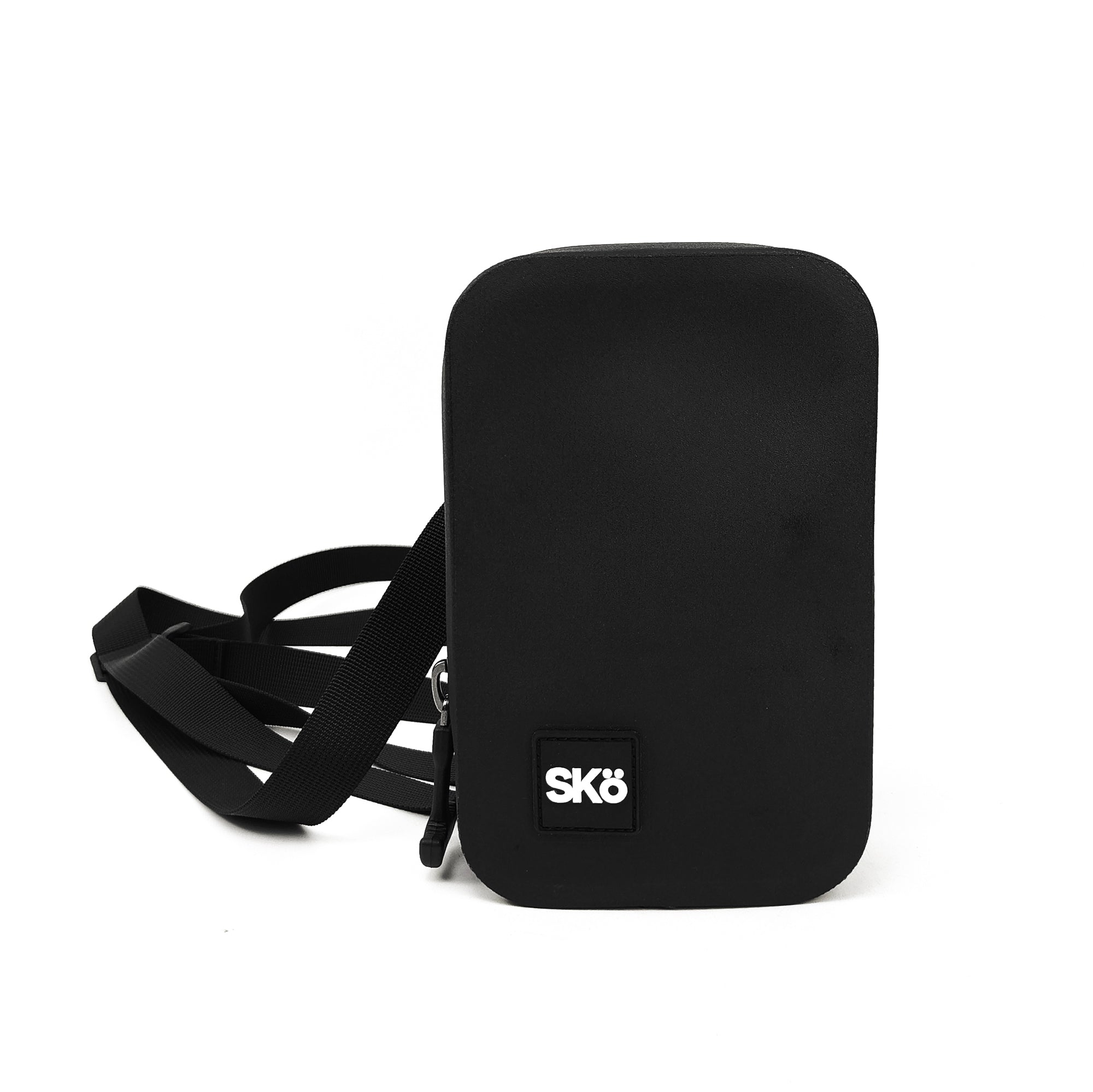
The SKÖ Waterproof Crossbody is built around compact essentials and on-body carry rather than clothing or bulk equipment.
It uses a waterproof zipper and is intended for real water exposure when properly closed.
Built for small essentials. Clothing, food and bulky equipment still belong in appropriately sized storage.