

River Rafting Packing List: What to Actually Bring
Rafting gear falls into three buckets: what you wear in the raft, what needs to stay dry, and what stays in the vehicle or camp load. Pack those correctly and the list gets much shorter.
For a guided day trip, wear quick-drying synthetic or wool layers, secure footwear that stays on your feet, sun protection and the outfitter-provided or approved whitewater PFD and helmet required for that trip. Bring drinking water if instructed, and keep only small valuables in waterproof storage. Leave dry clothes, towel and other bulky after-trip gear in the vehicle unless your outfitter tells you otherwise. For multi-day trips, add camp clothing, sleep gear and personal items according to the outfitter's exact packing system.
The raft is not a floating daypack.
On a guided day trip, most of the gear that matters is either worn on your body or supplied by the outfitter. The stuff that usually creates clutter is the “just in case” gear people would normally put in a backpack.
The old version of this article was right to warn against cotton, loose footwear and oversized bags, but a few claims were too universal. Not every outfitter supplies exactly the same equipment, helmets are not used on every mellow float, and multi-day systems vary dramatically by river and company.
The better rule is: start with the outfitter's trip-specific list, then organize your personal gear into wear, waterproof and leave-behind zones. If you are planning a gentle tube float instead of guided whitewater, follow a river tubing packing checklist because equipment and waterway rules differ.
Wear it. Seal it. Leave it dry.
River clothing + safety gear
Anything needed continuously should already be on your body before the boat leaves shore.
- Quick-dry layers
- Secure water footwear
- PFD
- Helmet when required
- Sun protection
Small waterproof valuables kit
Keep the river load small. The dry zone is for the few things that cannot tolerate immersion or loss.
- Phone
- Car key / key fob
- ID / payment card
- Critical medication if appropriate
Vehicle or camp gear
Dry clothes, towel and other bulky items usually do not need to occupy working raft space on a short commercial trip.
- Dry change of clothes
- Dry shoes
- Towel
- Extra layers not requested in raft
- Nonessential electronics
Commercial trips often provide technical gear, but “usually” is not a packing list.
Commercial rafting trips generally outfit guests with the PFD appropriate for the trip. Confirm whether personal PFDs are permitted.
Common on whitewater sections where impact and upset risk justify it, but not a universal item on every float trip.
REI notes commercial trips often provide wetsuits and booties when conditions call for them. Some outfitters rent or include splash jackets as well. If you bring your own neoprene gear, follow appropriate after-trip care; see how to clean a wetsuit and prevent odors.
Tents, sleep pads, food, dry bags and camp systems vary by company. Use the actual trip list instead of assuming what is included.
The trip email is more important than a generic internet checklist.
Whitewater conditions, equipment rules and clothing needs change by river, season and trip difficulty. National Park Service guidance for whitewater rivers treats life jackets, whitewater helmets, thermal protection and other safety equipment as route-specific decisions rather than one universal recreational-boating list.
If your outfitter tells you to bring a wetsuit, neoprene layer, specific footwear or nothing larger than a small personal pouch, follow that direction.
Quick-dry layers beat “comfortable when dry.”
REI's current rafting guidance recommends synthetic or wool clothing and specifically says to avoid cotton because it becomes heavy and cold when wet. Cold water can be a problem even when the air feels warm.
Choose polyester, nylon, merino or another fabric that does not stay saturated like cotton.
Add a light insulating layer when water or weather is cool. Follow the outfitter's thermal-protection requirements.
A splash jacket, wetsuit or drysuit can be appropriate depending on conditions. Do not substitute random outerwear when the outfitter requires technical gear.
Use sunscreen, sunglasses with retention and sun-protective clothing even when cold water makes the day feel cooler.
Choose shoes that remain on your feet in moving water.
REI recommends water shoes, sport sandals with a secure heel strap, or old sneakers that can get soaked. The common denominator is retention.
Closed-toe or otherwise secure footwear protects feet around rocky shorelines and stays attached during a swim.
Open sandals can work when they are designed to stay on the foot and are accepted by the outfitter.
They are not glamorous, but they remain on the foot and protect against sharp or slippery surfaces.
A sunny put-in does not tell you what the river is doing.
NWS River Forecast Centers and local hydrology pages publish observed river stages, flows and forecast information for many locations. Gauge data is useful context, but the outfitter or river manager should interpret whether a specific level is appropriate for your trip.
NPS warns that thunderstorms and upstream rain can change stream conditions rapidly, including flash-flood risk in some river systems.
Observed stage, flow and forecast direction help show whether a river is rising, falling or stable.
Do not use an internet gauge reading to overrule a guide service that has river-specific thresholds, permits and operating procedures.
NPS river-safety guidance says route difficulty, river classification, equipment, fitness and paddling experience all belong in the decision.
Most personal items do not need to ride beside you.
The smallest personal bag is often the easiest one to manage.
Guided day trip
If the guide service allows personal valuables in the raft, phone, key and one payment method usually need very little volume. A compact waterproof pouch or small valuables bag is easier to secure than a full-size daypack. Our waterproof crossbody bag comparison shows compact carry options, but follow the outfitter’s rules on whether and where they may be carried.
Do not assume you can clip it to your PFD or raft wherever you want. Follow the guide's directions because loose straps and personal gear can create snag or entanglement problems in whitewater.
Multi-day trip
Multi-day dry storage is a different system. Camp clothes, sleep gear and personal items are often packed in larger outfitter-issued dry bags or duffels with strict size limits.
Use the company's actual dimensions and packing instructions. Do not show up with a personal 65-liter bag simply because a generic article said “multi-day means bigger.”
Camp gear and river gear should not become one wet pile.
On overnight rafting trips, outfitters often separate guest gear into personal dry storage, camp systems and items kept accessible during the day. Exact limits vary, but organizing by function works almost everywhere.
Rafting layers, footwear and sun protection stay accessible because they are used every day on the water.
Keep sleeping layers and evening clothing separated from wet river clothing so camp starts with a genuinely dry system.
Some companies provide sleeping pads, tents and dry bags. Others expect guests to bring selected pieces. Confirm the exact list.
Bring only the electronics and documents you truly need. Every unnecessary device becomes another thing to protect from water, sand and impact.
Four common things make the trip worse.
Cotton river clothing
It becomes heavy, stays wet and provides poor cold-water comfort compared with quick-drying synthetic or wool layers.
Flip-flops and loose slides
Footwear needs to stay attached if you swim, walk a rocky shoreline or scramble through the takeout.
Extra electronics
A tablet, large camera kit or second phone is another water-risk problem unless the trip specifically calls for it.
Oversized personal bags
Commercial rafts have defined storage systems. Your normal backpack may be unnecessary, hard to secure or simply not allowed in the working raft.
The 60-second rafting check.
River rafting packing checklist
River rafting packing questions.
What should I wear whitewater rafting?
Wear quick-drying synthetic or wool layers, secure footwear that can get wet, and the life jacket and helmet required for your trip. REI recommends avoiding cotton and adding appropriate insulating layers when water or weather is cold.
Do guided rafting companies provide life jackets and helmets?
Guided whitewater companies generally supply the technical safety gear required for their trip, but the exact equipment varies. Helmets may be standard on technical whitewater and unnecessary on some mellow floats. Confirm directly with the outfitter before packing.
Should I bring my phone rafting?
Only if you have a reason to bring it and your outfitter allows personal valuables in the raft. Use waterproof storage that matches the exposure and follow the guide's directions for where it can be carried or secured.
Do I need a big dry bag for a rafting day trip?
Usually not for a short guided day trip. Personal dry storage is often limited to a phone, key, ID or small essentials. Bulky dry clothes and towels are typically more useful at the takeout. Multi-day trips use a separate packing system with outfitter-specific bag limits.
Are flip-flops okay for rafting?
They are a poor choice because they can come off in moving water. REI recommends water shoes, sport sandals with a secure heel strap or old sneakers that can get wet.
Should I check river flow before a rafting trip?
Current river levels and trends are useful context, and NWS River Forecast Centers publish observed and forecast river information for many locations. On a commercial trip, let the outfitter interpret whether conditions are appropriate. On a private trip, river level is only one part of the skill, weather and hazard assessment.
Prepare for the river day
Plan what to protect, pack and keep within reach before heading into the rapids.

Bring your phone rafting?
Read the complete SKÖ guide →

Are dry bags actually waterproof?
Read the complete SKÖ guide →

Seal a roll-top dry bag
Read the complete SKÖ guide →

Choose a small waterproof carry
Read the complete SKÖ guide →
Also explore: Adventure Travel Essentials
Phone, key and wallet in one waterproof place.
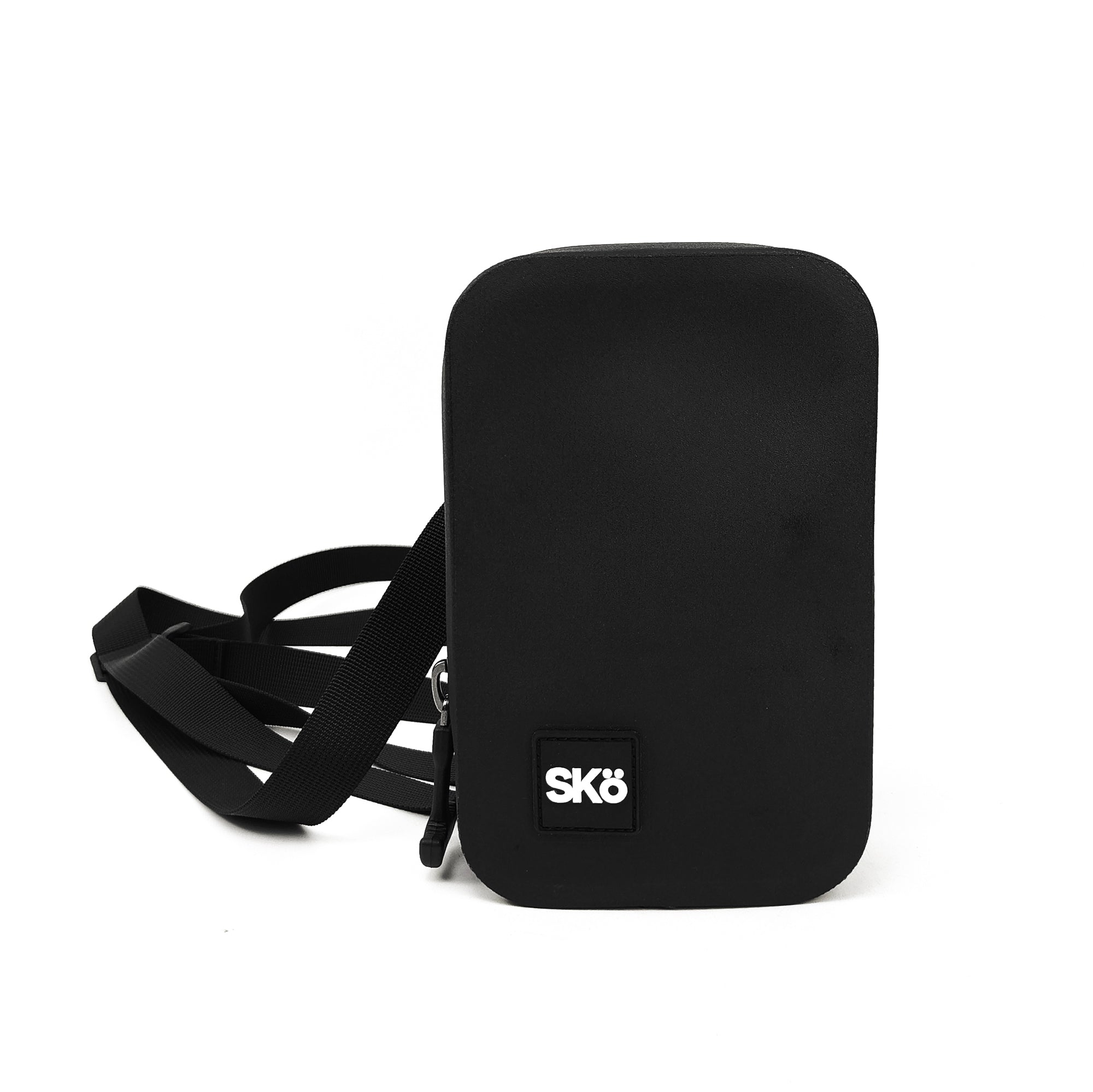
The SKÖ Waterproof Crossbody is compact storage for small essentials rather than a full rafting dry bag. It is sized for phone, wallet, key fob and similarly small valuables.
SKÖ currently publishes an IP68 rating, approximately 1.14 L capacity, 1680D TPU construction, a waterproof zipper, dimensions of 7.5 × 4.7 × 2 inches and an approximate weight of 13 oz. The product page describes the finished bag as waterproof and submersible when the zipper is fully and properly sealed.
On whitewater, the guide or outfitter decides where personal gear can safely ride. A waterproof bag does not override PFD fit, entanglement considerations or the company's raft-storage rules.
Sources
- REI Expert Advice, What to Wear Whitewater Rafting
- National Park Service, Obed Wild & Scenic River Safety
- National Park Service, River and Stream Safety
- American Whitewater, Safety Code of American Whitewater
- National Weather Service, River Forecast / Gauge Tutorial
- SKÖ Gear, Watersports Product Specifications
- SKÖ Gear, Waterproof Crossbody