


How Waterproof Bags Actually Keep Water Out

How Waterproof Bags Actually Keep Water Out
Waterproof fabric is only the beginning. A bag stays dry because the material, seams, closure and final seal all work together to remove every practical path water could take inside.
A waterproof bag is not waterproof because of one magic fabric. It is waterproof because the finished construction closes the paths water would otherwise use to get inside.
Think about a normal backpack. Water can move through the fabric, wick through stitching holes, pass between zipper teeth, enter at zipper ends or run through an opening at the top. Replacing the fabric with a waterproof material solves only the first problem.
To build a genuinely water-protective bag, designers have to deal with all of them.
How do waterproof bags keep water out?
Waterproof bags combine a water-impermeable material or coating with sealed seams and a closure designed for the intended level of water exposure. Depending on the bag, the seams may be welded or taped, while the opening may use a roll-top, waterproof zipper or airtight press-style seal. The finished bag is only as protective as the weakest part of that system.
Waterproofness is a system property. A waterproof fabric can still become a leaking bag if the seams or closure let water through. Likewise, an excellent waterproof zipper cannot make stitched, unsealed fabric joints suddenly submersible.
A waterproof bag works by removing every easy path inward.
Water does not care what the product is called. It simply moves through whatever path the construction leaves available.
That path may be microscopic holes created by sewing, a tiny gap at the end of a zipper, an incompletely rolled opening, a damaged coating or a puncture in the body fabric.
Every arrow is a potential leak path.
First, the bag body has to stop water passing through the fabric.
Many waterproof bags are not made from one solid sheet of homogeneous material. Instead, they use a textile composite. A woven nylon or polyester base gives the bag mechanical structure while a waterproof coating or laminate creates the water barrier.
Strength and waterproofing can come from different layers.
TPU, polyurethane and PVC are common examples of waterproof coatings or films used with reinforced textiles. The fabric underneath can provide tear strength while the polymer layer blocks water.
This is why simply knowing that a bag is “nylon” tells you very little about whether it is waterproof. Nylon itself can be part of the structure while the coating provides the actual water barrier.
What about DWR?
A durable water-repellent treatment helps surface water bead and roll away, but surface repellency is not the same thing as a complete waterproof barrier.
This distinction is common in rainwear and lightweight outdoor equipment. A face textile can use a water-repellent finish while another layer or coating provides the actual resistance to water penetration.
For a deeper comparison of common bag coatings, see TPU vs. PVC waterproof bags .
Waterproof fabric stops being waterproof the moment you punch holes through it.
Ordinary sewing joins fabric by repeatedly pushing a needle through it. That works beautifully for normal bags, but every needle penetration creates a potential water path.
Waterproof bag designers therefore need a way to either seal those holes afterward or join the panels without creating them in the first place.
How waterproof bag panels are joined.
Strong and simple, but the needle creates holes. By itself, a conventional stitched seam should not be assumed to be waterproof.
The panels are stitched for structure, then waterproof tape or another sealing treatment covers the seam. Properly designed taped seams can be used in waterproof products.
Compatible coated fabrics can be fused together with processes such as radio-frequency welding, creating a joint without a line of exposed needle holes.
SealLine describes its RF-welded seams as bonding coated fabric together rather than relying on stitching, while Sea to Summit demonstrates that welded construction is not the only viable approach: some of its waterproof dry bags use double-stitched, fully taped seams.
The lesson is not that one seam word automatically wins. It is that the seam itself has to be part of the waterproof design.
The opening is where waterproofing gets complicated.
The bag still has to open. That makes the closure one of the most mechanically demanding parts of the entire waterproof system.
Fold the opening into a longer water path.
A roll-top presses the upper sealing surfaces together and then folds the opening repeatedly. Those folds create a longer, compressed path between outside water and the interior.
Closure instructions are product-specific. SealLine recommends at least three folds on its roll-top dry bags; other manufacturers publish their own required roll count.
Sealing surfaces close the opening directly.
True waterproof zipper systems do more than put a coating over a normal zipper. Their construction creates a sealing interface designed to block water when the slider fully closes the track.
Water-resistant zippers are different. YKK, for example, classifies AquaGuard® separately from its actual waterproof zipper systems.
Interlocking lips form an airtight-style barrier.
Some specialized dry bags use a heavy-duty interlocking press-style closure. Watershed describes its system as working somewhat like a much stronger freezer-bag seal and designs it for airtight, watertight performance.
This is another example of why “dry bag” does not identify one universal closure technology.
A water-resistant zipper can look almost identical to a waterproof one.
Coated water-resistant zipper tape may be excellent for rain and spray without being designed for immersion. Do not judge zipper performance by appearance alone. Look for the zipper or finished product's actual published capability.
If you want the full technical breakdown of those systems, read How Do Waterproof Zippers Actually Work?
The final waterproof component is the person using the bag.
Waterproof construction can only work when the closure is used as designed.
A roll-top folded once instead of the required number of times changes the geometry of the seal. A waterproof zipper left a few millimeters open leaves a direct water path. Sand trapped in a sealing surface may prevent two surfaces from meeting correctly.
That means a waterproof bag can fail without the material itself failing at all.
Close the system completely
Fully seat the zipper, press seal or roll-top exactly as the manufacturer specifies.
Keep sealing surfaces clean
Dirt, sand and salt can interfere with closures that depend on close contact between sealing surfaces.
Do not overfill the bag
The closure needs enough room to fold or seat correctly. Overpacking can prevent the top of a bag from achieving the geometry its closure requires.
Follow maintenance instructions
Some waterproof zipper systems require occasional cleaning or lubrication. Use the care method specified for that closure rather than treating every zipper the same.
Going underwater changes the job of every seal.
Rain usually strikes a limited part of a bag and then runs away. During immersion, water surrounds the bag and continuously pushes against its seams, closure and material.
Water pressure works against the entire enclosure.
The deeper an object is submerged, the greater the surrounding hydrostatic pressure becomes. That can make a tiny leak path far more important than it was during rain or surface spray.
This is why “keeps rain out” and “designed for immersion” are fundamentally different performance claims.
When a manufacturer publishes an ingress-protection rating such as an IP rating, it is describing the performance of the tested enclosure under defined conditions. It is not simply rating the fabric by itself.
For the complete rating system, see our guide to IPX waterproof ratings .
Where did the water actually come from?
When moisture appears inside a waterproof bag, the location often provides a clue about what happened.
Water inside does not automatically mean the bag leaked.
Moisture already inside a sealed bag can condense when temperature changes. If you are seeing small droplets across the interior instead of a localized wet path, read Why Is There Condensation Inside My Dry Bag? before assuming the waterproof construction failed.
Five questions tell you more than the word “waterproof.”
What is the body material?
Look for an actual waterproof coating, laminate or construction rather than assuming a durable-looking textile is impermeable.
How are the seams sealed?
Determine whether they are welded, taped, otherwise sealed or simply stitched.
What kind of closure does it use?
A coated rain zipper, roll-top and true waterproof zipper should not be assumed to provide the same level of protection.
What does the finished product claim?
Look for a published rating or explicit manufacturer exposure guidance rather than extrapolating from one component.
What happens if the bag actually goes underwater?
If full immersion is a realistic part of your activity, choose equipment whose finished-product specifications actually address immersion.
Different water environments stress different parts of the bag.
The closer your activity gets to full immersion, the more every part of the waterproof system has to matter.

Surface water
Rain mainly challenges exterior materials, seams and exposed openings over time.

Dynamic water
Spray and wet decks add repeated exposure while a capsize introduces the possibility of sudden immersion.

Full-system protection
Once immersion becomes realistic, closures and sealed seams matter just as much as the waterproof material itself.
How waterproof bags work: FAQ
What material makes a bag waterproof?
Waterproof bags can use several different constructions, including TPU, polyurethane and PVC coatings or films over reinforced textiles. The material is only one part of the system; seams and closures must also prevent water entry.
Are welded seams completely waterproof?
Welding can create a highly effective waterproof joint by fusing compatible coated panels instead of leaving exposed needle holes. Final performance still depends on the weld quality, surrounding material and complete bag construction.
Can sewn seams be waterproof?
Yes, when the sewing is combined with an effective sealing system such as seam tape. Some commercial waterproof dry bags use double-stitched, fully taped seams.
How does a roll-top dry bag keep water out?
The top sealing surfaces are pressed together and folded repeatedly, creating a compressed, extended path between the outside water and the interior. The required number of folds depends on the product, so follow the manufacturer's instructions.
Is a roll-top dry bag submersible?
Not automatically. Roll-top is a closure style, not a universal immersion rating. Some manufacturers publish splash-protection ratings for roll-top products, while other bags are built for substantially greater exposure. Check the finished product's actual specification.
Is a waterproof zipper really waterproof?
Some zipper systems are designed and tested for actual waterproof or airtight applications, while others are only water-resistant. The appearance of the zipper is not enough to tell the difference.
Why does a waterproof zipper feel stiff?
True waterproof closures have sealing surfaces that must engage tightly. That additional sealing function can require more force than an ordinary clothing or backpack zipper. Follow the zipper manufacturer's cleaning and lubrication instructions.
Why is there water inside my bag if it did not leak?
Moisture trapped inside a sealed bag can condense when the temperature changes. Wet gear, humid air or warm contents can all supply moisture that later appears as droplets on the interior.
Does waterproof fabric mean the whole bag is waterproof?
No. Waterproof material only addresses water moving through the panels. The seams, closure, attachment points and finished construction still determine whether the complete bag keeps water out.
What does an IP rating tell me about a waterproof bag?
An IP rating classifies protection provided by the tested enclosure against ingress under defined conditions. The water numeral indicates the relevant water-exposure category. Always read the manufacturer's full specification rather than assuming a numeral represents unlimited use.
Primary References
- IEC 60529 — Degrees of Protection Provided by Enclosures (IP Code)
- YKK Americas — Water-Resistant vs. Waterproof Zippers
- YKK Americas — Waterproof Zippers for Outdoor Applications
- Cascade Designs / SealLine — Welded Dry Bag Seams
- Cascade Designs / SealLine — Proper Roll-Top Closure
- Sea to Summit — Lightweight Dry Bag Construction
- Watershed Drybags — Fabric, RF-Welded Seams and ZipDry Closure
- TIZIP — Waterproof Zipper Handling and Maintenance
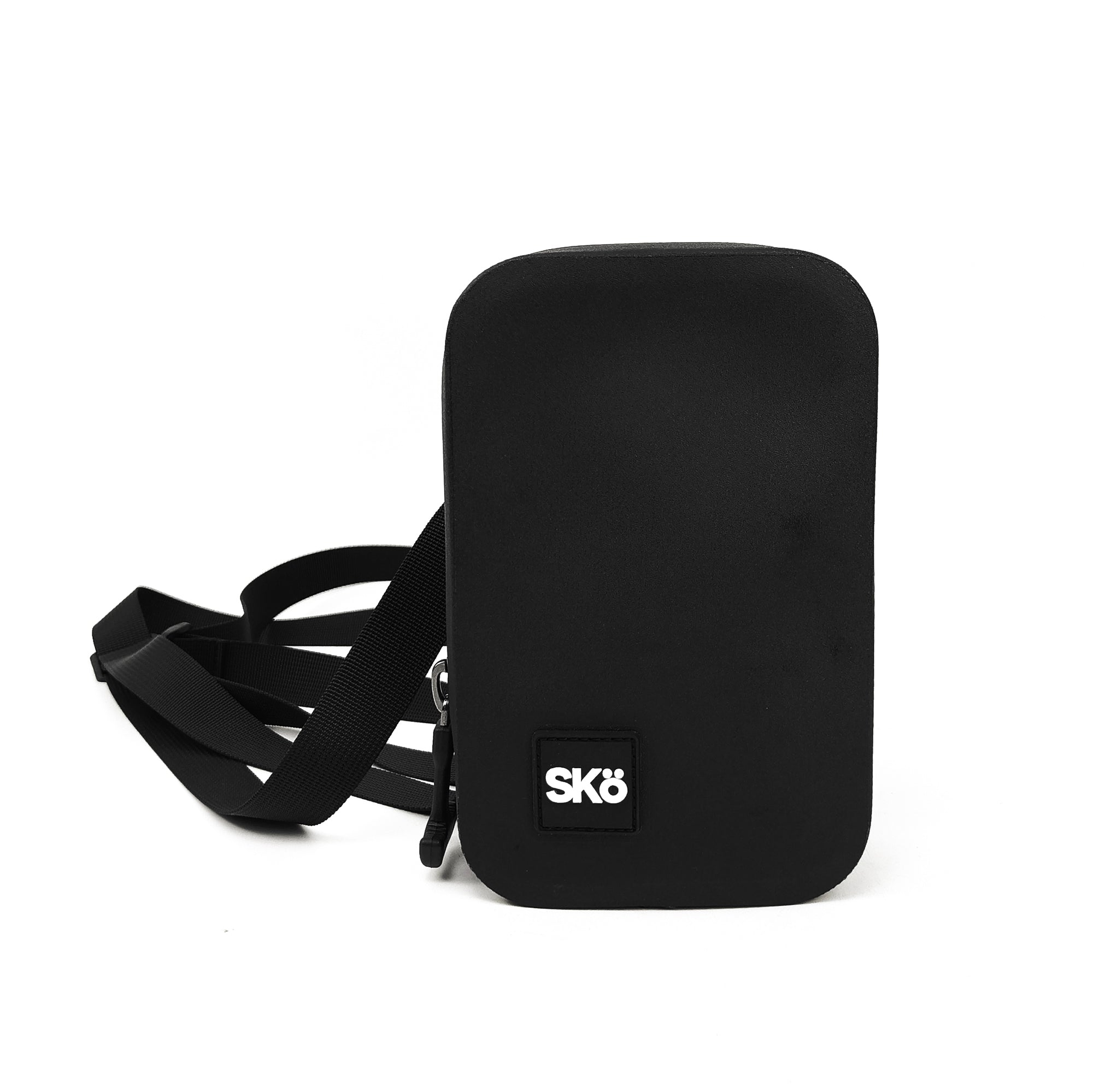
Waterproofing is the sum of the parts.
The SKÖ Waterproof Crossbody pairs waterproof material with sealed construction and a waterproof zipper to protect the small essentials you bring around water.