

Dry Bag vs. Waterproof Bag: What’s the Difference?
“Dry bag” describes a type of bag. “Waterproof” describes a level of protection. Once you separate those two ideas, choosing between a large gear bag and a small sealed bag gets much easier.
A sack, pack or duffel built to protect larger gear. Often large and commonly roll-top.
A broader category that can include crossbodies, pouches, cases, backpacks and dry bags.
Buy a dry bag when you need substantial sealed space for clothing, food, towels, camping equipment or other larger gear. Choose a smaller waterproof bag when you only need to protect essentials like a phone, wallet, keys or ID and want faster access. In either case, the product name does not tell you the exact water protection. Check the specific manufacturer's stated rating or intended use.
These two terms answer different questions.
Product listings often put “dry,” “waterproof,” “submersible” and “water-resistant” beside one another as though they describe the same thing. They do not.
Dry bag asks: What kind of bag is this?
Waterproof asks: How much water protection does this particular product provide?
Many traditional dry bags use roll-top closures, but the category is broader than one closure design. For how fabric, sealed seams and different closures make a finished bag water-resistant or waterproof, see how waterproof bags actually keep water out. Watershed, for example, sells dry bags using its ZipDry-style closure rather than a traditional rolled neck.
The word waterproof is broader still. A phone pouch, small crossbody, camera case, backpack or large dry bag can all make waterproof claims. The important question is what kind of exposure the individual product is designed and rated to handle. For a real example of two small waterproof bags using different closure designs, see SKÖ versus YETI SideKick Dry.
Ask two questions instead of one.
This distinction prevents most of the confusion around dry bags, waterproof bags and waterproof ratings.
What kind of bag is it?
This describes format, size and job. A roll-top dry sack, waterproof crossbody and sealed phone case are physically different products designed around different loads.
How much water can it handle?
This is the protection question. Rain, spray, a brief dunk and prolonged submersion represent different exposure levels.
Bag shape and protection level are separate choices.
A large gear bag and a small waterproof pouch can both exist at different levels of water protection. The category name alone does not place the product on the protection scale.
“Waterproof” still needs context.
SealLine publishes multiple water-protection levels across its own products, including splashproof, waterproof and submersible categories. That illustrates why the product name itself is not enough.
Splashproof
Intended around rain, spray and lighter water contact rather than complete immersion. For the distinction in common product claims, see waterproof versus water-resistant.
Waterproof
SealLine places many of its dry bags in a category intended to withstand quick submersions and activities such as paddling.
Submersible
Products at this level publish defined immersion performance. The exact test still depends on the manufacturer's stated rating.
An IPX8 label also does not represent one universal depth and duration. The manufacturer specifies the conditions of the IPX8 test.
Dry bag vs. small waterproof bag.
Neither category automatically wins. They solve different carrying problems.
| Factor | Dry Bag | Small Waterproof Bag |
|---|---|---|
| Main job | Clothing, food, towels, camping equipment and other bulky gear. ACA paddling lists commonly include a dry bag for spare clothing. | A few high-consequence essentials such as phone, wallet, keys and ID. |
| Typical size | Often measured in multiple liters and built to hold larger loads. | Much smaller, commonly sized around daily essentials. |
| Closure | Commonly roll-top, although zip-seal and other closure systems also exist. | Waterproof zipper, zip seal, fold-over or another sealed closure depending on the product. |
| Access | Roll-top styles require opening and then properly rerolling the closure every time. | Often designed for faster access to frequently used items. |
| Underwater use | Depends entirely on the individual bag's published protection level or rating. | Also depends on the individual product's published protection level or rating. |
| Electronics | A general-purpose dry bag may not be the same thing as a purpose-built electronics enclosure. | Some pouches and cases are specifically designed around phones and small electronics. Read their stated limits. |
| Best question | Do I need sealed space for a larger amount of gear? | Do I need a few important items protected and easy to reach? |
A 20-liter gear problem and a phone-and-wallet problem are not the same problem.
Once you are carrying spare layers, camp gear or a towel, liters of capacity matter more than instant access.
A huge dry bag can protect them, but it may create unnecessary bulk and repeated opening whenever you need your phone.
Large dry bags commonly ride inside boats or packs. A smaller waterproof bag can stay on your body.
Capacity tells you how much fits inside. The product rating tells you what kind of water exposure it is built to handle.
Which one do you actually need?
The load is gear.
- You are carrying clothes, towels, food or camping equipment
- The bag can ride inside or tied into a kayak, canoe or boat
- You only need to open it occasionally
- You want substantial sealed capacity
- You may need several liters or more of storage
The load is essentials.
- You mainly need a phone, wallet, keys or ID
- You expect to reach for those items frequently
- You want the bag on your body
- Large-volume storage would only create unnecessary bulk
- You have checked that its stated protection matches your activity
Separate bulk gear from high-consequence valuables.
A water day does not have to force every item into one container. Two different bags can solve two very different problems.
- Dry clothing
- Towel
- Food
- Extra layers
- Larger equipment
- Phone
- Wallet
- Car key
- ID
- Small payment essentials
Read these six things before buying.
Bag comparison checklist
The questions behind the terminology.
Is every dry bag waterproof?
A dry bag is designed around keeping its contents dry, but the exact protection still varies by product. Some are intended mainly for rain and spray, others for brief immersion, and some publish explicit submersion ratings. Check the individual manufacturer's claim.
Is every waterproof bag a dry bag?
No. Waterproof describes protection rather than one particular bag shape. Phone pouches, crossbodies, camera cases and other products can be waterproof without being traditional dry bags.
Is a waterproof phone pouch a dry bag?
Not in the usual product-category sense. A phone pouch is a small enclosure built around one device or a few small items. A dry bag usually refers to a larger gear bag. Both can provide water protection.
Can I put my phone and wallet in a small dry bag?
Yes. The tradeoff is convenience. With a traditional roll-top, you need to unroll and properly reseal the closure each time you want the phone. A smaller waterproof bag may be more convenient if those items need repeated access.
Does IPX8 always mean the same depth?
No. IPX8 involves immersion beyond the IPX7 test conditions, but the manufacturer specifies the actual test conditions. Read the stated depth and duration rather than treating IPX8 as one universal underwater specification. Compare the different immersion labels in our IPX waterproof ratings explainer.
Related SKÖ guides.
When the load is just phone, wallet and keys.
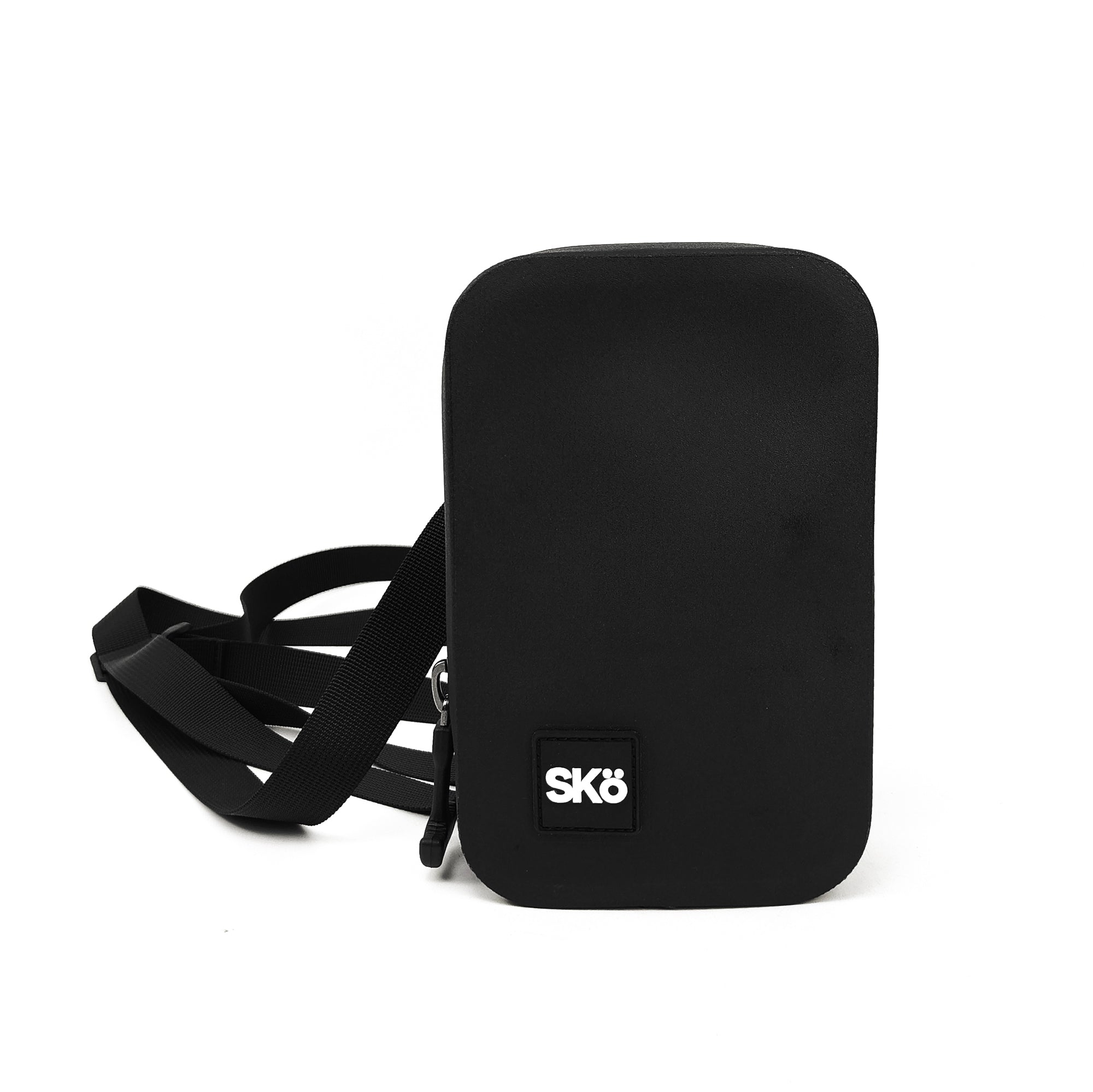
The SKÖ Waterproof Crossbody is not a dry bag for spare clothing, towels or camping gear. It solves the smaller problem in this comparison: keeping a few important essentials sealed and worn on your body.
It uses a waterproof zipper and is designed for real water exposure when properly closed. SKÖ does not currently publish a specific depth-and-duration rating, so it should not be interpreted as having one simply because it is designed to be submersible.
Made by SKÖ, publisher of this guide.
Sources
- SealLine / Cascade Designs — Splashproof, Waterproof and Submersible
- SealLine / Cascade Designs — IPX7 Rating on E-Case Cases
- SealLine — How to Properly Seal a Roll-Top Dry Bag
- NRS — How to Seal an NRS Dry Bag
- Sea to Summit — How to Correctly Close a Dry Bag Roll-Top Closure
- Watershed — Our Technology
- OutdoorGearLab — Best Dry Bags
- Keystone Compliance — IPX7 and IPX8 Water Immersion Testing
- American Canoe Association — Paddler's Safety Checklist
Explore more SKÖ guides
More useful guides for keeping your gear protected and your essentials ready.
 Can a Dry Bag Be Fully Submerged?
 Waterproof vs. Water-Resistant: What's the Actual Difference?
 How to Seal a Roll-Top Dry Bag Properly (and Fix Leaks)
 How Waterproof Bags Actually Keep Water Out