


Where to Put Your Keys, Phone, and Wallet When You're Surfing
Where to Put Your Keys, Phone, and Wallet When You're Surfing
Last updated: September 19, 2026

Everything you're not taking into the lineup still needs somewhere to go.
Your keys, phone, and wallet aren't going in the water with you — that part isn't up for debate. What's actually up for debate is where they go instead, and the answer depends heavily on whether you're driving a car with a traditional metal key or a fully electronic fob.
For a standard metal key, the calculus is simple: a waterproof pouch worn on your body, or handed off to whoever's on the beach with you. For a modern smart key, it gets complicated fast, because most automakers don't want their electronic fobs submerged at all — the battery contacts and antenna coil inside aren't built for saltwater, waterproof pouch or not. That's why a lot of surfers with keyless cars end up digging through the owner's manual looking for a hidden mechanical backup key, usually months after they bought the car and right after they nearly lost the fob in a shorebreak.
The short version: lock the fob in the car and carry a separate mechanical valet key if your model has one, hand your keys to a non-surfing companion, use a car-mounted combination lockbox, or — if none of that applies — carry a small waterproof pouch tied or clipped to your body. Never leave keys loose in a wetsuit pocket or buried in the sand near your towel; both are exactly how surfers actually lose them, according to surf-specific guides like The Inertia's breakdown of the problem.
Where should you put your car keys when surfing?
Hand your keys to a friend on the beach, lock the fob in the car and bring a mechanical valet key if your model has one, use a car-mounted combination lockbox, or wear a waterproof pouch tied to your body. Never leave keys loose in a wetsuit pocket or buried in the sand — both are common ways surfers actually lose them.
Ranked: What Actually Works, by Key Type
Not every option fits every car or every beach. Here's how the realistic choices stack up once you factor in what kind of key you're carrying and whether you're surfing alone.
| Option | Water Exposure | Best For | Fit |
|---|---|---|---|
| Give keys to a companion | None | Any key type, surfing with others | Best Fit |
| Lock fob in car, carry valet key | None | Cars with a mechanical backup key | Best Fit |
| Car-mounted combination lockbox | None (keys stay in the box) | Surfing solo, traditional or spare key | Good Option |
| Waterproof pouch worn on body | Submersion | Traditional metal key only | Good Option |
| Loose in wetsuit pocket or buried in sand | Uncontrolled | Nothing — this is how keys get lost | Not Recommended |
What About Your Phone and Wallet?
While you're actually surfing, your phone and wallet don't come with you either — there's no pouch that lets you duck-dive and paddle comfortably with a phone strapped on, and most people who try end up losing it in the first wipeout. The real question is what holds them on the beach while you're out.
A bag left open on a towel is an easy target, and it's a common enough problem that police departments publish guidance specifically about it, like this fact sheet on keeping valuables safe at the beach. If you don't have a non-surfing friend to hold your stuff, the next best thing is a bag that can survive getting splashed, buried under a towel, or fully dunked if the tide creeps up while you're out past the whitewater.
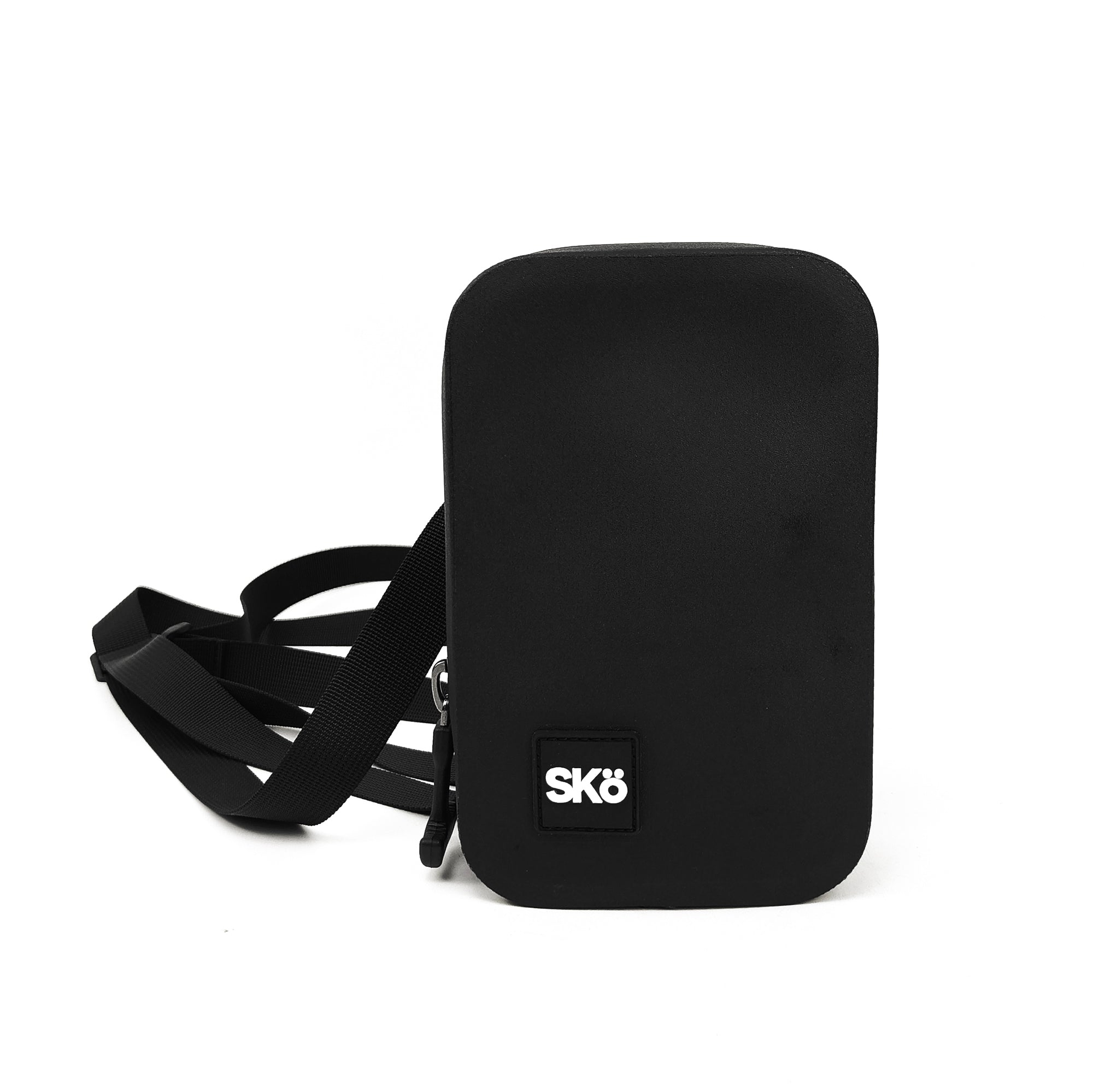
If you want to compare it against other waterproof carry styles before deciding what fits your setup, SKÖ's waterproof bag guide breaks down sizing and closure types beyond just the crossbody.
At a beach break with no lifeguard shack or coffee shop nearby to hold your things — which describes most surf spots outside a handful of famous breaks — the setup that actually holds up over a two-hour session is the boring one: keys locked in the car or handed off, phone and wallet zipped into something that doesn't care if a wave reaches your towel, parked visibly enough that nobody can dig through it unnoticed.
People Also Ask
Is a hidden magnetic key box on my car a safe option?
It's better than nothing but riskier than it feels — experienced thieves know the common hiding spots (wheel wells, bumpers, undercarriage) and check them specifically at surf parking lots. A combination lockbox you control, or handing keys to a companion, is more reliable than hiding a spare on the vehicle itself.
Can I wear a phone armband while surfing?
Not practically once you're past the whitewater — paddling, duck-diving, and pop-ups make an armband uncomfortable and risk losing the phone on a wipeout. Armbands work fine for flatwater paddling or standing in the shallows, but for actual surfing, the phone is better off on the beach in something submersible.
Sources
Since most of what actually needs a home during a surf session is what stays on the beach — phone, wallet, spare key — a waterproof crossbody that can handle a rogue wave near your towel works better than a bag that only handles rain.
$80 · Limited Lifetime Warranty