

Why Is My Waterproof Bag Sticky or Tacky? Causes & Fixes
A tacky surface can be residue, trapped moisture or actual material breakdown. The first job is figuring out which one you have.
Start with a gentle fresh-water wash and mild soap allowed by the manufacturer, then air dry the bag completely in the shade. If the tackiness disappears, it was likely surface residue. If a large area stays gummy, soft, peeling, stretchy or deformed after cleaning, the coating or material may be breaking down.
“Sticky” can describe three different problems.
A bag that becomes tacky after years in a hot garage is telling a different story than one that feels greasy after sunscreen or insect repellent spills on it.
That is why aggressive cleaning is the wrong first move. Heat, chemical exposure and age can affect coated plastics differently, and strong solvents can make damage worse.
Residue, moisture or material breakdown?
Sunscreen, lotion, oil or insect repellent may have transferred to the surface. Gentle cleaning is the first test.
If the bag also smells damp, storage moisture and mildew deserve attention before you assume the polymer itself is failing. For odor linked to wet storage, see why waterproof bags develop a musty smell.
Heat, UV, age and chemical exposure can contribute to coating or plastic breakdown. Cleaning cannot reverse physical degradation.
Clean gently before you diagnose the coating.
Move the bag out of heat and direct sun.
Let the material return to a normal indoor or shaded temperature before judging the surface. SealLine storage guidance recommends avoiding prolonged direct UV exposure and extreme temperatures.
Rinse with fresh water.
Remove salt, dirt, sunscreen residue and loose contamination before adding any cleaner. For a manufacturer-first cleaning routine, follow our waterproof bag cleaning and maintenance guide.
Use mild soap if the care instructions allow it.
Clean a small area first. SAIL's dry-bag care guidance warns against solvent-based cleaners such as acetone.
Goal: remove something sitting on the surface, not dissolve or strip the waterproof layer.
Air dry completely in the shade.
Do not use a clothes dryer or high heat unless the manufacturer specifically instructs otherwise. Recheck the texture only after the bag is fully dry.
TPU and PVC do not age in exactly the same way.
NRS explains that flexible PVC commonly relies on plasticizers, while TPU achieves flexibility differently. That difference matters, but it does not make every sticky PVC bag the same problem or every TPU bag immune to damage.
Heat and aging can change how some additive systems behave over time.
Heat, abrasion, contamination and poor storage can affect any coated bag.
If the surface stays gummy or starts peeling, cracking, stretching or deforming after cleaning, stop treating it as simple dirt.
Powder is not a repair. Solvent can make things worse.
Baby powder can make a sticky surface feel temporarily less tacky without fixing the cause. Solvents, bleach and aggressive chemical cleaners can damage coatings and adhesives. If the waterproof layer itself is breaking down, replacement or low-consequence reuse is more realistic than a cosmetic “fix.”
Use the condition, not the age.
| What you see | What it usually means for next steps |
|---|---|
| Small greasy patch | Gentle cleaning first. If the surface returns to normal, continue using it within the manufacturer’s guidance. |
| Musty smell + damp history | Address moisture and mildew. Clean, dry and store open before deciding the coating is failing. |
| Tacky over a large area after cleaning | Contact the manufacturer and stop trusting it for high-consequence waterproof storage. |
| Peeling, flaking or cracking coating | Replace or downgrade. Surface cleaning cannot rebuild a failing waterproof layer. |
| Soft, stretched or deformed material | Replace for critical use, especially after heat exposure or chemical contact. |
Sticky waterproof bag questions.
Can I use rubbing alcohol or acetone?
Do not use strong solvent cleaners unless the manufacturer specifically approves them. Start with fresh water and mild soap compatible with the bag.
Does a sticky bag mean it is no longer waterproof?
Not automatically. Persistent large-area tackiness, peeling, cracking or deformation is the bigger reason to stop trusting the bag with electronics or documents.
Can heat make a waterproof bag sticky?
Heat can accelerate aging and affect some plastics and coatings. Move the bag out of heat, let it cool, clean it gently and reassess.
Should I throw the bag away?
Not necessarily. A bag that is no longer trustworthy for waterproof storage may still be useful for wet towels, muddy shoes or other low-consequence gear.
Keep troubleshooting the material.
Move the high-consequence small items into reliable storage.
The SKÖ Waterproof Crossbody is compact waterproof storage for a phone, wallet and keys when an older bag’s coating or closure has reached the end of its useful life.
See the Waterproof Crossbody →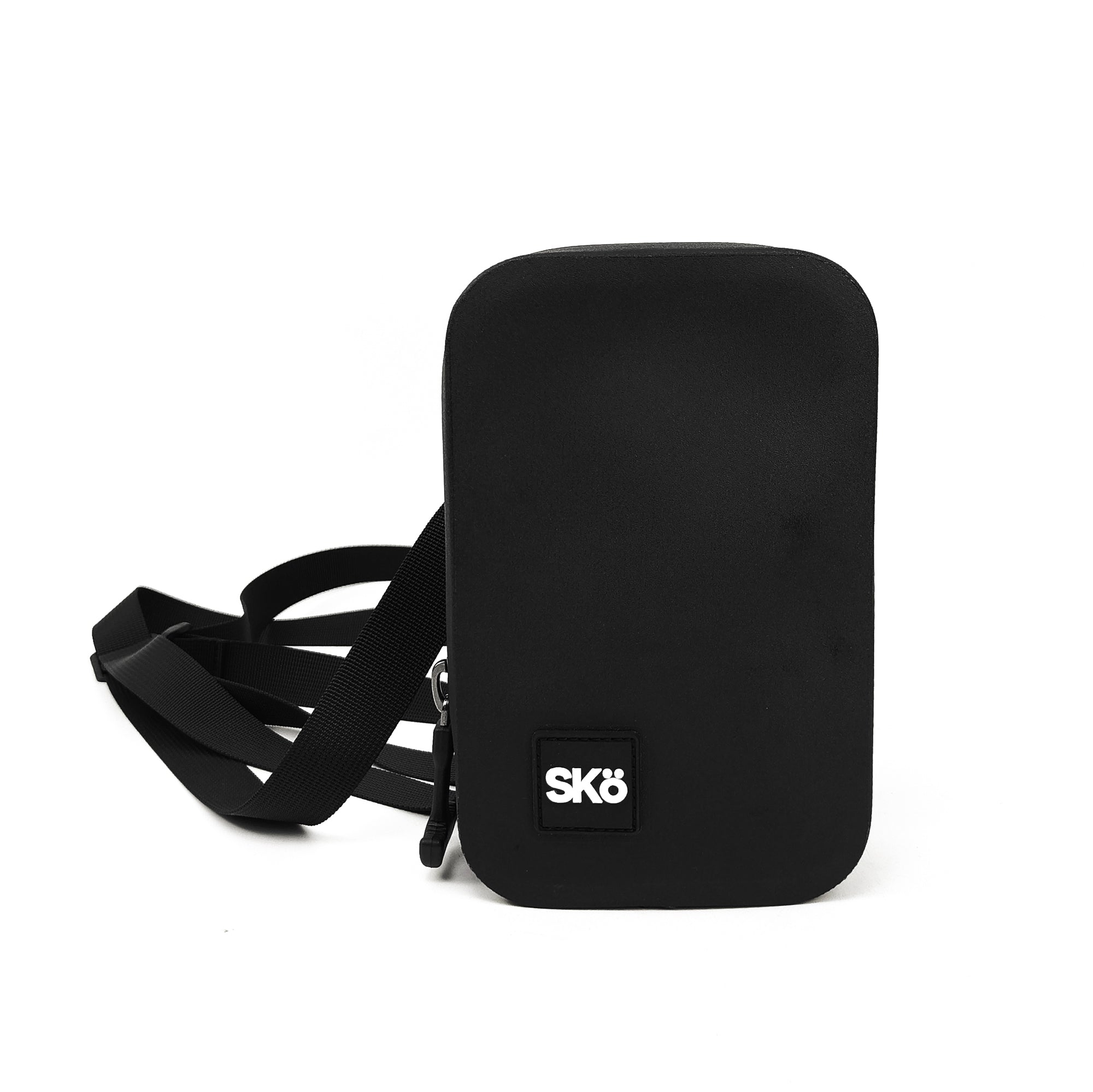
Explore more SKÖ guides
Explore practical ways to clean, maintain and assess waterproof bag materials over time.
 How to Clean a Waterproof TPU Bag Without Ruining It
 Why Does My Waterproof Bag Smell Musty?
 How Long Do Dry Bags Last? Signs to Repair or Replace
 Why Does My New Waterproof Bag Smell Like Plastic?