

How to Keep Your Camera Dry While Kayaking
A camera on a kayak needs three homes: sealed while you paddle, reachable when you are ready to shoot, and in your hands only for the frame.
Keep a camera body or lens sealed and tied into the kayak while paddling. Use compact sealed storage on your body for a phone, spare battery or memory card, and take the camera into your hands only on calm water or from a stable landing. No single bag does all three jobs well.
A perfectly sealed camera is useless for the shot. An exposed camera is one wave from trouble.
That tension is why cameras get wet on kayaks. The paddler opens the dry bag “for one minute,” rests the camera on the spray skirt or between the knees, then picks up the paddle.
The fix is a system with a sealed transport position, a protected ready position for small accessories, and a deliberate shooting position.
Plan on a swim and secure the gear.
Maryland’s paddling guidance tells canoe, kayak, paddleboard and raft users to expect to capsize and swim occasionally.
Secure gear and distribute weight evenly rather than leaving camera equipment loose in the cockpit or on deck. For larger protected cargo and hatch-versus-wearable storage options, see our waterproof backpacks for kayaking guide.
A camera bag is cargo. It does not replace a properly fitting personal flotation device.
Most of the paddle, the camera should be in Home 1.
Use a dry bag or hard waterproof box for:
- Camera body
- Lenses
- Drone or larger accessories
Use compact protected storage for:
- Phone
- Spare batteries
- Memory cards
- Car key
Take the camera out only for the frame:
- Calm water
- Paddle secured
- Return camera to Home 1 or 2 before moving
“Weather sealed” and “waterproof” are not interchangeable.
| Camera | Protection plan |
|---|---|
| Phone | Keep sealed on your body and expose it only for the shot. Phone water resistance can decrease with wear and does not make every water exposure safe. |
| Waterproof action camera | Use the model’s own published water-depth guidance and mounting instructions. Protective housings can extend the intended depth on supported models. |
| Weather-sealed mirrorless / DSLR | Treat weather sealing as rain resistance, not immersion protection. Seal and tie the camera in between shots. |
| Camera with little or no sealing | Keep it sealed except on calm water or shoot from shore. A hard waterproof box may be the more conservative transport choice. |
Open a salty housing too early and residue can move toward the gasket, camera or controls.
GoPro’s housing guidance tells users to rinse a closed housing with fresh water after saltwater use, dry it, then open it. That sequence is a useful model for waterproof camera enclosures generally, while the exact maintenance steps should follow the enclosure maker.
Dry the exterior before opening any protective case so the water you just kept out does not drip in during unpacking.
Set the camera system before the boat touches water.
Camera-on-kayak checklist
Protect the rest of the paddling electronics.
Keep the small electronics accessible without opening the main camera bag.
The SKÖ Waterproof Crossbody is compact storage for a phone, spare battery, memory cards and car key. Camera bodies and lenses belong in larger purpose-appropriate protected storage. For organizing the phone, keys and other small essentials separately from camera equipment, read how to carry valuables while kayaking.
See the Waterproof Crossbody →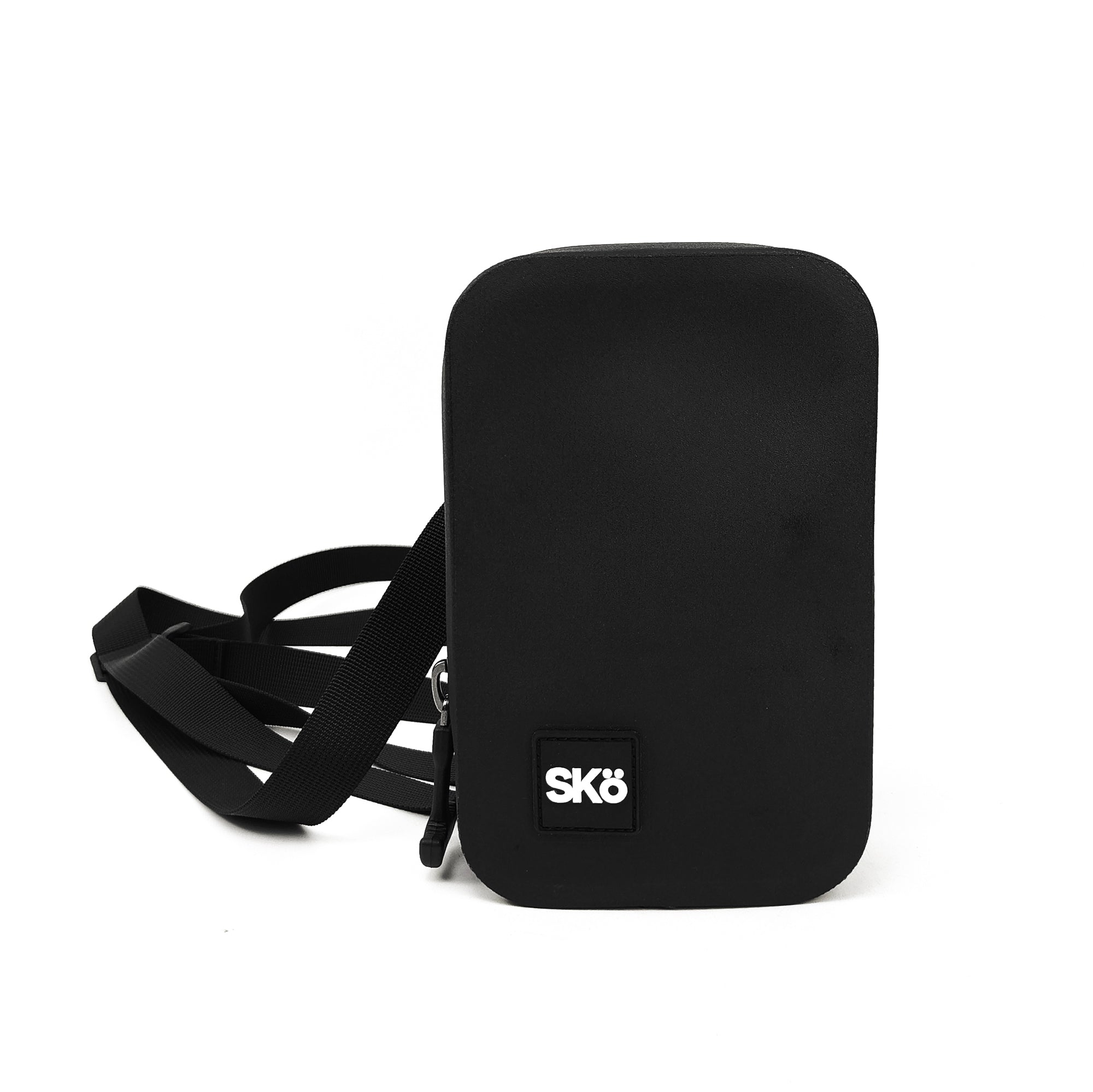
Explore more SKÖ guides
More useful guides for keeping your gear protected and your essentials ready.
 How to Keep Your Phone Dry While Kayaking
 What Size Dry Bag Do I Need for Kayaking?
 Kayaking Essentials for Beginners: What to Actually Bring
 Can a Dry Bag Be Fully Submerged?