


Best Waterproof Bags for Kayaking
Kayak storage has three different jobs: keep gear dry, keep the right items reachable, and keep the few essentials you cannot lose from disappearing with the boat.
SKÖ Gear makes the small crossbody discussed for the on-body essentials role. It is not the primary hatch or deck dry bag. This guide recommends different bag types for different kayak zones instead of forcing one product to win every job.
Give your gear three homes.
Hatch bags
Several smaller roll-tops conform to the hull better than one giant cylinder and let you separate clothing, food and sleep gear.
Best fit: 5–13 L modular dry bagsDeck / day-access bag
Keep only the layer, snack, map or safety-adjacent item you genuinely need without opening the hatch.
Best fit: compact rugged dry bag secured to the boatCritical small valuables
Phone, car key and ID may need a separate controlled layer so they are not buried in the kayak or lost with loose deck gear. For a closer look at small-item retention choices, see carrying your phone, wallet and keys while kayaking.
Best fit: compact sealed on-body storage when safeWhere the bag rides changes what the bag should be.
A sea kayak hatch, sit-on-top tankwell and touring deck are different storage environments. Start with the location, then the product.

Narrow openings and tapered hulls reward several small sacks that can slide past each other and fill odd spaces.
Anything outside the hatch adds windage, snag risk and clutter. Keep only what you truly need during the paddle.
Only carry phone, key or ID on your body when the storage does not interfere with your PFD, spray skirt, wet exit or rescue gear. For fit and mobility considerations, review how to choose a kayaking life jacket; never allow a bag to compromise the PFD.
Pack food and larger gear in well-fitted dry bags. On sit-on-top kayaks without enclosed hatches, secure external cargo to the manufacturer’s designated rigging points.
Imagine the boat upside down before you decide what “accessible” means.
Maryland paddling guidance tells paddlers to expect to capsize and swim occasionally. That is the right mental model for storage too.
Modular bags remain protected and inside the hull.
Loose cargo becomes something you now have to chase or abandon.
That may be fine if you do not need it for emergency communication.
Safety and freedom of movement beat convenience.
Four bag roles worth comparing.
These picks deliberately solve different jobs. The “best kayaking bag” is the one that matches the zone where it lives.
| Product | Best kayak role | Useful size | Water claim | Why it works | Main limitation |
|---|---|---|---|---|---|
| Sea to Summit Lightweight | Hatch organizer | 5–13 L | 10,000 mm HH; avoid submersion | Light, flexible, packs around hull shape | Not for repeated exposed abrasion |
| Sea to Summit Big River | Exposed deck / sit-on-top | 8–20 L | 10,000 mm HH; avoid submersion | 420D fabric + lash points | Bulkier than hatch sacks |
| Watershed Ocoee | High-consequence compact | 10.5 L | IP68 | ZipDry closure, compact duffel access | Heavy and expensive for basic gear |
| SKÖ Waterproof Crossbody | Phone / key / ID | Small essentials | See current SKÖ product claim | Keeps tiny valuables separate from bulk gear | Not bulk dry storage; carry must not interfere with PFD/wet exit |
For waterproof backpacks specifically, use the dedicated Best Waterproof Backpack for Kayaking pillar so this guide does not cannibalize that search intent.
Where each bag actually earns its place.
Kayak storage is constrained by hatch openings, deck space and rescue movement. The winning product changes with the location.
 Hatch-first storage5–13 L70D · flexible · very light
For enclosed kayak hatches, several small flexible dry bags are often more useful than one giant cylinder. They fit tapered spaces, let you color-code categories and keep one wet item from contaminating everything else.
Buy it if
- You have touring hatches
- You want modular packing
- You need low weight
Skip it if
- The bag will live exposed on a rough deck
- You expect intentional submersion
- You want one large duffel opening
 Exposed cargo8–20 L420D · lash points
When the bag lives outside a hatch, thicker fabric and attachment points matter more. Big River is a natural crossover for a sit-on-top tankwell or a small deck load where it can be secured to the boat.
Buy it if
- You paddle a sit-on-top
- Your bag stays exposed
- You want multiple attachment points
Skip it if
- You are stuffing narrow touring hatches
- You need a submersible zipper
- You only carry a phone and key
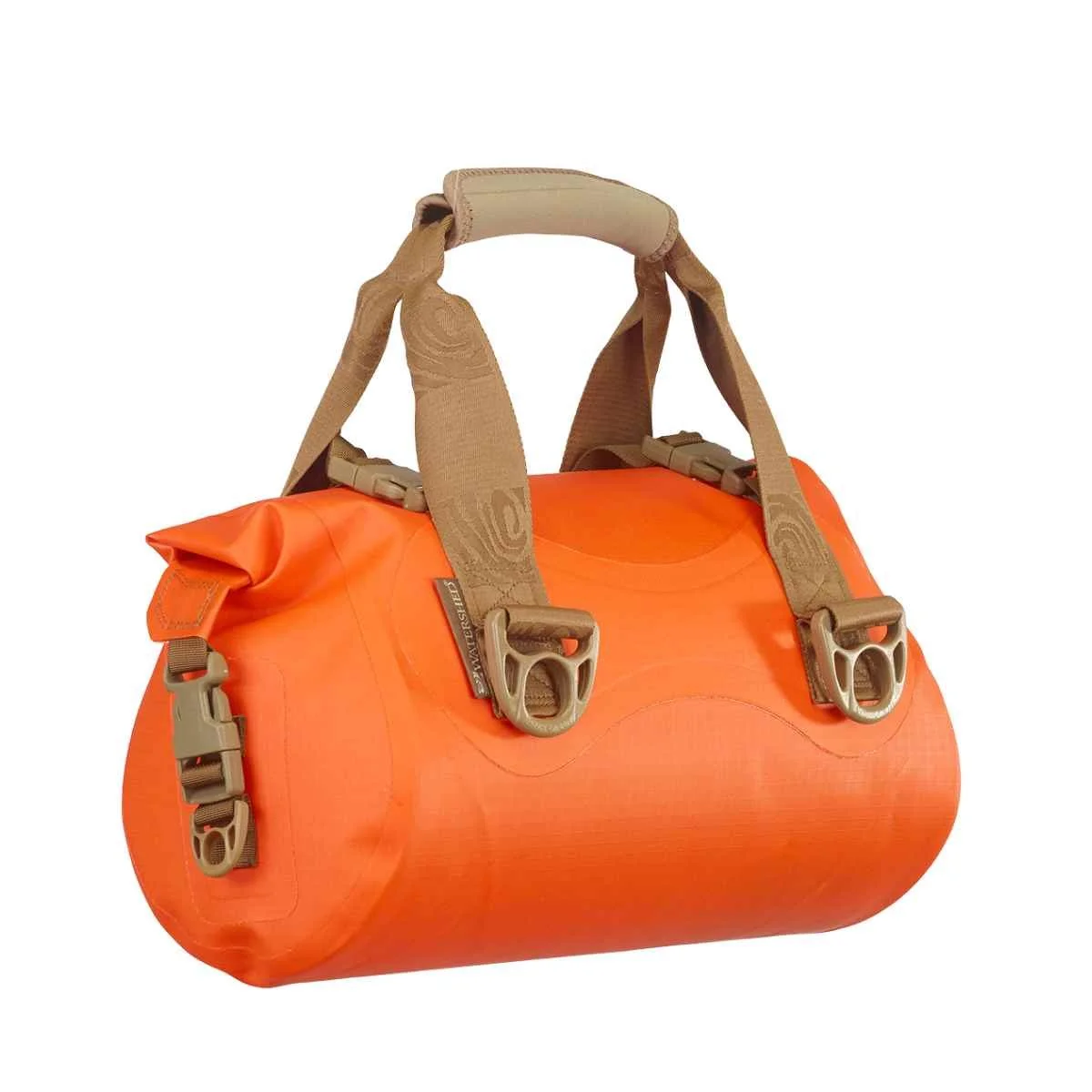 High-consequence compact10.5 LZipDry · IP68
Ocoee makes sense when the contents are worth protecting with a more serious published seal. The duffel opening is also easier to work from than a deep roll-top when you are handling camera gear or small technical equipment.
Buy it if
- You carry high-value electronics
- You want compact duffel access
- You accept weight for stronger protection
Skip it if
- You are just packing clothes
- You need several soft bags to fit a hatch
- You prioritize low cost
 Critical small essentialsPhone + keyseparate from bulk gear
SKÖ belongs in this guide only because phone, car key and ID have a different access problem from camp gear. It should be treated as a small essentials layer, not the primary kayak dry bag.
Buy it if
- You want phone/key separate from hatches
- You need those items before and after paddling
- The carry method remains safe
Skip it if
- You need clothing or food storage
- You use a spray skirt setup where straps interfere
- You want a bag that stays in the boat
Boat shape changes the storage answer.
The same bag behaves differently in a touring hatch, a sit-on-top tankwell and a fishing crate.
Several small hatch bags
Use soft 5–13 L sacks to fill tapered spaces and keep weight low in the hull.
Best starting point: Sea to Summit LightweightSecure exposed dry bag
Tankwell storage is external, so choose tougher fabric and secure the bag to designed rigging points.
Best starting point: Big RiverOne compact bag + essentials layer
Short trips often need far less gear than people bring. Keep the cockpit clear.
Best starting point: 8–13 L roll-topDry storage + tackle are separate systems
Use dry bags for clothing/electronics and keep tackle in purpose-built organizers.
See the fishing pillar for a full setupA bag cannot interfere with the PFD, spray skirt or wet exit.
Maryland paddling guidance tells paddlers to expect to capsize and emphasizes properly fitted life jackets. Anything worn on the torso needs to preserve freedom of movement and self-rescue.
Kayak dry-bag questions.
What is the best waterproof bag for kayaking?
There is no single best bag for every kayak. Use smaller flexible dry bags inside hatches, a tougher compact bag for exposed deck/tankwell storage, and separate critical small valuables only when the carry method is safe.
What size dry bag is best for kayaking?
For hatches, several 5–13 L bags are often easier to pack than one 30 L sack. For day-access deck or tankwell storage, about 8–20 L is a useful range. Multi-day trips may need more total volume split across several bags.
Should I put a dry bag on the deck or inside the hatch?
Put bulk gear inside hatches when possible. Deck storage should be limited to items you need during the paddle and should be secured so it cannot become loose cargo.
Can I wear a crossbody while kayaking?
Only if it does not interfere with your PFD, spray skirt, paddle stroke, wet exit or rescue gear. For some kayak setups, the safer answer is to keep valuables secured inside the boat instead.
Is a waterproof backpack better than dry bags for kayaking?
It depends on portage and storage. Backpacks are useful when you carry gear between car and launch, but several small dry bags often fit kayak hatches better. See the dedicated waterproof-backpack pillar for that category.
Do kayak hatches stay completely dry?
Do not assume they do. Hatches can leak through covers, fittings, bulkheads or hull damage. Use dry bags inside the hatch for items that genuinely need to stay dry.


Dry, reachable and still with you are three different jobs.
Build the storage system around the kayak zone and the capsize. Small hatch bags handle bulk gear, one controlled day bag handles access, and the handful of essentials you cannot lose get their own plan.