

Why Is My Waterproof Bag Cloudy, Yellow or Discolored?
Yellowing, white haze and dark spots usually point to different causes. Wash the bag first, then read what remains.
Start with fresh water and mild soap. If a white haze disappears, it was likely surface residue. If dark spots return, moisture and mildew are the bigger problem. If yellowing stays after cleaning, it is more likely a change in the material itself and may not be reversible.
Wash first. Diagnose second.
Water itself is not the only thing acting on a waterproof bag. Sunlight, dried salt, sunscreen, soap residue and damp storage can all change what the surface looks like.
The useful question is not simply “why did it change color?” It is “does the color wash off, smell musty or stay embedded in the material?”
Three appearances, three different starting points.
Usually even, does not wash off and may be more noticeable on the side that received more sun.
- Likely cause
- UV-related color change in the material.
- Try
- Clean gently, then store out of direct sun.
- Next check
- Inspect fold lines and leak-test the bag before trusting it with sensitive gear.
Often patchy, chalky or concentrated around dried splash lines and contact areas.
- Likely cause
- Salt, minerals, sunscreen or soap left on the surface.
- Try
- Fresh-water rinse followed by mild soap and water.
- Next check
- If the haze remains after cleaning, treat it more like permanent discoloration.
Often appears in folds or inside the bag and may come with a musty smell.
- Likely cause
- Mildew or moisture left in the bag during storage.
- Try
- Wash it, then let it dry completely before storing again.
- Next check
- If the odor returns, inspect the storage space and anything packed with the bag.
Residue sits on the surface. UV aging changes the material.
The original source set describes PVC and TPU separately. That matters because “waterproof bag” does not mean one universal coating or one universal aging pattern.
UV exposure can change the polymer and produce visible yellowing or browning as degradation progresses.
Keep future UV exposure down and inspect older fold lines for brittleness or cracking.
Covestro notes that aromatic TPU can yellow under UV, while aliphatic TPU was developed for better color stability.
If the bag maker does not identify the TPU chemistry, do not assume it is immune to color change.
Bag-care guidance consistently starts with fresh water and gentle cleaning after exposure. For the step-by-step care routine, see how to clean and maintain a waterproof bag before treating stains as coating deterioration.
If the mark washes away, you were looking at residue rather than a change inside the coating.
Sea to Summit warns that damp fabric can mildew.
Dry the bag completely before storage and improve airflow where it is kept.
Strong chemistry can damage the coating faster than the discoloration does.
The source guidance used here favors fresh water, mild or non-detergent soap, shade and complete drying. It does not support bleaching, solvent scrubbing or aggressive heat as a safe way to “restore” the original color.
Use the same four-step routine every time.
Rinse it with fresh water.
Remove salt, grit and easy surface residue before adding cleaner.
Wash gently with mild soap and water.
Use the care method allowed by the manufacturer. Avoid bleach, solvents and harsh household cleaners.
Dry it completely in the shade.
Do not add more UV and heat exposure just because direct sun dries faster.
Inspect what is left.
Persistent yellowing points toward material change. Returning dark spots point toward moisture. A vanished white haze was likely residue.
How a cosmetic problem turns into a material problem.
If the color change is inside the material, stronger chemistry is not reversing the aging process.
Focus on seams, fold lines and leakage rather than chasing the original color.
Sea to Summit warns that solvents can damage or delaminate coated fabrics.
Stay inside the maker’s care instructions and rinse thoroughly afterward.
Fast drying adds more of the UV exposure associated with aging and color change.
Dry the bag thoroughly without stacking more sun exposure onto the coating.
Closed folds and humid storage are exactly where dark spots and musty odor can return.
Use a cool indoor spot with airflow instead of a hot vehicle, dock box or damp bin.
Discoloration questions.
Does a cloudy or yellow bag mean it leaks?
Can I get the yellow out?
What if the spots smell musty?
Should I replace a discolored bag?
Related SKÖ guides.
Keep small essentials sealed and separate from wet gear.
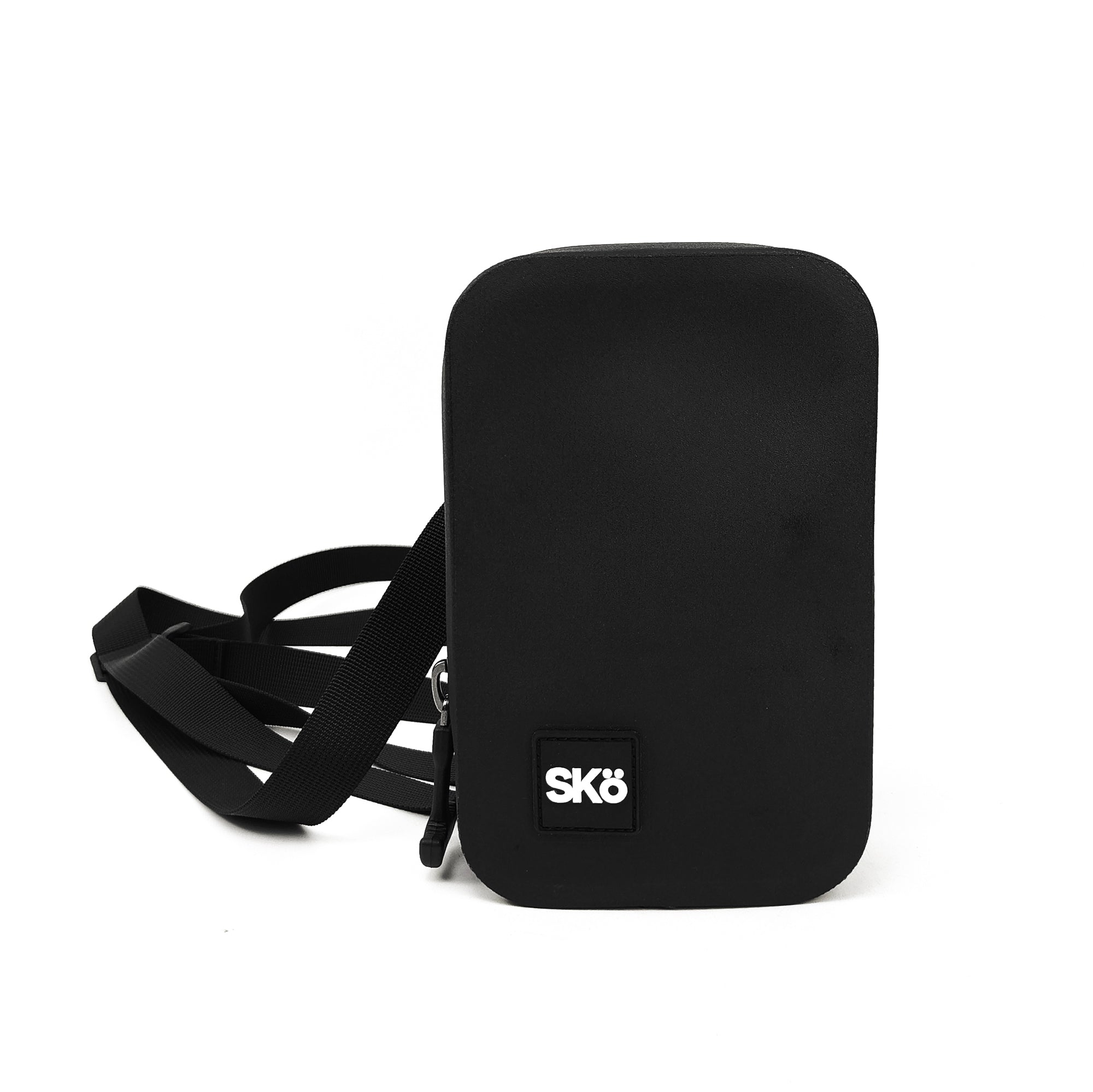
The SKÖ Waterproof Crossbody is compact storage for small valuables around water. Like any coated bag, it benefits from fresh-water rinsing, shade drying and clean, dry storage.
Small-value storage only. SKÖ does not publish a specific depth-and-duration rating.
Explore more SKÖ guides
Learn how waterproof bag materials age, how to care for them and which features matter for lasting protection.
 Why Does My New Waterproof Bag Smell Like Plastic?
 TPU vs. PVC Waterproof Bags: Which One Actually Holds Up?
 How Waterproof Bags Actually Keep Water Out
 Waterproof vs. Water-Resistant: What's the Actual Difference?