

Materials
Choose materials around the conditions the product is expected to encounter.
We believe good outdoor gear starts by understanding where it will actually be used.
For SKÖ, that means designing around water, weather, movement, and the unpredictable conditions that come with real adventure.
Designing for water changes the decisions you make from the very beginning.
It means thinking about how a product closes, where water can enter, what materials make sense, how the product moves with you, and what happens when conditions stop being dry.
Instead of starting with an ordinary bag and asking how much water it can tolerate, we believe the environment should help define the product from the start.
Choose materials around the conditions the product is expected to encounter.
A waterproof body means little if the opening becomes the weak point.
Protection depends on how the pieces work together, not simply what each piece is made from.
Waterproof gear still needs to be comfortable, accessible, and practical outside the water.
Waterproof performance isn't created by one material, one zipper, or one specification.
The pieces have to work together. That's why we think about protection as a complete system, from the material that forms the body to the closure that protects the opening.
The opening is one of the most important parts of the waterproof system. A sealing zipper helps create the barrier that keeps water away from what's inside.
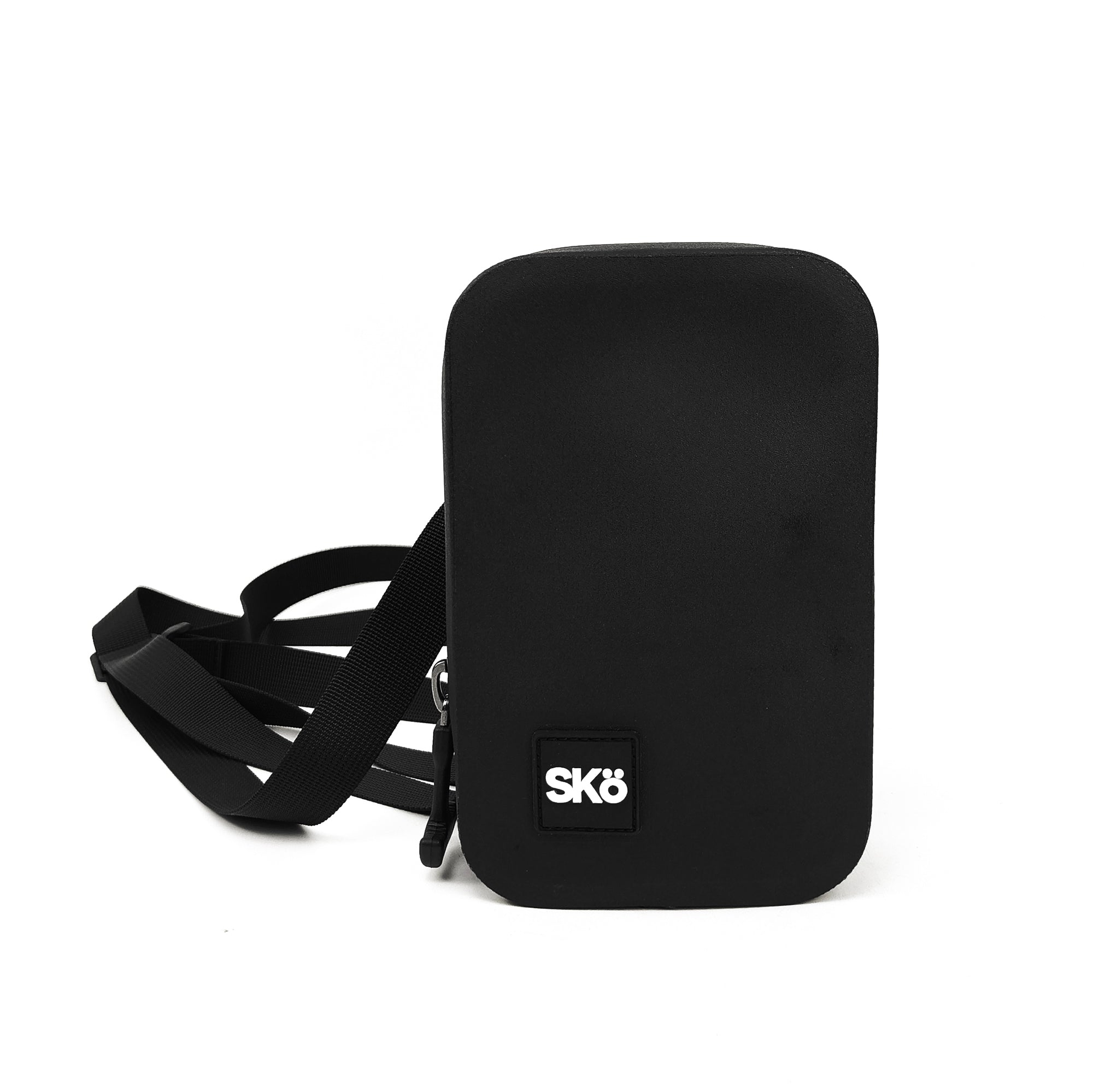
Durable TPU construction gives the Crossbody a body designed around water, weather, and the rough conditions that come with outdoor use.
The Crossbody carries an IP68 rating and is designed for waterproof and submersible protection when properly closed and sealed.
Waterproof performance also depends on use. The zipper and sealing surfaces should be clean and the closure fully sealed before exposure to water.
Don't ask one component to do everything. Design the whole system around the job.
More isn't automatically better.
Every added pocket, layer, feature, and piece of hardware introduces something else to carry, manage, or think about.
We believe good design should solve the problem without becoming another problem itself.
The goal isn't to make gear smaller for the sake of being small. It's to understand what the product needs to do and give it exactly what that job requires.
A feature should solve a real problem, not exist simply because there's room to add it.
The clearer the purpose of a product, the easier it is to decide what belongs and what doesn't.
Good gear should reduce friction in the adventure, not introduce more of it.

Outdoor gear has to work while you're actually outdoors.
That means thinking beyond the product on a table. How does it feel when you're moving? Can you keep it where you need it? Does it still make sense when the weather changes or the adventure moves into the water?
We believe design decisions should make more sense in the environment they're intended for, not less.
Gear should work with the activity instead of constantly demanding your attention.
Protection is only useful when the product remains practical to carry and use.
Water, weather, movement, and terrain should be part of the design conversation from the beginning.
Design for the moment the product leaves the table.
Material choice isn't separate from product design. It's part of the same decision.
When a product is intended to spend time around water, its materials, closure, weight, and construction all have to support the way that product is meant to be used.
Durable TPU construction gives the Crossbody a body designed around water, weather, and the demands of outdoor use.

The closure is part of the waterproof system, helping protect the opening when fully closed and properly sealed.
The Crossbody keeps its compact format while providing waterproof protection for the essentials you want with you.
We don't choose materials because a specification sounds impressive.
We choose around what the product needs to do.
Specifications matter. Materials matter. But every decision should ultimately support the experience the product was created for.
Start with the environment. Water, weather, movement, and terrain should shape the product rather than become problems to solve afterward.
More isn't the goal. Every feature should serve the product's purpose without adding unnecessary complexity.
Protection should come from the complete design working together, not from relying on a single material, feature, or specification.
A product has to make sense beyond the design table. It should remain useful when the adventure gets wet, rough, active, or unpredictable.
If it doesn't make the adventure better, simpler, or more protected, it doesn't belong.
The principles are simple. Understand the environment, protect what matters, remove what doesn't, and design for the way gear is actually used.