


Best Waterproof Bags for Whitewater Rafting
Four serious river bags plus the small valuables role. We separated guided day trips, private rafting and multi-day expeditions because the “best bag” changes when the outfitter, rigging system and access needs change.
SKÖ Gear publishes this guide and sells the small crossbody mentioned below. SKÖ is not ranked as the primary rafting dry bag because a 1.14 L valuables bag does a different job from a 50–75 L river bag. Competitor strengths are called out directly, and published manufacturer specs are kept separate from editorial judgment.
First decide whether you even need to buy a dry bag.
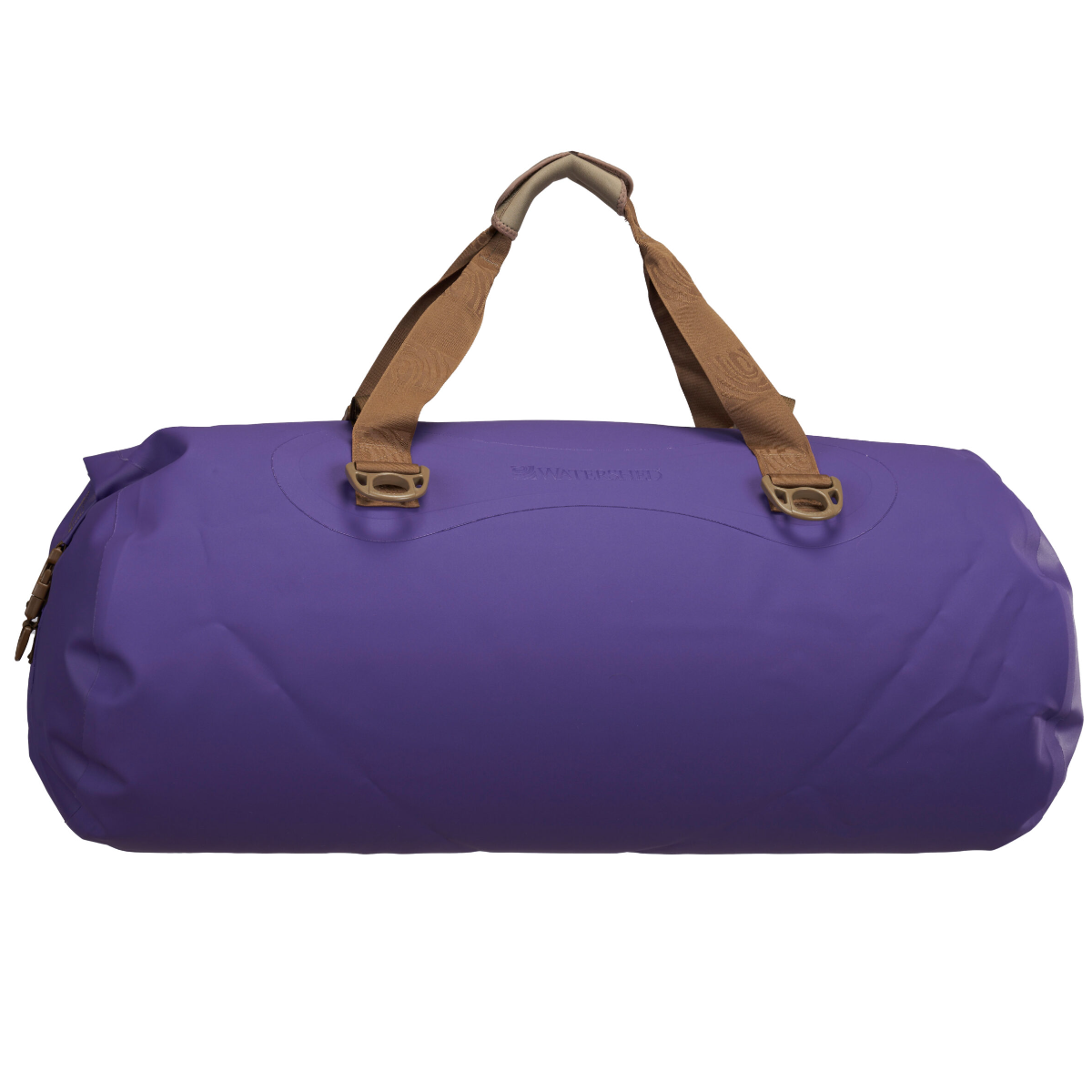
A 75.5 L duffel built around long river trips, with ZipDry closure, several hard lash points, compression straps and a published IP68 rating.

The river-industry classic. NRS says Bill’s Bag has been used from the Grand Canyon to the North Pole since 1977.

A heavy-duty zip-access duffel with an IPX7 immersion test, reinforced lash points and a molded waterproof bottom.

A wide-mouth roll-top duffel in 35, 70 and 105 L sizes with welded seams and heavy-duty TPU-coated nylon.
Phone, car key, ID and a card need their own controlled storage layer. The SKÖ Waterproof Crossbody can fill that role when a guide or private-rig setup allows on-body carry. It is not a replacement for the primary river dry bag and never replaces a PFD. For outfitter rules and safer phone-storage decisions, see whether to bring a phone whitewater rafting; on-body storage is not appropriate for every trip.
Four primary river bags worth comparing.
Whitewater storage is not one category. A classic roll-top sack, a duffel-style roll-top and a submersible zipper duffel solve different access and rigging problems. The table keeps those differences visible instead of pretending the products are interchangeable.
| Product | Our pick | Price* | Published water protection | Capacity | Weight | River-use advantage |
|---|---|---|---|---|---|---|
| Watershed ColoradoRiver duffel | Best overall | From $281 | IP68; ZipDry closure | 75.5 L | 2.95 lb | Hard lash points + compression straps + wide opening |
| NRS Bill’s Bag 65LClassic roll-top sack | Classic river pick | $219.95 | NRS sells it as waterproof | 65 L | See current NRS specs | Simple roll-top design with decades of river use |
| YETI Panga 50LZipper duffel | Premium zip access | $350 | IPX7; 1 m / 30 min | 50 L | 5.2 lb | Fast duffel access, molded waterproof bottom, lash points |
| NRS High Roll DuffelRoll-top duffel | Easy-access roll-top | $219.95–$279.95 | Waterproof; NRS says not submersible | 35 / 70 / 105 L | Varies | Wide duffel format, welded seams, removable shoulder strap |
*Prices checked October 11, 2026 and can change. Manufacturer pages were prioritized. A published IP rating describes a test condition, not permission to rig a bag loosely or ignore guide instructions.
No fake river score.
The best rafting bag depends on access, rigging, trip length and whether an outfitter already supplies storage. We used category winners instead of pretending a 65 L roll-top and a 50 L zipper duffel can be reduced to one made-up 9.3/10 number.
Start with trip ownership
Guided trips and private trips solve storage differently. Buying recommendations come after that split.
Reward secure rigging
Hard lash points, stable shapes and ways to reduce movement matter on a raft.
Separate access from immersion
A zipper can improve access. A roll-top can simplify the system. Neither is automatically “better.”
Prefer primary specs
Manufacturer water ratings, volume, weight and closure details take priority over vague marketplace claims.
Guided day, guided multi-day or private river?
The same bag can be excellent in one setup and unnecessary in another. This is the first decision route.
Use the outfitter’s system first.
Commercial operators often control dry storage and may provide the bag you need.
- Ask if a day bag is provided
- Ask when you can access it
- Ask about phone/camera rules
- Use base lockers when offered
Main bag + day access.
Your large personal bag may stay packed until camp while a smaller bag handles daytime layers and essentials.
- Pack sleep/clothing gear deep
- Keep rain layers accessible
- Protect documents in a second layer
- Follow the guide’s rigging system
You own the whole problem.
Now the bag, tie-down, access plan and entanglement risk are all yours.
- Choose volume by trip length
- Rig bags so they cannot become loose cargo
- Eliminate excess line
- Keep rescue gear separate from personal storage
Where each bag actually wins.
The point is not to crown one bag for every rafter. It is to make the tradeoff obvious enough that you can rule products out quickly.
Choose the Colorado if you want a bag that looks like it was designed around a raft rather than adapted to one. Watershed specifically positions it for long-term river tripping, and the combination of hard lash points, compression straps and a wide duffel opening is unusually aligned with that job.
Buy it if
- You do private or multi-day river trips
- You care about dedicated lash points
- You want duffel access instead of a tall sack
Skip it if
- You only take guided day trips
- You want the lowest-cost roll-top
- You do not need 75 L of capacity
Bill’s Bag is the conservative pick. NRS says the line has been trusted by professionals since 1977, including Grand Canyon use. The appeal is not novelty; it is a familiar roll-top format from a brand built around rafting.
Buy it if
- You value proven river simplicity
- You are comfortable with a roll-top
- You want a mid-size multi-day bag
Skip it if
- You want duffel-style zipper access
- You want an explicitly published IP immersion spec on the product listing
- You need a very small day bag
The Panga makes the most sense when fast duffel access and heavy-duty construction are worth extra weight and money. YETI publishes an IPX7 test of one meter for 30 minutes and builds the 50L around a waterproof zipper, molded waterproof bottom and six lash points.
Buy it if
- You open the bag often
- You want a molded base and structured feel
- You value a published immersion test
Skip it if
- You want a lightweight bag
- You want maximum liters per dollar
- You prefer a closure without zipper maintenance
High Roll sits between a tall dry sack and a zipper duffel. The fold-down StormStrip closure keeps the construction straightforward, while the 35, 70 and 105 L sizes let you scale from day gear to expedition loads. NRS lists it as waterproof but not submersible.
Buy it if
- You want duffel-style loading
- You prefer roll-top simplicity
- You need multiple capacity choices
Skip it if
- You require a submersible zipper rating
- You want a compact personal bag
- You only do outfitter-supplied day trips
A waterproof bag that becomes loose cargo is still a bad setup.
Whitewater turns bag selection into a rigging problem. Access, tie-down points, loose line and rescue-gear interference matter alongside waterproofing.

Private trips need a deliberate tie-down system. NRS’s own rafting gear guidance explicitly pairs dry bags with straps for tying gear to the boat.
Excess straps and cords can create entanglement problems. American Whitewater’s safety guidance treats entrapment and loose lines as serious hazards.
Rain shell, insulating layer and other weather-critical items need a storage location that is actually reachable when conditions change.
Throw bags, first aid, repair equipment and emergency hardware should remain accessible and should not be buried under personal dry bags.
The shortest route to the right setup.
Start with who owns the storage system, then how long the trip is, then whether fast access matters enough to justify a zipper duffel.
Whitewater decision route
This is deliberately more useful than asking “which bag has the highest waterproof number?” because trip logistics decide what you can actually use.
Use supplied storage unless the operator tells you to bring your own.
Enough for layers, food and basic gear without expedition volume.
Watershed Colorado, Bill’s Bag or High Roll depending access and closure preference.
Choose when easy opening is worth the extra weight and price.

Do not pretend a small crossbody replaces the river bag.
A primary rafting dry bag handles clothing, sleeping gear, camp equipment or a full day’s layers. The SKÖ Waterproof Crossbody has a much narrower job: phone, car key, ID and a card when compact sealed on-body storage is permitted.
Our rule: if the bag has to hold a jacket, lunch or overnight gear, SKÖ is not the primary bag. If it only needs to protect the handful of items you cannot afford to lose, it can complement the main dry-storage system.
The questions that matter before you trust a bag on whitewater.
What is the best waterproof bag for whitewater rafting?
For a private or multi-day trip, Watershed Colorado is our top overall pick because its 75.5 L capacity, duffel access, hard lash points and published IP68 rating are unusually aligned with river use. On a guided trip, the best bag may be the one the outfitter already provides.
What size dry bag do I need for rafting?
For a day trip, roughly 35–65 L can cover layers, food and personal gear depending on what the raft already carries. Multi-day personal gear often pushes into roughly 65–105 L. Commercial outfitters may provide a specific bag size, so ask before buying.
Is a roll-top or waterproof zipper better for rafting?
Neither is universally better. Roll-tops are simple and proven. Waterproof zipper duffels can provide faster access. The deciding questions are how often you open the bag, whether the manufacturer publishes an immersion claim and how the bag rigs to your boat.
Can I wear a waterproof crossbody while rafting?
Only if it does not interfere with your PFD, rescue gear or the guide’s instructions. On technical whitewater, leaving the phone at base can be safer than inventing an on-body setup.
Do outfitters provide dry bags?
Many do, especially on multi-day trips, but the exact system varies. Ask what size is provided, whether a separate day bag is included and when you can access each bag.
Does a dry bag need to be submersible for rafting?
Not every rafting setup requires a published submersion rating, because many bags are rigged above the waterline and are primarily handling splash, rain and flip risk. If prolonged immersion is part of your risk model, choose a product with a clearly stated test rather than assuming “waterproof” means unlimited underwater use.


Buy the storage system for the trip you actually take.
Guided day trip? Ask the outfitter first. Private multi-day river? Buy the large bag around rigging, access and volume. Then give phone, key and ID their own small protected layer instead of burying them under a week of gear.